

All-Steel Ventilated Floor Solutions for Reliable Airflow Management
2026-10-07
Most raised floors look the same from above. But when airflow management decides whether your servers stay cool or your cleanroom stays compliant, the material and ventilation design beneath your feet matter more than you think. That's where Lipin Floor stands apart—with all-steel ventilated floor solutions built for reliable, predictable air delivery. Here's why that foundation matters for your next project.
Why Steel Panels Outperform Aluminum in High-Traffic Data Halls
In busy data halls, carts, server racks on casters, and hurried technicians create a relentless grind against wall and column surfaces. Aluminum might seem appealing for its light weight, but that same softness becomes a liability the moment a loaded dolly clips a corner or a ladder leans too hard against a panel. Steel, on the other hand, shrugs off impacts that would leave visible dents or deep scratches in aluminum, keeping the facility looking sharp without constant patching or replacement.
Beyond impact resistance, steel brings a steadier thermal and fire performance profile. In a space packed with high-density cabling and continuous power draw, localized heat is a given. Aluminum expands and contracts more noticeably with temperature swings, which can stress mounting points and lead to rattling or warped panels over time. Steel remains dimensionally stable under those same conditions, and its higher melting point offers an extra margin of passive protection that building codes increasingly expect in critical infrastructure.
Maintenance is another factor often overlooked until the first deep cleaning cycle. Aluminum is prone to oxidation and can develop a dull, chalky film in humid or mildly corrosive environments, especially if the facility uses aggressive cleaning agents. Steel panels with a proper powder coat or galvanized finish shrug off scrubbing and stay cleaner longer with minimal effort. In a high-traffic data hall where uptime and appearance both matter, steel simply demands less attention while taking more punishment.
Perforation Patterns That Keep Static Pressure Balanced
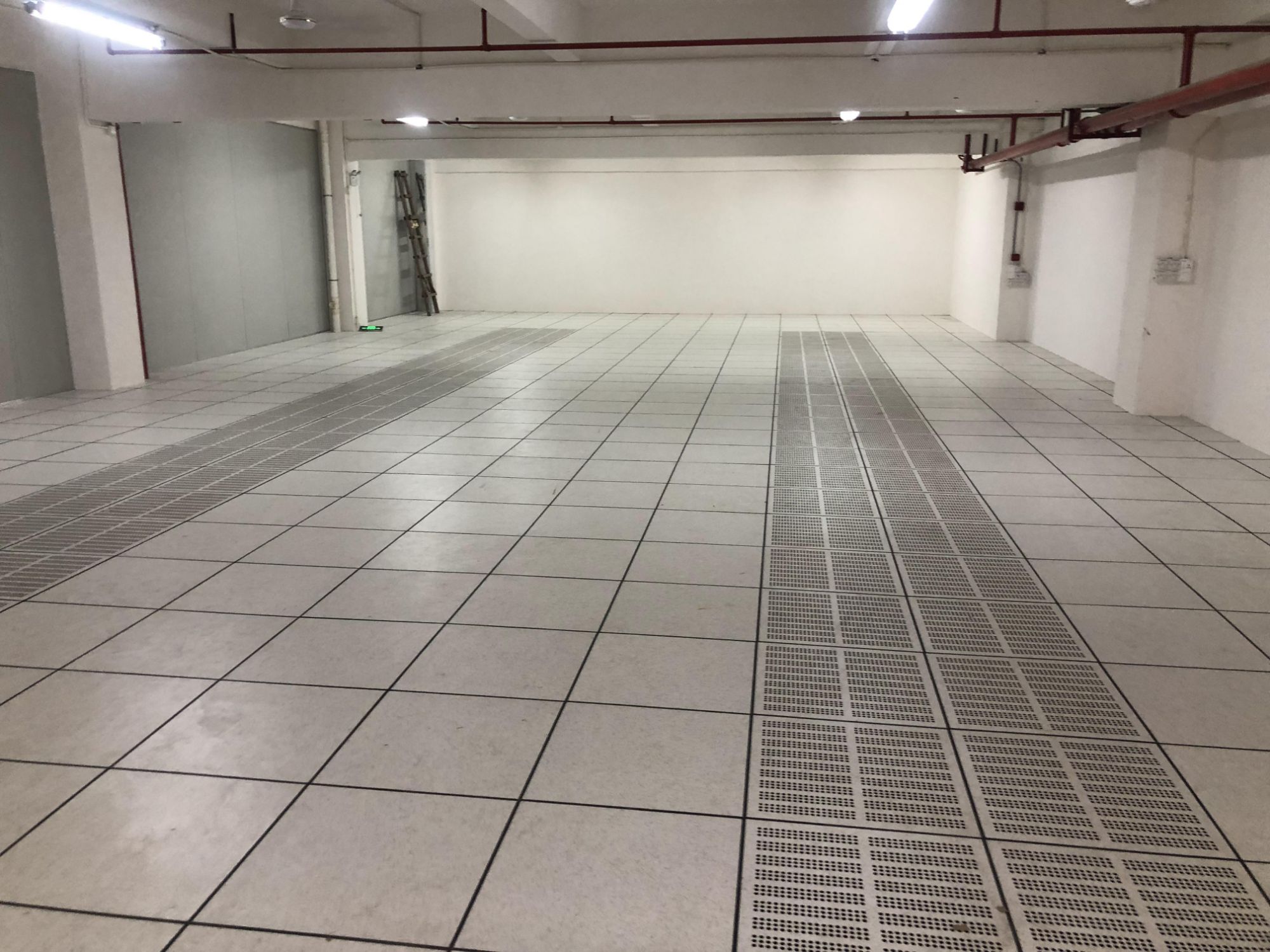
Static pressure balance in perforated systems depends on how openings are arranged across a surface. A uniform grid of identical holes might seem logical, but it often creates localized high-velocity zones near edges and corners where air has fewer neighboring perforations to draw from. Shifting to a graded pattern—slightly larger perforations near the center and smaller ones toward the perimeter—helps distribute resistance more evenly. This keeps the pressure differential from spiking in any single area.
Another effective approach is varying the open area percentage rather than hole diameter. For example, using a hexagonal or staggered pitch instead of a square grid allows more holes per unit area without weakening the panel. The key is matching the cumulative free area to the intended airflow volume; too little open area raises static pressure upstream, while too much causes uneven suction. Patterns with rounded inlet edges also reduce turbulence, which stabilizes the pressure field across the entire perforated zone.
Coatings and Finishes for Corrosion-Prone Environments
Selecting the right protective layer for structures exposed to salt spray, industrial fallout, or constant humidity means looking beyond generic paint systems. The real challenge lies in how a coating behaves at the microscopic edges, fasteners, and weld zones, where corrosion typically starts years before it becomes visible. In these environments, film thickness alone rarely saves a surface; what matters is the balance between barrier properties, adhesion under cyclic wetting and drying, and the ability to self-heal minor scratches through pigments that passivate exposed steel.
Modern approaches often combine a zinc-rich primer with a high-solids epoxy intermediate coat and a UV-stable polyurethane or polysiloxane topcoat. But the success of this stack depends on surface preparation and application conditions. Dust, chloride contamination, or dew point violations can turn a premium spec into an early failure. On coastal structures, for instance, soluble salts trapped beneath the primer pull moisture through the film by osmosis, causing blistering within months even when dry film thickness readings meet the data sheet.
For maintenance teams, the practical selection hinges on exposure severity, access for recoating, and tolerance for downtime. Thermally sprayed aluminum or zinc can outlast liquid coatings by decades on splash-zone steel, but the initial cost and need for trained applicators often rule them out for smaller assets. Meanwhile, newer moisture-cure urethanes and high-ratio glass flake epoxies offer faster return-to-service with fewer application windows, making them a pragmatic middle ground when recoating must happen between tides or during short plant outages.
Plenum Depth and Its Effect on Air Distribution
Plenum depth directly shapes how air enters a space, but its influence is often underestimated until pressure imbalances or uneven temperatures appear. A shallow plenum tends to create higher velocity at diffuser openings, forcing supply air downward with less mixing. The result can be noticeable drafts near occupied zones and a wider temperature swing between floor and ceiling. By contrast, a deeper plenum allows airflow to expand and slow before passing through diffusers, which promotes a softer discharge and more gradual entrainment of room air.
The relationship between plenum depth and distribution also depends on how supply air enters the void. If the duct terminates abruptly near a diffuser, a shallow cavity gives the air little room to turn and equalize, so nearby outlets may deliver noticeably different volumes. Increasing depth gives the airstream space to spread, reducing local static pressure hotspots and helping diffusers perform closer to their rated throw. In retrofit projects, adding even a few inches of plenum height can smooth out otherwise erratic patterns without changing the diffuser layout.
Field adjustments frequently focus on damper positions or diffuser type, yet the plenum itself acts as a hidden balancing chamber. When space constraints force a minimal depth, designers can compensate with perforated diffusers, turning vanes, or relocated duct connections to break up direct airflow. Still, no accessory fully replaces the benefit of adequate depth. The most uniform distribution typically comes from matching the plenum cross-section to the supply air volume, allowing the cavity to do part of the mixing work before air ever reaches the occupied zone.
Load Ratings Without Sacrificing Airflow
Most industrial spaces face a familiar trade-off: you either get a floor that can handle serious rolling loads, or you get one that lets air move freely through the space. Heavy-duty solid surfaces tend to trap heat, dust, and fumes, while open grating and perforated panels often buckle under forklift traffic or repeated pallet drops. The result is usually a compromise that leaves both maintenance crews and production managers unhappy.
The solution lies in engineered structural decks that pair reinforced load-bearing ribs with precisely spaced ventilation openings. Rather than simply punching holes in a flat sheet — which weakens the material along the edges — these systems use formed channels and tapered apertures that distribute stress across the entire panel. This means you can specify a deck rated for 5,000 pounds per axle or more, while still allowing enough open area to meet smoke ventilation, natural cooling, or dust extraction requirements.
Field feedback from loading docks, mezzanine walkways, and assembly platforms consistently highlights the same advantage: no more choosing between a floor that breathes and a floor that holds. The airflow stays predictable because the opening pattern is calculated, not arbitrary, and the load rating stays intact because the structural geometry does the heavy lifting. For anyone tired of patching cracked solid floors or watching lightweight grating sag under daily use, this approach removes the old either/or logic entirely.
Cleaning Protocols That Preserve Ventilation Efficiency
Keeping ventilation running at full capacity starts with the filters. A clogged filter forces fans to work harder and reduces the amount of air exchanged per hour. Replace or clean filters on the schedule recommended by the manufacturer, but check them more often if the building sits near heavy traffic or construction dust. For washable filters, use a vacuum or low-pressure water rinse; never bang them against a wall, as that can damage the fibers and let finer particles slip through.
Ductwork and vent covers collect a surprising amount of film that quietly chokes airflow. Instead of reaching for a harsh degreaser that leaves sticky residue, wipe accessible surfaces with a damp microfiber cloth and a mild soap solution. Pay attention to supply and return grilles, ceiling diffusers, and the first few feet of duct visible behind them. If you spot mold or heavy debris, schedule a professional duct cleaning—but avoid companies that push antimicrobial fogging as a routine add-on, since those chemicals can linger and affect indoor air quality.
Finally, think about what happens during routine floor and surface cleaning. Brooms and dry dusters kick particles into the air, where they get pulled into the HVAC system. Use vacuum cleaners with HEPA filters and wet mopping for hard floors. Keep chemical storage away from fresh air intakes, and time any strong-smelling cleaning tasks for periods when the ventilation can run on full outdoor air mode. Small changes like these keep the system balanced without sacrificing cleanliness.
FAQ
The panels are engineered with precision-cut openings that direct cool air evenly across the underfloor plenum. Because steel doesn't warp or absorb moisture, the open area stays constant over time, so air distribution remains predictable even as thermal loads shift.
Steel offers higher structural rigidity per panel thickness, which allows larger free area without sacrificing load capacity. It also has low thermal expansion, so gaps between panels don't open up and leak conditioned air where it isn't needed.
Yes, the all-steel construction with reinforced edges supports concentrated loads from server racks and maintenance carts. The ventilation openings are positioned away from high-stress zones, so you get both load-bearing strength and effective airflow.
Absolutely. You can specify different free-area percentages, slot orientations, or perforation shapes. This lets you match the floor to your CFD model instead of forcing your cooling design to work around a fixed panel.
Panels can be supplied with removable understructure filters or gasketed edges that seal against the stringer. Routine cleaning is straightforward because the steel surface doesn't fray or shed particles, which keeps airflow paths clear longer.
Common finishes include powder coat, epoxy, and anti-static treatments. These coatings are applied thinly and evenly, so they don't reduce the open area. Anti-static finishes are particularly useful in sensitive electronics environments where static discharge could disrupt operations.
In most cases, yes. The panels are manufactured to standard raised floor dimensions, and they can be dropped into existing stringer grids. However, it's important to verify the understructure's load rating and the panel's edge profile to ensure a secure fit.
Steel is non-combustible and won't contribute fuel to a fire. Ventilated steel panels also maintain their structural integrity at high temperatures longer than wood-core alternatives, giving occupants more time to respond and reducing the risk of floor collapse during an incident.
Conclusion
In high-traffic data halls, all-steel ventilated floor systems earn their keep where aluminum alternatives often dent, warp, or lose their load-bearing integrity. The inherent stiffness of steel allows panels to carry heavy rolling loads without compromising the open area that perforation patterns rely on. Rather than punching holes in a uniform grid—a shortcut that leads to uneven static pressure and turbulence—modern designs use graduated perforation layouts that match air delivery to equipment density. This keeps cold aisle pressure steady, preventing hot spots while allowing precise airflow tuning across the raised floor. This balance is critical for high-density racks that demand constant, predictable airflow.
Corrosion-prone environments such as coastal facilities or sites with high humidity demand coatings that go beyond a simple powder coat. Multi-stage pretreatments, epoxy primers, and anti-microbial topcoats on steel panels resist oxidation and chemical attack, extending service life far beyond bare aluminum. Plenum depth also matters more than many realize: a too-shallow plenum creates velocity spikes and uneven distribution, while a deeper but poorly sealed plenum wastes fan energy. All-steel solutions pair rigid, gasketed panels with reinforced stringers to eliminate air leakage, and their smooth, non-porous surfaces simplify cleaning—vacuuming and damp mopping without abrading the finish or reducing ventilation efficiency over repeated maintenance cycles.
Contact Us
Contact Person: yuki
Email: [email protected]
Tel/WhatsApp: +86 18664390732
Website: https://www.lipinfloor.com/