

Anodizing Equipment Key Considerations for Optimal Performance
2026-10-06
Selecting the right anodizing equipment is not just about buying a machine—it’s about engineering consistency into every finish. From power supply stability to tank chemistry control, each decision shapes the durability, color uniformity, and overall quality of your anodized parts. Yet many shops overlook critical factors that quietly erode performance and drive up rework costs. In this guide, we break down what actually matters for optimal anodizing performance, drawing on real-world production insights. Whether you’re upgrading an existing line or planning a new one, understanding these key considerations will help you avoid costly mistakes. For specialized expertise in anodizing systems, Junda offers proven solutions tailored to demanding industrial requirements.
Rectifier Ripple and the Quiet Fight Against Burned Coatings
A quiet enemy lurks inside every rectifier circuit, and it rarely announces itself until the coating starts to peel. Ripple—the small, stubborn AC residue riding on top of the DC output—acts like a slow chisel against the electrodeposition layer. When the rectifier's filtering stage falls out of tolerance, the supposedly smooth direct current develops tiny voltage spikes and dips. Those fluctuations disturb the way metal ions settle onto the workpiece, leaving behind micro-porosity and uneven film thickness that no amount of post-treatment can fully repair.
Most plating shops only notice the problem after the damage is done: burned edges on high-current-density areas, dull patches where the coating should be bright, and an unusually high scrap rate that defies easy explanation. The fight against ripple is rarely dramatic—it happens in capacitor banks, choke connections, and routine waveform checks that are easy to postpone. Yet skipping that quiet maintenance forces the line operator to compensate with higher voltage or longer dwell time, which in turn exaggerates the thermal stress on the bath and the coating itself.
The solution isn't a single heroic fix; it's a habit of reading the rectifier's output as a fingerprint rather than a number. A true DC signal should show almost no AC component under load, typically below five percent of rated voltage for most decorative and functional plating. When that threshold creeps upward, the coating pays for it with burned edges and lost adhesion. The fight remains quiet because it happens in meters, oscilloscopes, and preventive maintenance schedules—not in the visible drama of the plating tank. But the shops that win that fight are the ones whose coatings survive the customer's inspection without a single whisper of failure.
Lining Failures Are Never Sudden
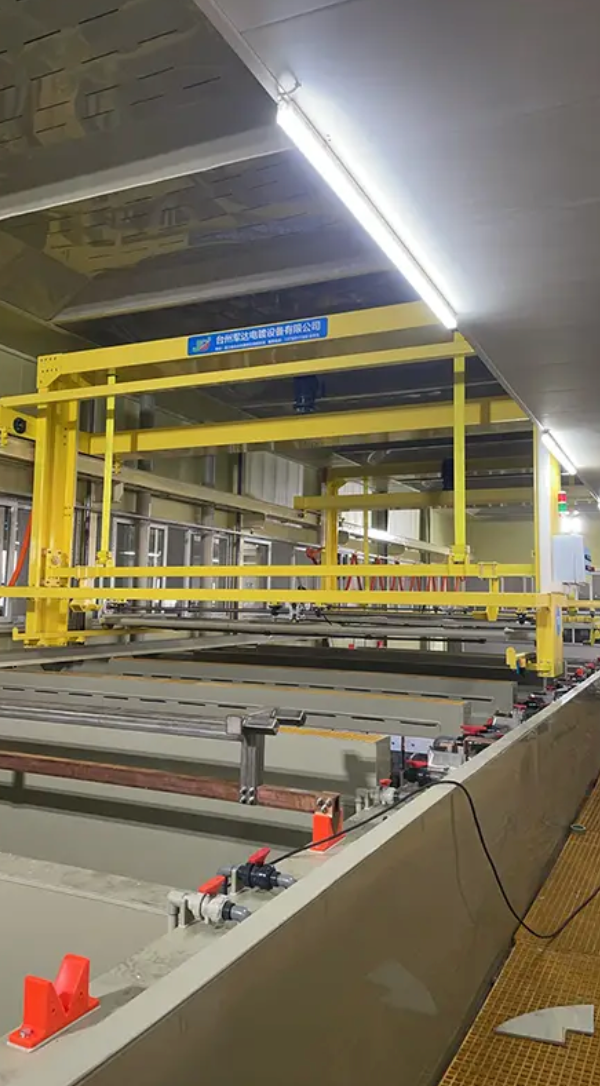
Lining failures are never sudden in the sense of being unpredictable. The final tear or crack may look abrupt on a shift report, but it almost always follows a long trail of measurable wear. Thermal cycling opens micro-fissures long before visible cracks spread, and abrasive or corrosive service gradually eats away at the liner's original thickness. When inspections record those small changes—whether it's a 2 mm loss at the feed end or hairline fractures around bolt holes—the eventual failure becomes a known point on a trend line rather than a random event.
What hides this progression is the gap between casual observation and consistent measurement. A liner that still holds material tends to be judged as healthy, even when local wear has shifted stress onto areas never designed to carry that load. Flaking at the edges, dulling of the surface, and changes in the sound during operation all provide early clues, but they only matter if someone logs them against baseline data. Without that discipline, each inspection simply confirms the liner is present, and the real condition drifts toward a rupture that feels sudden to the crew that inherits it.
The human side of failure is just as predictable. Shift handovers that omit small leaks, photos taken from too far away, and a natural reluctance to call for downtime all allow early damage to go unreported. A simple routine—thickness checks at fixed points, close-up images of high-wear zones, and clear thresholds for replacement—turns those vague worries into a scheduled repair. Sudden lining failures are rarely sudden in fact; they just become sudden when nobody has been watching the right signs.
Temperature Control Beyond the Thermostat
Most homes still rely on a single wall-mounted thermostat to judge comfort for every room, but that narrow view misses what actually drives temperature swings. Direct sunlight, drafts, appliance heat, and even the number of people in a space can shift the feel by several degrees without the central sensor ever noticing. A more practical approach treats the thermostat as one input among many.
Zoned dampers inside ductwork let you direct conditioned air only where it's needed, so a south-facing bedroom doesn't overheat while the basement stays cold. Wireless temperature sensors placed in rooms you actually use can average readings or follow occupancy, reducing the guesswork. Radiant floor systems and ductless mini-splits go further by heating or cooling zones independently at the source rather than forcing air through long, leaky runs.
Passive measures often outperform smarter gadgets. Sealing leaky windows, adding thermal curtains, or improving attic insulation stabilizes indoor temperatures before any system turns on. Even simple habits like closing doors to unused rooms or adjusting ceiling fan direction cut the load on heating and cooling equipment. When the thermostat becomes part of a broader strategy instead of the sole decision-maker, comfort stops being a number on a wall and becomes something you can actually feel in every corner.
Agitation Methods That Actually Prevent Hot Spots
Most hot spots form because heat enters a vessel unevenly, and without movement the warmer fluid simply sits at the edges while the center lags behind. A simple stir bar left spinning at moderate speed already changes that dynamic, but the real difference comes from pairing the right stir bar size with an offset placement—slightly off-center so the vortex tilts and pulls cooler liquid across the heated walls instead of just spinning the same warm core.
For thicker mixtures or small volumes, intermittent agitation often beats constant stirring. A few seconds of vigorous swirling every twenty to thirty seconds breaks up boundary layers that a weak continuous stir never touches. In closed systems, gentle inversion works surprisingly well because it forces the entire mass to travel through the temperature gradient, rather than letting a stable pocket of overheated liquid stay hidden near the heat source.
Filtration Is Not Just About Clarity
People often assume filtration exists solely to make liquid transparent, but that view misses the quieter work happening at a microscopic level. A filter can reshape how a beverage feels on the tongue, strip away compounds that trigger off-flavors days later, or even preserve delicate aromatics that would otherwise fade. The real goal isn't always a crystal-clear pour—it's a more stable, more expressive liquid that holds up over time.
Consider a cloudy apple juice that tastes bright on day one but turns muddy by day four. A well-chosen filtration step doesn't just remove suspended solids; it selectively pulls out the enzymes and polyphenols responsible for that gradual collapse. Meanwhile, the fruity esters and acids slip through untouched. That kind of selectivity separates thoughtful filtration from brute-force clarification, and it's why two equally clear liquids can behave completely differently in the glass.
There's also a textural dimension. Some filters shear large particles into finer ones, altering mouthfeel without changing visual clarity at all. Others strip too aggressively and leave a drink feeling hollow. The best filtration choices come from asking what you want to protect, not just what you want to remove. Clarity becomes a byproduct, not the finish line.
Automation Where It Matters Most
Automation earns its keep when it targets the repetitive, high-friction work that quietly drains hours every week. Instead of chasing every possible use case, the smartest teams look for bottlenecks in data entry, approval routing, inventory reconciliation, or customer follow-ups—places where delays and small mistakes pile up.
The real payoff shows up in returned time and fewer errors, not in the number of bots deployed. Rule-based, predictable processes benefit most, especially where exceptions are rare. That frees people to handle judgment calls, build relationships, and work through edge cases that software can't resolve.
FAQ
Ripple affects how evenly the oxide layer forms. Lower ripple, usually under 5%, gives a denser and more uniform coating, especially for hard anodizing. If the rectifier outputs high ripple, you might see burning or patchy dye absorption.
Start from the total electrical power going into the bath and assume most of it becomes heat. A practical rule is to allow roughly 1 ton of refrigeration per 3 to 4 kW of rectifier output, then add 20 to 30 percent headroom for hot weather or long runs. Oversizing cooling is cheaper than fighting temperature drift.
Without consistent agitation, temperature and acid concentration stratify near the parts. That leads to soft spots, uneven film thickness, and poor color repeatability. Air agitation is common, but eductor or pump-driven flow gives more predictable circulation for precision work.
Polypropylene or PVC are typical for the tank body, with welded seams and proper support. For higher-temperature hard anodizing, consider PVDF or a lined steel tank. Avoid materials with exposed metal fasteners since they become a corrosion and contamination source.
It depends on part mix and labor. Manual works for small batches or odd shapes, but automation pays off when you need repeatable dwell times, consistent transfer speed, and traceability. Many shops start manual and retrofit automation once throughput demands rise.
Weekly checks on bus bar connections, rectifier cooling fans, and agitation lines catch small issues before they shut down a line. Also monitor acid temperature and conductivity trends because a slow change often signals a failing chiller or contamination.
Cathodes need to match the part surface area and be positioned to give even current distribution. If they are too close or too small, you can get high current density areas that burn or produce excessively thick coating on edges.
For standard sulfuric anodizing, a conventional DC rectifier is fine. Pulse capability helps with hard anodizing or difficult alloys where you need to control heat and pitting. It is a cost-benefit call based on whether you regularly process those materials.
Conclusion
In anodizing, the rectifier often gets attention for its voltage and current output, but what really separates stable parts from scrap is ripple. Too much AC ripple generates excess heat at the interface, quietly burning coatings even when the numbers on the panel look fine. This is why checking ripple under load matters more than a spec sheet figure. Lining failures compound the problem because they rarely announce themselves; a pinhole can sit behind a tank wall, slowly eating into the steel while the bath chemistry drifts. By the time you see staining or erratic conductivity, the damage is already deep. Temperature control has to go beyond the thermostat reading, too. Bath temperature needs to be mapped across the entire tank, because readings from a single probe often miss stagnant zones where heat builds and coating quality drops.
Agitation is another place where good-looking numbers hide trouble. Air agitation may churn the surface, but it does little for the tight areas near rack contacts where hot spots start. Proper eductor or pump-driven flow keeps the acid moving past every profile, which is the real point. Filtration also tends to be judged by water clarity, yet dissolved aluminum and colloidal sludge are the bigger threat to pore structure and current distribution. Finally, automation earns its keep only when it targets the operations that drift the most—rectifier pulsing, temperature alarms, and transfer timing. Automating these prevents the slow drift that human operators often miss, especially on long weekend shifts.
Contact Us
Contact Person: hayyr
Email: [email protected]
Tel/WhatsApp: 8613082110525
Website: https://www.jundaelectroplating.com