

Best Carbon-Based Soil Conditioner for Thriving Plants and Rich Soil
2026-08-15
Struggling to keep your garden lush despite your best efforts? The missing link could be a carbon-based soil conditioner—a simple upgrade that transforms tired dirt into a living, breathing foundation for robust plants. Tundrr brings that next-level soil vitality within reach, and here's why it's turning heads among savvy growers.
The Carbon Factor Your Garden Soil Has Been Missing
Gardeners often chase nitrogen or phosphorus while the real limiting factor sits right under their boots. Carbon, in the form of decomposed plant matter and root exudates, is what gives soil its structure, its moisture-holding capacity, and its ability to feed the microbial life that plants depend on. Without a steady return of carbon, even well-fertilized beds slowly turn into compacted, lifeless dirt that needs more and more inputs to perform.
The fastest way to restore it isn't a single magic amendment but a habit: keep living roots in the ground as long as possible, chop and drop spent crops, and layer in woody mulches that break down slowly. Each of these feeds a different carbon pathway—some become stable humus, some fuel the fungal networks that shuttle nutrients to roots, and some simply open up space for air and water. Over a season or two, the change shows up as darker, crumbly soil that smells faintly sweet after rain.
You'll notice it most when the weather turns extreme. Carbon-rich soil holds more water during dry spells and drains better in heavy downpours, reducing the frantic cycle of rescue watering and replanting. Instead of treating soil like a sterile medium, think of carbon as the long-term investment that pays out in fewer pests, deeper roots, and a garden that mostly takes care of itself.
Why Carbon-Based Conditioners Outperform Ordinary Compost
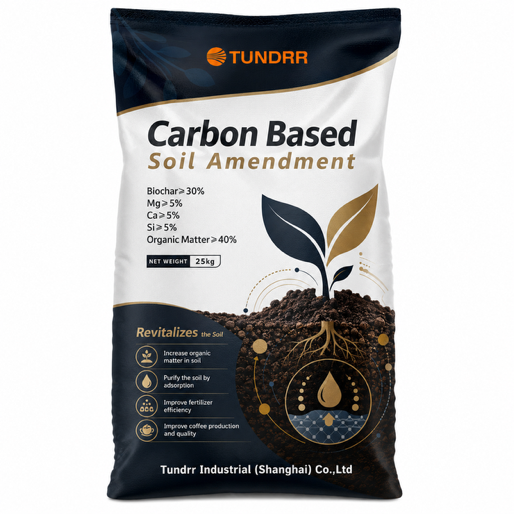
Ordinary compost breaks down fast, releasing its nutrients in a single flush that often washes past the root zone before plants can use them. Carbon-based conditioners work differently. Their stable, recalcitrant carbon structures act like a slow-release matrix, holding onto nitrogen, phosphorus, and micronutrients and metering them out as roots demand. That means fewer applications, less leaching, and a steadier supply of nutrition through the entire growing season.
There's also the matter of soil architecture. Compost adds organic matter, yes, but it shrinks in volume as it decomposes, leaving the soil to settle back and compaction to return. A carbon-based conditioner provides a more permanent framework—tiny, porous carbon particles that create air and water channels, improve drainage in clay, and boost water-holding capacity in sand. The result is a root environment that stays loose and breathable long after ordinary compost would have vanished.
Finally, consider the biological kick. Compost introduces microbes, but they feast on the compost itself, and populations crash when that food runs out. Carbon-based conditioners offer a long-term habitat for beneficial fungi and bacteria, supporting a resilient soil food web that cycles nutrients and suppresses pathogens. It's the difference between a quick sugar rush and a balanced, slow-burning fuel for your soil.
What Healthy Roots Really Need from Carbon-Rich Soil
Carbon-rich soil does more than hold moisture; it structures the underground environment so root tips can push through without wasting energy. Decomposed organic compounds bind mineral particles into crumbs and micro-aggregates, which creates a balance of large and small pores. Those pores are what allow oxygen to flow in and excess water to drain out, both of which roots need to avoid stress and disease.
The carbon fraction also feeds a dense network of bacteria, fungi, and protozoa that roots rely on for nutrients. As these organisms break down residues, they release nitrogen, phosphorus, and sulfur in forms root hairs can absorb. Some filamentous fungi even extend the root's reach, trading mineral nutrients for sugars that roots exude. That exchange works only when carbon is continually replenished, not just added once.
A steady supply of varied organic matter keeps the soil loose and biologically active. Without it, aggregates collapse, microbial activity drops, and roots grow shallow, brittle, and more vulnerable to drought. So healthy roots really need a living, carbon-cycling soil rather than a chemically corrected one.
A Closer Look at Carbon's Role in Soil Structure
Carbon is often discussed as the glue holding soil particles together, but the mechanics go deeper than simple binding. In healthy soil, carbon exists mostly as decomposed organic matter—humus—and living root exudates. These compounds coat mineral surfaces, changing how clay, silt, and sand interact. Instead of lying as separate grains, particles begin to cluster into micro-aggregates, then larger macro-aggregates. This hierarchy of structure is not random; it is driven by carbon’s electrochemical charge and its ability to form stable bonds with iron, aluminum, and calcium ions. Soils rich in this type of carbon resist slaking when wet and stay porous when dry, creating a resilient physical framework.
Beyond just gluing particles, carbon changes how water and air move through the profile. Well-structured soil with high carbon content develops a network of pores of varying sizes—large ones for drainage and gas exchange, small ones for holding plant-available water. This arrangement prevents both waterlogging and drought stress. And because roots can easily penetrate this crumbly structure, they deposit even more carbon through decay and exudation, reinforcing the cycle. Farmers and gardeners often notice this as soil becoming easier to work, less prone to crusting, and more forgiving after heavy rainfall or tillage.
But the relationship is not automatic; it depends on the type of carbon and the soil’s biology. Fresh plant residues break down quickly and provide only temporary aggregation. In contrast, carbon that has passed through microbial processing—becoming part of fungal hyphae, bacterial biofilms, or earthworm casts—forms longer-lasting structural units. This means the real driver of soil structure is not just carbon content on a lab report, but the living community that transforms dead plant material into stable, structural carbon. Without active roots and soil fauna, even carbon-rich inputs can fail to improve tilth. Understanding this nuance explains why no-till, cover cropping, and compost applications often outperform synthetic approaches that ignore the living carbon cycle.
Choosing a Carbon Soil Conditioner Without the Gimmicks
Ignore the flashy claims about carbon sequestration and focus on what you can actually measure. Ask for the total organic carbon percentage, the feedstock source, and the particle size range. A product that only lists biochar or activated carbon without specifying ash content, pH, or application rate per acre is hiding behind buzzwords. Real conditioners come with a lab sheet showing how many tonnes of stable carbon you are adding, not just a promise of healthier soil.
Look for evidence from independent field trials, not just greenhouse pots or lab incubations. A trustworthy supplier will share multi-year data from real farms with named crop, soil type, and control plots. If they cannot tell you how the product performed in a drought year or on clay versus sand, that is a red flag. Gimmicky products lean on vague testimonials and before/after photos; solid ones hand you yield numbers and soil carbon measurements you can verify.
Finally, do the math on cost per acre of stable carbon delivered, not per bag. A high-carbon product with a low application rate might be cheaper in the long run than a cheap compost loaded with labile carbon that vanishes in a season. Run a small strip trial on your own ground for a full season. Watch how soil structure, infiltration, and root growth change. If the only noticeable difference is the marketing story, you have your answer.
From Depleted Dirt to Lush Growth: The Carbon Connection
Depleted soil loses its structure and turns to dust, but carbon can reverse that. It starts when plant roots and residues break down, feeding microbes that glue mineral particles into crumbs. Those crumbs create pore spaces for air and water, which is exactly what roots need to push deeper. Without carbon, the whole system stalls. With it, the ground shifts from hardpan to something springy underfoot.
The connection shows up in the color too. Dark, humus-rich earth holds onto carbon as stable organic matter, and that darkness absorbs heat in spring. Worms and beetles follow the carbon, shredding dead leaves and pulling them underground. As they move, they open channels that let rainfall soak in instead of running off. This is how a lifeless patch gradually turns into a tangle of roots, fungi, and shoots.
What matters is the slow build. A single season won't fix decades of neglect, but each input of compost, cover crop, or mulch adds another layer of carbon that doesn't wash away. Over time, the soil's capacity to hold nutrients expands, and plants respond with stronger stems and deeper green. The carbon connection is not a quick fix; it's a steady repair that turns depleted dirt into ground that can grow almost anything.
FAQ
It's a mix rich in stable organic carbon—things like biochar, humic substances, or composted plant residues. Unlike quick fertilizers, it works on the soil itself, feeding microbes and improving structure so nutrients and water hang around longer.
By giving roots a better home. The carbon particles hold onto water and dissolved nutrients, then release them slowly as plants need them. It also creates more surface area for beneficial fungi and bacteria, which in turn break down minerals into forms roots can absorb.
It works in both. For pots, mix a small handful into the potting soil before planting—about 5 to 10 percent by volume. Raised beds can take a bit more, but always blend it evenly rather than dumping a layer on top.
Most soils do well with one application in spring and another in autumn. If you're working with very sandy or heavy clay ground, the first year might need a third round. After that, a yearly top-up is usually enough unless a soil test shows organic carbon is still dropping.
Not quite. Compost is partially decomposed and keeps breaking down fast, releasing a burst of nutrients and then fading. A carbon-based conditioner is more stable, so it stays in the soil for years, building long-term structure and microbial habitat rather than acting like a short-term meal.
It depends on the source. Some biochars have a high pH and can nudge acidic soils upward, while others are pH-neutral. Check the product label—if your soil is already alkaline, look for a conditioner made from woody material that's been washed or aged to lower its ash content.
Treating them like fertilizer and piling on too much. More is not better. A thin, well-mixed application does more than a thick layer left on the surface. Also, dry biochar can suck moisture from the soil at first, so dampen it or blend it with compost before working it in.
Conclusion
Most garden soils carry plenty of nitrogen and phosphorus, yet still fail to support strong plants because they lack a stable carbon framework. Unlike ordinary compost, which breaks down quickly and needs constant replenishment, a high-quality carbon-based soil conditioner persists in the root zone. It feeds the microbial life that mineralizes nutrients slowly, creating a steady supply rather than a short-lived surge. Healthy roots don't just need available food; they need open channels for air and water, and a physical matrix that resists compaction. Carbon-rich amendments bind clay particles into crumbs and hold sandy grains together, building the kind of crumbly, resilient structure that lets roots push deep without fighting the soil.
That structural shift is what turns depleted dirt into lush growth. Instead of chasing pH adjustments or dumping more fertilizer, you address the real bottleneck: the soil's ability to hold carbon. When selecting a product, ignore flashy labels about "instant green-up" or exotic ingredients you can't verify. Look for a conditioner with a high percentage of stable, recalcitrant carbon—biochar, humic substances, or properly aged woody material—and ask how it's processed. A good carbon amendment should feel granular and earthy, not dusty or wet. Over a season or two, you'll notice water soaking in instead of running off, roots reaching deeper, and plants that shrug off dry spells. That quiet resilience is the real sign you've chosen the best carbon-based soil conditioner for your garden.
Contact Us
Contact Person: Ellen Zhang
Email: [email protected]
Tel/WhatsApp: +86(21) 2287 6756
Website: https://www.tundrr.com/en/