

Bidirectional Power Modules Known for High Efficiency and Compact Design
2026-10-09
Power density used to be a trade-off: you could have efficiency or you could have compactness, but rarely both. Bidirectional power modules are rewriting that rule, and TPS has been quietly pushing the boundaries with designs that deliver high efficiency in a footprint that defies expectations. So what exactly goes into these modules—and why are they suddenly everywhere? This post breaks down the engineering, the benefits, and the future of bidirectional power.
When Power Flows Both Ways, Size Still Matters
Bidirectional energy systems have upended the old assumption that bigger always means better, but dismissing scale entirely would be a mistake. When electrons move in two directions—say, between a home battery and the grid, or from an electric vehicle back to a building—the physical footprint of the hardware shapes how smoothly that exchange happens. A compact inverter might handle modest trickles of power without breaking a sweat, yet push a serious reverse flow through it and thermal limits surface fast. That’s where size sneaks back into the conversation, not as raw bulk but as headroom for sustained bidirectional loads.
Consider the difference between a 5 kW and a 15 kW capable charger when both are asked to export for hours rather than minutes. The smaller unit may technically support bidirectional operation, but its cooling paths and component ratings were likely designed around shorter, lower-intensity bursts. Run it flat-out in reverse on a hot afternoon, and you’ll see derating, or worse, a protective shutdown. The larger unit, even if only partially loaded most of the time, holds its efficiency curve steadier because it’s not constantly bumping against its own ceiling. This isn’t about bragging rights; it’s about avoiding the hidden cost of replacing equipment that was sized for showroom specs but not real-world abuse.
There’s also a subtler point about voltage stability. In a neighborhood where several homes are pushing solar power back onto the same transformer, the impedance of that transformer and the gauge of the service wiring start to matter enormously. A system designed with a bit of extra copper and a slightly larger transformer will soak up reverse surges without letting local voltage drift out of spec. Shave those margins too thin, and you get flickering lights or inverter trips that no software update can fix. So yes, power now flows both ways—but the physical size of the pipes, not just the direction of the current, still decides whether the whole arrangement holds together when it matters most.
The Efficiency Puzzle Inside a Tiny Enclosure
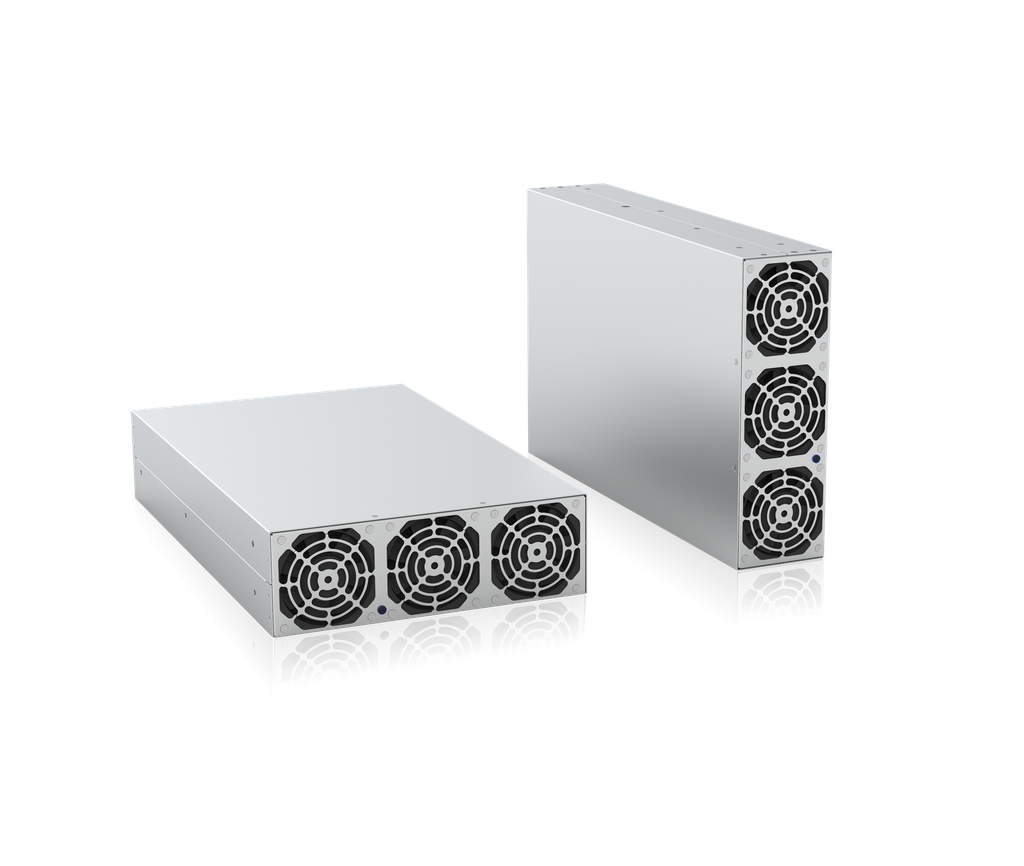
Cramming high performance into a few cubic centimeters forces every component to justify its existence. Without room for oversized heat sinks or redundant circuits, designers lean on clever geometry and materials that pull double duty. A single copper layer might carry current, shed heat, and stiffen the board, blurring lines between structure and function.
The real riddle isn't just fitting parts in; it's keeping them cool and fed with power while they run at full tilt. Ventilation paths shrink to narrow slits, and thermal mass drops to almost nothing, so tiny fluctuations become sharp spikes. Passive cooling turns into an art of surface finishing and emissivity tricks rather than brute-force airflow.
Then there's the assembly angle. Every millimeter saved on a connector or a mounting boss translates into more room for the actual working bits. Automated pick-and-place machines need enough clearance for their nozzles and cameras, so the layout becomes a negotiation between the ideal electrical path and what a robot can reliably build. Solve that, and the enclosure stops feeling like a constraint and starts acting like a focusing device.
Keeping Heat in Check Without Sacrificing Density
Packing more components into the same board area used to mean accepting higher temperatures as an unavoidable trade-off. That assumption no longer holds. By pairing copper-filled thermal vias with thin, high-conductivity dielectric layers, engineers can move heat away from hot spots without adding bulk. The key is to spread thermal energy laterally before it reaches the outer surface, which lets dense layouts keep their footprint while still meeting temperature limits.
Component placement matters just as much as material choice. Grouping high-power devices near board edges or dedicated cooling channels creates a predictable heat path, while low-power sections stay compact and untouched. Short, wide copper pours under BGA packages act as local heat spreaders, and selective use of metal-core substrates only where the thermal load is highest avoids the weight and cost of a full-board change.
The result is a design where thermal resistance drops without expanding the board outline or increasing layer count. Hot spots become less severe, and the margin between operating temperature and component limits widens. That margin is what allows higher processing power, longer lifetimes, or both, all within the same dense envelope. It is not about rejecting density; it is about managing heat as carefully as signal integrity.
What Compact Bidirectional Modules Actually Enable
In power conversion, the promise of a compact bidirectional module often gets reduced to a single spec: higher efficiency in a smaller footprint. But the real story is less about squeezing watts per cubic inch and more about what that density lets you do downstream. When you no longer need to leave room for bulky magnetics or separate charge and discharge paths, the architecture itself changes. Systems that once tolerated fixed energy flow because the hardware dictated it can now respond dynamically—pulling from a battery during a transient, pushing back during regeneration, or balancing multiple sources without a dedicated converter for each direction. That flexibility is the quiet payoff of a well-designed bidirectional stage.
Look closely at a compact bidirectional module and you will notice it rarely behaves like a simple voltage source in reverse. The control loops have to manage not just current direction but also the transition through zero, where small timing errors can turn into large voltage spikes. Good modules handle this by integrating the sensing and gate drive closely with the power stage, avoiding the delays that come from off-the-shelf controllers bolted onto a generic board. This is why some compact modules can switch direction in a few microseconds while others struggle with ringing and overshoot. The enabling capability is not just bidirectionality—it is bidirectionality that you can trust in real time, without external snubbers or complex sequencing logic.
Another underappreciated consequence is thermal behavior. In a unidirectional design, heat concentrates in one set of semiconductors and magnetics. In a bidirectional module, the same components carry current both ways, which means the thermal cycling evens out—if the design accounts for it. A compact module that fails to spread losses across both operating quadrants will age unevenly, even if the datasheet numbers look fine on a bench. The modules that actually deliver long-term value are those where the layout, the magnetic design, and the switching strategy are co-optimized for alternating power flow. That is what enables applications like vehicle-to-grid, energy storage with rapid charge-discharge cycling, and industrial drives that capture braking energy without a separate resistor bank.
Placement, Layout, and the Hidden Cost of Space
Square footage on a floor plan rarely matches square footage you actually live in. A sofa shoved against the wrong wall can turn a generous living room into a narrow hallway with cushions, while a desk placed to face a blank corner makes half the room feel off-limits. Placement is not just about where things fit; it decides whether a space invites you in or subtly pushes you toward the edges.
The hidden cost shows up in small, repeated motions. Walking three extra steps to reach a filing cabinet every time you need a folder. Squeezing past a bed to open a closet door. Clearing a dining table that blocks the kitchen entry. None of these feel like a major expense, but over months they eat time, patience, and the sense that a room is working for you. The real price of poor layout is not rent or mortgage interest—it is the daily friction of using the space below its potential.
Better placement often costs nothing at all. Pulling furniture away from walls, creating clear paths between the door and the window, or grouping items by the point of use can unlock square footage you already own. The goal is not to fill every corner but to make the space between objects feel intentional. When each zone has a reason to exist, the hidden cost disappears and the room starts earning its keep.
Design Levers That Push Performance Further
A well-chosen design lever acts like a quiet multiplier—something that looks ordinary on paper but shifts the entire feel of a product once pulled. The most effective ones aren't about adding more horsepower; they're about removing friction in places users rarely notice. Think of how a simple change in data fetching order can make a page feel twice as fast without touching a single line of backend code. That's the kind of leverage worth chasing.
The trick is to stop optimizing in isolation. A caching strategy that ignores how users actually navigate will underperform no matter how clever the invalidation logic is. Instead, pair technical choices with behavioral patterns. For instance, if most visits land on a dashboard, preloading that view's critical assets during the previous interaction creates a seamless transition. It's not about doing more work—it's about doing the right work at the moment it matters most.
Real performance gains often hide in the seams between systems. Adjusting how a front-end batches requests can lower server load more effectively than doubling infrastructure. Similarly, rethinking the order of render-blocking resources might cut perceived latency in half. These levers rarely show up in a standard checklist, but once found, they become the quiet advantage that separates a product that merely works from one that feels effortless.
FAQ
They allow energy to flow both ways, enabling regenerative braking and battery storage systems to capture and reuse power that would otherwise be wasted.
Advanced semiconductor switches and optimized control algorithms reduce conduction and switching losses, so efficiency stays high regardless of which way the power flows.
Smaller footprints free up board space in dense equipment like EV chargers and solar inverters, making it easier to add functionality without enlarging the enclosure.
Yes, many integrate gate drivers, protection circuits, and current sensing inside the package, so designers avoid extra parts and simplify the power stage layout.
High power density can create hot spots, so manufacturers often use ceramic substrates and advanced die-attach materials to spread heat quickly and keep junction temperatures within safe limits.
They are especially valuable in battery energy storage, vehicle-to-grid systems, uninterruptible power supplies, and DC microgrids where space is limited and round-trip efficiency directly impacts operating costs.
Higher switching frequencies shrink the magnetic components, which reduces overall module size, but designers must balance this against increased switching losses and potential electromagnetic interference.
Key specs include on-resistance, reverse recovery charge, thermal resistance, integrated protection features, and the ability to maintain efficiency across a wide operating range.
Conclusion
Bidirectional power modules have matured to the point where high efficiency no longer demands bulky thermal hardware. When current can reverse, the converter still has to handle identical loss mechanisms in either direction, so shrinking the board footprint forces harder choices about topology and component placement. The real challenge is not cramming more silicon into a small box but managing the heat that dense layout generates. Modern designs lean on integrated magnetics, lower parasitic packaging, and novel control schemes that reduce conduction and switching losses at both ends. The result is a module that fits into spaces previously reserved for unidirectional converters, yet still maintains flat efficiency curves across charge and discharge modes.
That compactness unlocks practical benefits beyond the datasheet. Systems like vehicle-to-grid chargers, battery backup units, and portable energy storage become simpler to lay out and cheaper to assemble because the power stage occupies less area and requires less copper routing. But space has a hidden cost: tighter spacing between high-current traces and gate-drive loops can create crosstalk or localized hot spots if not accounted for early. Designers who treat placement as an active variable rather than an afterthought can push switching frequency higher, shrink passives, and still keep junction temperatures within limits. Each design lever—semiconductor choice, gate resistor tuning, thermal via patterns, or minor changes in board stack-up—adds a little more margin. Collectively, they let a small bidirectional module behave like a much larger one, without giving away the density advantage that made it attractive in the first place.
Contact Us
Contact Person: Lily
Email: [email protected]
Tel/WhatsApp: +49 (0) 2161 49526-0
Website: https://tps-elektronik.com/en/