

Bulk Residential Energy Storage Battery: Your Essential Guide to Home Backup Power and Cost Savings
2026-10-30
When a blackout hits or your utility bill spikes, a bulk residential energy storage battery shifts from “nice-to-have” to the backbone of your home’s energy plan. This guide skips the sales pitch and shows how UNC systems deliver real home backup power and long-term cost savings without the usual hype. If you’ve been wondering whether a home battery can truly pay for itself, you’re about to get straight answers.
Why Bulk Residential Batteries Are Cheaper Than You Think
Most homeowners assume buying batteries in bulk only makes sense for contractors or off-grid enthusiasts. The reality is that group purchases, direct-from-manufacturer programs, and community buying clubs have quietly shifted the math. When you skip the single-unit retail markup and share logistics costs with a dozen neighbors, the per-kilowatt-hour price drops far below what any big-box store advertises. You are not sacrificing quality either—many of these bulk channels move the exact same cells and enclosures as premium brands, just without the glossy packaging and middlemen.
Another overlooked factor is that residential energy storage is no longer a luxury add-on for solar arrays. Utilities facing grid strain now offer rebates for aggregated home batteries, effectively paying you to join a virtual power plant. Those incentives stack with existing tax credits, and when combined with a bulk purchase discount, the effective cost can fall by half or more. A 10 kWh pack that would cost $8,000 at retail might land near $4,200 in a coordinated buy, even before local grants.
Warranty fears often hold people back, but bulk buyers typically negotiate longer coverage terms because they represent a larger order volume. Installers who participate in group programs also trim their labor rates when they can schedule multiple homes in the same neighborhood on one trip. All of this means the biggest barrier is not price—it is simply knowing how to find and organize a bulk purchase in your area.
Stop Guessing: How to Size Your Home Backup Power Correctly
Most people buy a generator or battery based on square footage or a rough guess, then end up either tripping breakers or paying for capacity they never use. A better starting point is to list the actual devices you need during an outage—refrigerator, furnace blower, a few lights, internet gear—and check each one's running wattage, not the startup surge. Add those numbers together, then add about 20% for inverter losses and small loads you forgot.
The bigger mistake is ignoring surge wattage on motors. A refrigerator that runs at 200 watts can briefly pull 600 to 800 when the compressor kicks on, and a well pump can double or triple its running draw. If your backup unit can't handle that spike, it will shut down right when you need it. Look for the "starting watts" or locked-rotor amps on the nameplate, and make sure the unit's peak rating covers the highest single surge plus everything else already running.
Finally, think in watt-hours if you're using a battery, not just watts. A 3,000-watt inverter means little if the battery behind it only stores 1,500 watt-hours—that's half an hour of full output. Decide how many hours you realistically need to bridge, multiply your average continuous load by that time, and then derate the battery by temperature and age. If the math doesn't match your budget, trim the load list instead of fudging the numbers.
The Payback Period Nobody Talks About (And How to Calculate Yours)
Most people think of payback periods in strict financial terms—how long until an investment returns its initial cash outlay. But there's another kind of payback that rarely gets measured: the time it takes for a new skill, habit, or relationship to start giving back more than it costs you in energy, focus, and missed alternatives.
To calculate yours, start by listing the true upfront investment. This includes not just money but the hours of awkward practice, the frustrating early attempts, and the social invitations you decline. Then note the first moment you experience a concrete win—a task that used to take three hours now takes one, a conversation that flows without forced effort, or a small project that lands because of your new capability. Subtract the start date from that first tangible return, and you have your personal payback period.
The trick is to recognize that some payback periods are deliberately long. Building a reputation or mastering a craft rarely pays back in weeks. If you only chase short cycles, you'll keep cycling through surface-level efforts. Instead, pick one or two long-horizon investments, track your honest costs, and watch for the inflection point where the balance flips from drain to asset.
Battery Warranties Decoded: What Actually Shortens Lifespan
Most battery warranties peg replacement to a fixed cycle count, but that number rarely captures what actually degrades a pack. Heat is the silent killer: a lithium-ion cell stored at 40°C (104°F) loses capacity nearly twice as fast as one kept at 25°C, even if both are never used. Parking in direct sunlight or leaving a laptop plugged in overnight can do more damage than a full day of normal cycling.
Depth of discharge plays an oversized role. Routinely draining a battery below 20% and then recharging to 100% stresses the electrodes far more than partial top-ups between 30% and 80%. Fast charging compounds the problem by raising internal temperature and accelerating the growth of resistive films inside the cell. That's why two users with identical cycle counts can see wildly different health readings after a year.
Warranty clauses often ignore these realities. Many exclude capacity fade unless it drops below 80% within a short window, and they rarely cover degradation from high ambient temperatures or using third-party chargers. Time itself is unavoidable: even an unused battery will lose about 5% capacity per year simply due to calendar aging, faster if stored at full charge.
Grid-Tied or Off-Grid? A Practical Decision Guide for Homeowners
Before you start comparing panel prices, take a hard look at your monthly electric bill and your utility’s rules for buying back excess power. In many places, grid-tied systems still make the most financial sense because you can send surplus energy to the grid during sunny hours and draw from it at night. But if your utility has low or zero net metering, or if you face frequent outages, the math shifts quickly.
Going off-grid isn’t just about adding batteries. You’ll need to size a battery bank for your worst stretch of cloudy days, not your average usage, and you’ll probably want a backup generator for winter. That extra equipment adds significant upfront cost and ongoing maintenance. Plus, your household habits may need to change—running the dryer, charging an EV, or using air conditioning during a heat wave can drain a battery faster than most people expect.
A practical middle path is a hybrid system with battery backup. You stay connected to the grid for normal use but keep a few critical circuits powered when the grid goes down. This avoids the full cost and lifestyle compromise of going completely off-grid while still giving you some independence. The real decision usually comes down to three things: how reliable your grid is, what your utility pays for your excess solar, and how much you’re willing to spend for peace of mind.
Save More by Pairing Storage with Solar and Smart Rate Plans
Pairing a home battery with your solar panels opens up a smarter way to manage electricity costs. Instead of sending excess solar energy back to the grid for minimal credit, you can store it and use it during peak-rate hours when utility prices spike. This shifts your consumption away from expensive time windows, turning your solar setup into a round-the-clock money saver.
Smart rate plans, like time-of-use tariffs, charge different prices depending on the time of day. By programming your battery to charge when rates are low—often overnight or midday when solar production is high—and discharge when rates climb, you avoid drawing expensive grid power. Over a year, this combination can cut utility bills far more than solar alone, especially in regions with steep evening peak rates.
FAQ
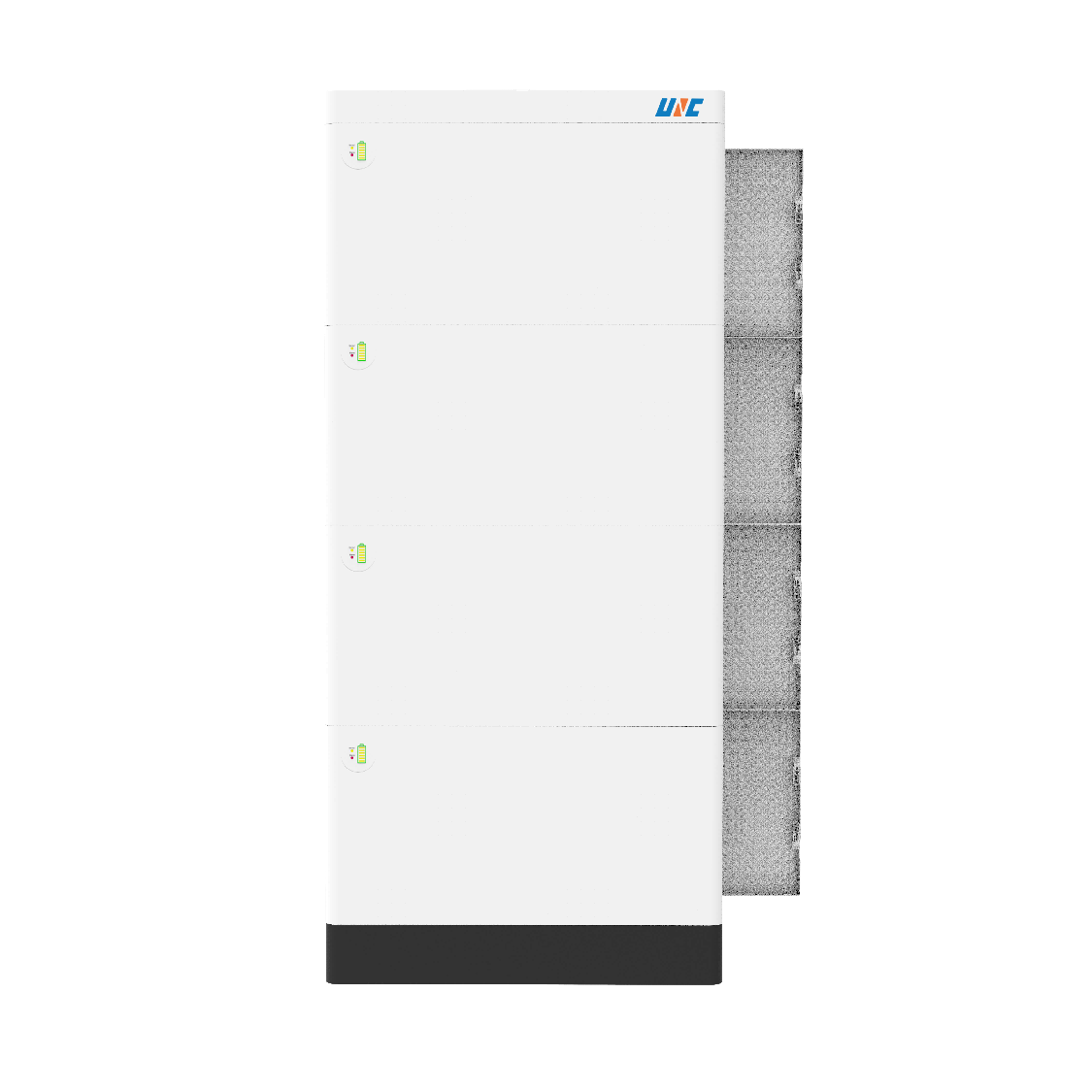
Most people expect just more kilowatt-hours, but the real shift is in how the system is wired and controlled. A single battery typically runs at a lower voltage and communicates directly with one inverter. A bulk bank often requires a higher-voltage DC bus, a dedicated battery management system that balances many modules, and a more robust inverter that can handle larger charge and discharge currents without clipping. You also start thinking in terms of stackable racks and dedicated power rooms rather than a wall-mounted box.
Start with your actual time-of-use rates, not the flat average. Look at the difference between your highest and lowest price periods, then estimate how many kilowatt-hours you can shift from peak to off-peak each day. Multiply that daily shifted energy by the price spread and by the number of days you expect to cycle the battery. Subtract round-trip efficiency losses of about 5 to 10 percent. If the annual savings don't cover at least a tenth of the installed cost, the payback may be too long to justify unless backup resilience is worth a lot to you personally.
Usually not without trouble. Even modules from the same manufacturer but different production years can have different internal resistance and capacity fade. If you connect them in series or parallel, the system will constantly derate to the weakest module, and balancing becomes a daily annoyance. Some high-end systems allow mixing through separate DC-DC converters per module, but that adds cost and complexity. For a bulk bank, it is almost always cheaper and safer to buy matching modules at the same time or add a completely separate second bank later.
Weight and floor loading are the big ones. A 30 kilowatt-hour stack can weigh over 700 pounds, and many garages or basements are not rated for that concentrated load. You also need adequate clearance for heat dissipation, a smoke detector tied to your home alarm, and sometimes a bollard or barrier if the rack is near a vehicle bay. Some local codes require a dedicated circuit and a disconnect switch within sight of the battery. Check the fire code for maximum stored energy allowed in a residential structure before you buy.
For most homes, yes, but not for the reason people assume. LFP wins because it tolerates thousands of full cycles and does not need cobalt, so prices have dropped below most nickel-based alternatives. However, if you live in a very cold climate and the battery must sit in an unheated shed, a nickel-manganese-cobalt cell can perform better at minus 20 Celsius, though it carries a higher fire risk. Flow batteries are technically viable for homes but remain too bulky and expensive for anything under 40 kilowatt-hours. So LFP is the default, not the only option.
A good LFP bank should retain 70 to 80 percent of its original capacity after ten years of daily cycling. That assumes you keep the cells between about 20 and 80 percent state of charge for most of the year and never let them sit fully charged in high heat. If you only cycle during outages, the calendar life may dominate and you could see 12 to 15 years before noticeable fade. The inverter and battery management electronics will likely need replacement before the cells themselves.
Your system should have a programmable reserve or backup threshold. Once the battery falls to that level, it stops powering nonessential loads and keeps only critical circuits like refrigeration, medical equipment, or a well pump. If the solar array still cannot meet that reduced demand, the system will eventually shut down to protect the battery from over-discharge. When the grid returns, it will recharge from both solar and grid power, depending on your settings. Many people also keep a small generator inlet as a third fallback.
Most insurers will cover a professionally installed battery under the existing dwelling policy, but you must notify them and often provide proof of a licensed electrician's sign-off. Some companies add a rider if the system is over a certain size, typically 20 kilowatt-hours, or if it is mounted on a wall rather than the floor. Ask about liability coverage if the battery damages a neighbor's property during a fire. In a few states, utilities require an additional interconnection agreement even for battery-only systems with no solar export.
Conclusion
Many homeowners assume a bulk residential energy storage battery is a luxury, but the math tells a different story. Buying larger or multiple units often lowers the cost per kilowatt-hour, and when you stop guessing on capacity, you avoid overspending on power you'll never use. Start by listing the essential loads you want to run during an outage—refrigerator, lights, medical equipment, maybe a well pump—and match the battery's continuous output and total energy to those needs, not to your entire house. A common mistake is sizing for peak demand instead of actual daily consumption, which inflates the upfront cost. The payback period also gets ignored too often. It's not just about the sticker price; you need to factor in avoided electricity costs, time-of-use savings, and any demand-charge reductions. For most homes, the real break-even point lands somewhere between six and ten years, but only if the battery is cycled regularly. Warranties matter here because depth of discharge, temperature swings, and frequent full cycles quietly shorten lifespan. A ten-year warranty means little if the fine print excludes daily cycling or requires a specific operating temperature band.
Choosing between grid-tied and off-grid is another practical fork in the road. Grid-tied systems let you keep the utility as a backup and typically cost less because you don't need oversized inverters or generator support. Off-grid setups demand more battery capacity and a reliable backup source, but they make sense for remote properties or areas with frequent, prolonged outages. The real savings, though, come from pairing storage with solar and smart rate plans. When your battery can charge from excess solar during the day and discharge during peak evening rates, the utility bill drops noticeably. Some homeowners even use the battery to sell power back to the grid during high-demand windows, turning a passive asset into a small income stream. The key is to run the numbers with your actual usage data, not a generic online estimate. A well-sized bulk purchase, paired with the right inverter and a realistic understanding of warranty limits, turns a backup power box into a long-term cost-cutting tool. That combination—affordability, honest sizing, and rate arbitrage—is what most guides leave out.
Contact Us
Contact Person: Manager Leng
Email: [email protected]
Tel/WhatsApp: 8613764878967
Website: https://www.unc-energy.com