

Cabinet-type Static Var Generator Suppliers from China: Top 10 You Should Know
2026-10-10
China’s cabinet-type static var generator market is crowded, but not every supplier earns a spot on a buyer’s shortlist. Whether you’re upgrading power factor correction or tackling harmonics, getting the right vendor matters more than the spec sheet alone. In this guide, we’ve filtered through the noise to highlight ten names you should know—including GEYA, a supplier that has quietly built a reputation for dependable cabinet-type SVG units without the inflated price tag. Read on to see who else made the cut and why they stand out.
Inside the Cabinet: How SVG Modules Handle Rapid Reactive Load Changes
The cabinet is where the real work happens. Each SVG module tracks voltage and current on the bus at sampling rates far beyond what a traditional capacitor bank can manage. The IGBT-based inverter inside doesn't wait for a control room command; it senses a sag or swell in reactive demand and adjusts its output within a handful of milliseconds. That kind of speed turns what used to be a slow, stepped correction into something closer to continuous compensation.
When a large motor starts or an arc furnace swings from idle to full load, the reactive current can spike and collapse in the span of a few cycles. Mechanical contactors simply can't keep up, but the SVG module's switching devices reroute energy almost instantly. The internal DC bus stays charged, so there's no delay waiting for a capacitor to discharge or a relay to close. Commands from the local controller recalculate the required reactive current dozens of times per second, and the power stage follows without hunting or overshooting.
Because the modules sit side by side in the same cabinet, thermal and harmonic interactions are managed at close range. Each unit runs its own current loop but coordinates through a shared communication bus, so if one module reaches its limit, neighbors pick up the slack. The result is a reactive power response that tracks load changes smoothly, keeping the power factor near target even when the downstream process is anything but steady.
Matching Voltage Sag and Flicker Control to Your Facility's Real Needs
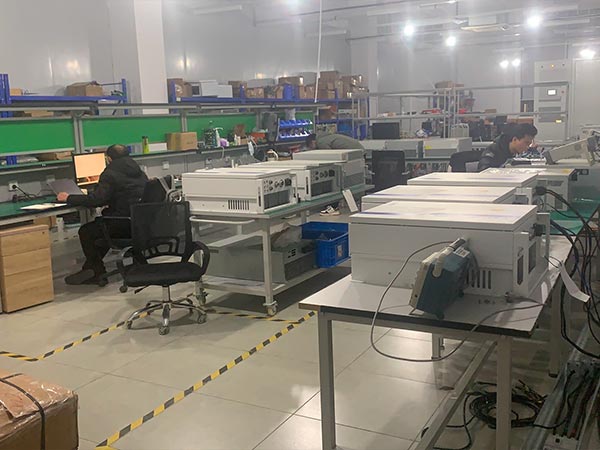
Voltage sags and flicker aren't one-size-fits-all problems, yet many facilities still reach for generic fixes that overcorrect or underdeliver. The first step is to stop treating these power quality events as isolated electrical quirks and start viewing them through the lens of your actual operations. Which processes halt during a sag? How often does flicker annoy occupants or disrupt sensitive equipment? Answering those questions reveals whether you need ride-through for milliseconds or voltage regulation for seconds—and whether a simple capacitor bank will do or a dynamic voltage restorer is justified.
A practical way to narrow the options is to map your equipment's immunity to the local supply's sag profile. If your facility mostly sees shallow, short-duration dips, a well-tuned static transfer switch or even an improved grounding scheme might be enough. But if deep, long sags or repetitive flicker from nearby arc furnaces or motor starts are part of daily life, you need active conditioning—something that injects or absorbs real power in real time. Matching the solution to the measured disturbance, not the worst-case scenario you imagine, often cuts both capital cost and energy losses.
Don't forget that your facility's needs change over time. A production line that once tolerated a 30% sag may now have PLCs and VFDs that trip at 15%. Similarly, adding LED lighting or high-efficiency motors can shift flicker sensitivity in unexpected ways. Regular power quality logging—even for just a week each quarter—gives you the data to re-evaluate whether your controls still match reality. The goal isn't to eliminate every possible disturbance, but to spend only what's needed to keep your specific operations running smoothly, without buying insurance against events that never happen.
When Standard Ratings Fall Short: Custom Voltage and Capacity Considerations
Standard off-the-shelf battery packs rarely account for devices that draw sharp current spikes or operate in sub-zero temperatures. A nominal 3.7V lithium-ion cell, for instance, might sag below the brownout threshold of a GPS tracker when transmitting at 2A in cold weather. That’s when engineers realize the printed voltage rating on a datasheet is just a starting point, not a promise.
Custom voltage often means reconfiguring cell arrangements rather than inventing new chemistry. Two 18650 cells in series give you 7.4V nominal, but adding a buck-boost converter with a programmable cut-off can hold 5V steady even as the pack drains. The trick is matching the protection circuit’s hysteresis to the load profile—too wide a window and the device may reset; too narrow and you waste capacity.
Capacity customisation is less about squeezing in more milliamp-hours and more about distributing them where they matter. A medical monitor that runs a heater for 30 seconds every hour needs a cell with low internal resistance for pulse delivery, while a remote sensor that sleeps for days benefits from a chemistry with near-zero self-discharge. Working directly with a pack assembler to tune electrode thickness or tab welding pressure can yield a 10–15% usable capacity gain without changing the physical footprint.
Comparing Build Quality and Component Sourcing Among Chinese Manufacturers
When you put two devices from different Chinese factories side by side, the differences in build quality often tell a story that spec sheets never will. Some manufacturers chase tight tolerances with CNC-machined aluminum frames and reinforced stress points, while others cut costs with softer plastic blends that flex under pressure. The sourcing of internal components matters just as much: a factory that pulls capacitors from established Japanese suppliers and batteries from top-tier Korean cell makers tends to produce hardware that outlasts the budget alternatives. Yet this information rarely appears on a product listing, so buyers have to dig into teardown reports and long-term reviews to see who actually used quality parts.
There is also a quiet hierarchy among production hubs. Certain cities in Guangdong have spent two decades building supply chains around precision connectors and display panels, giving local factories easier access to reliable components at competitive prices. Others rely on generic parts markets where batch-to-batch consistency can drift. Smart sourcing isn't just about picking the cheapest option; it's about maintaining relationships with component vendors who treat rejects as a real problem. Factories that audit incoming materials and quarantine defective lots usually produce fewer units with premature button failures, screen delamination, or battery swelling.
For anyone evaluating manufacturers, the key is to ask for a bill of materials breakdown and, if possible, visit the assembly floor unannounced. Look at how they store sensitive parts, whether soldering stations are calibrated, and what happens to units that fail stress tests. A factory that takes pride in its sourcing and build process will often show you the reject bin without being asked. That transparency, more than any marketing claim, separates a manufacturer invested in long-term reliability from one just pushing volume out the door.
After the Sale: Training, Remote Diagnostics, and Spare Parts Availability
Once the equipment lands on your floor, the real work begins. We stick around to make sure your team actually knows how to run it—not just from a manual, but through hands-on sessions tailored to how your operators work, what shifts they run, and which mistakes are most likely to happen in the first month. That kind of practical training keeps downtime from becoming a learning curve you pay for twice.
When something goes wrong, you shouldn't have to wait for a technician to drive three hours just to read an error code. Our remote diagnostics tap into the machine's control system from anywhere, often flagging a worn belt or a misaligned sensor before it turns into a full stop. If a site visit is needed, the technician arrives already knowing which parts to bring.
Spare parts aren't an afterthought here. We keep a regional stock of the components that actually wear out—not just the expensive ones, but the small gaskets, filters, and fuses that stall production. If a part isn't in your local warehouse, we ship from the nearest hub the same day, because a machine that's waiting on a two-dollar seal is just as idle as one missing a motor.
Real-World Installations Where Cabinet-Type SVGs Reduced Penalties and Downtime
At a mid-sized automotive parts stamping plant in Ohio, frequent voltage dips from nearby arc furnaces were tripping CNC presses and servo drives, causing several hours of unplanned downtime each month. The utility's penalty for low power factor was also adding roughly $18,000 per year. After installing a 600 kVAR cabinet-type SVG in the main switchgear room, the system's response time of under 15 ms kept line voltage stable during external faults. Power factor held above 0.98, eliminating the penalty, and press faults dropped to near zero over the following six months.
A municipal water treatment facility in the Southwest faced a different challenge: large variable frequency drives on raw water pumps were injecting harmonic currents back into the feeder, leading to overheating of backup transformers and occasional nuisance tripping of protection relays. The facility installed two 300 kVAR cabinet-type SVGs near the pump house. Besides filtering the dominant 5th and 7th harmonics, the SVG's reactive compensation reduced peak demand charges and ended the utility's monthly power factor penalty. The backup transformer temperature dropped by 12°C, and relay trips stopped entirely.
In a textile weaving mill in North Carolina, rapid load swings from dozens of looms caused noticeable voltage flicker, which not only triggered a utility flicker penalty but also produced visible variations in thread tension. A compact cabinet-type SVG rated at 450 kVAR was placed adjacent to the mill's main distribution board. Within a week, flicker measurements fell below the utility's limit, the penalty was removed, and the mill reported a 3% reduction in cloth defects attributed to tension inconsistencies.
FAQ
A cabinet-type SVG is a self-contained reactive power compensation unit housed in a standard electrical cabinet. Unlike traditional capacitor banks, it uses power electronics to inject leading or lagging current almost instantly, which makes it much better at handling fluctuating loads like welding machines or cranes. You get smoother voltage regulation and no risk of resonance with the grid.
It comes down to scale and specialization. Chinese manufacturers have invested heavily in IGBT-based power electronics over the last decade, so they can produce reliable units at price points that are hard to beat. Many of them also offer flexible customization, such as different voltage levels or outdoor enclosures, without the long lead times you’d see from some European brands.
Names that regularly come up include Sieyuan Electric, Rongxin Power Electronic, TBEA, and several Hangzhou or Wuxi based specialists. It’s worth noting that rankings shift with project volume, but these companies have solid track records in both utility and industrial applications.
Pay close attention to the rated reactive power in kvar, the response time, the harmonic filtering capability, and the physical dimensions of the cabinet. Also check whether the unit supports parallel operation and what kind of cooling system it uses—forced air is common, but for dusty sites you might need a more robust design.
Most top Chinese SVG suppliers now have dedicated export teams that can do remote commissioning via video or send engineers on site. They usually provide wiring diagrams, parameter setting guides, and sometimes a cloud-based monitoring portal. The key is to clarify in the contract who covers travel costs and how software updates will be delivered.
One frequent issue is underestimating the local grid conditions. A unit that works perfectly in a Chinese factory might struggle with a weak or heavily distorted grid elsewhere, so you should share actual power quality data before ordering. Another pitfall is ignoring the cabinet’s IP rating—if it will be installed near moisture or dust, specify a higher protection level from the start.
Pricing usually scales with kvar capacity and voltage class, but you’ll often see a base price for the power module plus extra for features like a built-in detuned reactor, larger touchscreen, or weatherproof cabinet. Many suppliers quote FOB or CIF, so make sure you know what’s included in terms of packaging, documentation, and spare parts.
Conclusion
Cabinet-type static var generators (SVGs) from leading Chinese suppliers are built around fast-responding power modules that handle rapid reactive load changes without the delays common in older capacitor banks. Inside the cabinet, IGBT-based switching and modular control boards let a single unit track millisecond-level fluctuations, which matters most in facilities with frequent motor starts, welding lines, or crane operations. Rather than simply quoting a fixed kvar rating, the better vendors first match voltage sag and flicker control to the actual load profile—checking how often dips occur, how deep they go, and whether existing transformers already add impedance. This sizing approach prevents overspending on oversized cabinets or undersizing that leaves flicker complaints unresolved. When standard 400V or 690V ratings fall short, several Chinese manufacturers offer custom voltage taps, higher overload capacity, and non-standard enclosure dimensions to fit switchgear rooms with limited floor space.
Build quality varies noticeably across the top ten suppliers, so buyers should compare not just the brand of capacitors and reactors but also the source of IGBT modules, busbar plating, and cooling fan redundancy. Some factories use imported power semiconductors alongside domestic control software, while others mix lower-cost components that can degrade faster in hot or dusty environments. After-sale support is another dividing line: the strongest suppliers provide remote diagnostics, on-site commissioning, and stocked spare parts in regional warehouses, reducing the risk of long downtime. Real-world installations show cabinet-type SVGs cutting reactive power penalties by 20–40% and preventing production stoppages caused by voltage flicker on shared feeders. In most cases, the payback comes not only from utility bill savings but from avoiding nuisance tripping of sensitive drives and PLCs.
Contact Us
Contact Person: Leo
Email: [email protected]
Tel/WhatsApp: +86-13567770207
Website: https://www.geyapower.com/