

China Food Grade Oil-Free Air Compressor Selection Guide for Safe Food Production
2026-08-15
Compressed air touches nearly every stage of food production—from pneumatic conveying and mixing to filling and packaging. If the air isn’t oil-free and food-grade, you’re not just risking product spoilage; you’re risking audits, recalls, and consumer trust. In China’s tightening food safety landscape, selecting the right oil-free air compressor has moved from a purchase decision to a critical control point. This guide breaks down what actually matters: air purity standards like ISO 8573-1 Class 0, material compatibility, energy costs, and maintenance realities in humid and high-demand environments. Whether you’re expanding a production line or replacing an aging unit, you’ll find practical, no-fluff criteria to make a confident choice. And when you compare systems, Seize Air brings oil-free compressor technology engineered specifically for safe, uninterrupted food manufacturing.
What Counts as Food-Grade Air Under Chinese Rules
China does not issue a standalone “food-grade air” certificate or standard, so the definition is built from overlapping food safety and compressed air rules. The foundational document is GB 14881-2013, the national food safety standard for general hygienic practices, which requires that any air contacting food or food-contact surfaces must be free of contaminants that could affect product safety. This forces processors to treat compressed air as an ingredient, not just a utility, and to document its purity just as they would for water or additives.
For compressed air in direct contact with food, the most common compliance benchmark is the particle-water-oil classification in ISO 8573-1, adopted in China through GB/T 13277.1. Many plants use purity class 2:2:1 as a practical floor: particles limited to 400,000 per cubic metre in the 0.1–0.5 micron size range with tighter caps for larger particles, a pressure dew point no higher than -40°C, and total oil content below 0.01 mg/m³. Because that standard does not set a microbial limit, high-risk operations add point-of-use sterile filters, typically rated at 0.01 micron, and validate them through routine microbiological swabs or air sampling.
Where air is used in open processing or clean filling zones, facility design standards such as GB 50073-2013 often come into play. Dairy, beverage, and ready-to-eat lines may require an ISO 8 cleanroom environment at minimum, with compressed air terminations filtered to produce air that is dry enough to discourage mould growth, clean enough to avoid visible or measurable particle contamination, and oil-free enough to pass both sensory panels and chemical residue tests. In practice, what counts as food-grade air is a risk-based judgment tied to the product and process, not a fixed label on a specification sheet.
Common Oil Entry Points in Standard Compressors
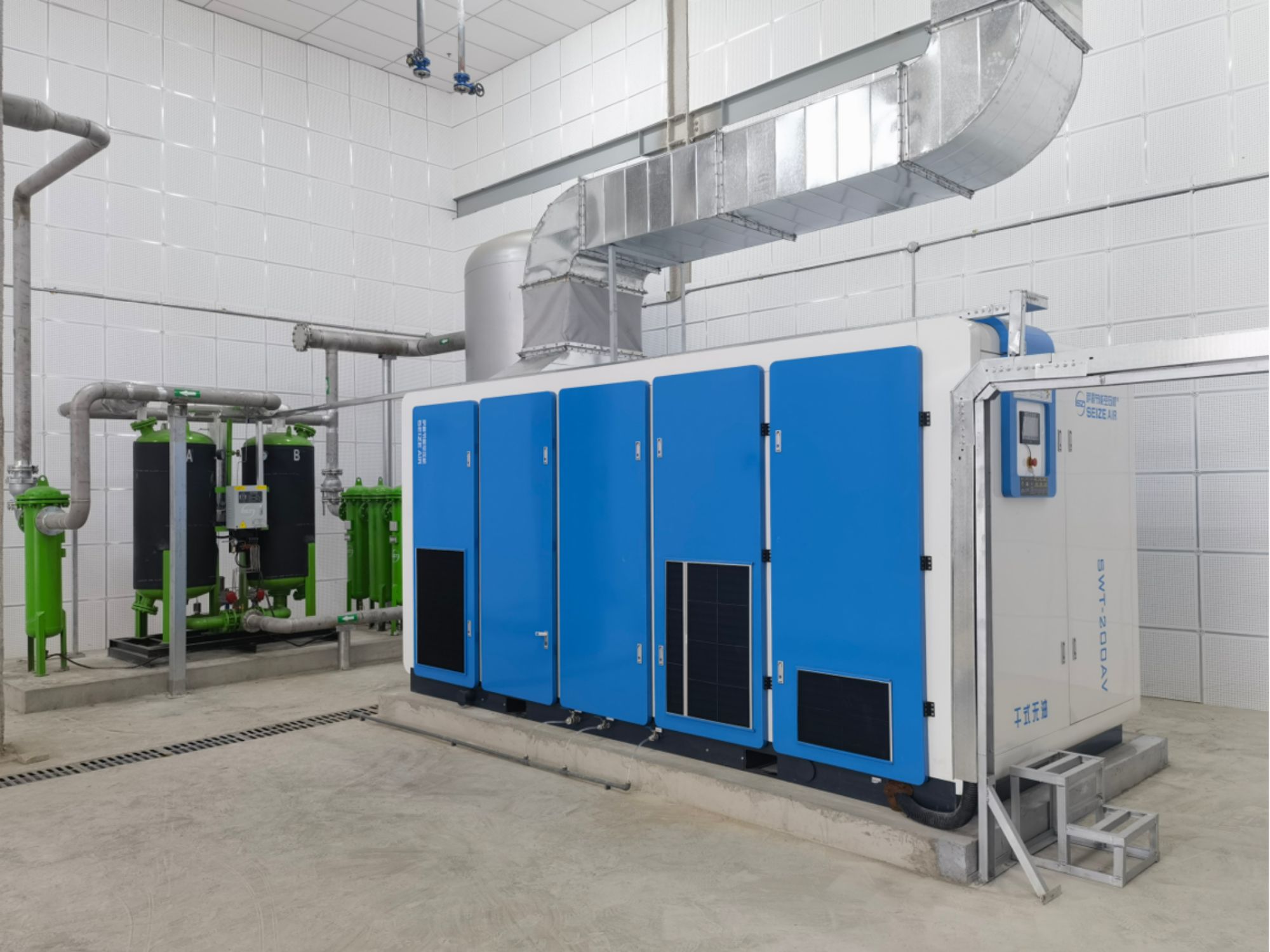
In a standard compressor, oil doesn't just sit in the sump—it moves through several well-defined entry points that keep rotating and sliding parts lubricated. The most obvious one is the fill port, usually located on the crankcase or oil reservoir, where fresh lubricant is added during maintenance. From there, oil is drawn into the pump inlet, often through a strainer or magnetic plug that catches debris before it reaches the gallery. On splash-lubricated reciprocating units, the connecting rod dipper or slinger ring is another common entry point, flinging oil up into the cylinder walls and wrist pin area as the crankshaft spins.
Pressure-lubricated compressors rely on drilled passages in the crankshaft and bearing housings to deliver oil directly to main and rod bearings. These internal drillings act as precise entry points, and any blockage starves the bearing almost immediately. Rotary screw compressors add a different route: oil is injected into the compression chamber itself through an orifice or nozzle, where it seals clearances, removes heat, and lubricates the rotors. The oil then leaves the air stream through a separator and returns to the sump via a scavenge line, which is often a small-diameter tube that can clog if sludge builds up.
Seals and gaskets also create secondary oil entry points, sometimes unintentionally. Worn shaft seals, piston rod packings, or loose cover plates allow oil to migrate into the air side or onto external surfaces, causing leaks and oil carryover. Recognizing these paths—both designed and accidental—helps technicians pinpoint lubrication failures before they turn into scored cylinders or seized bearings.
Calculating Real Air Demand Without Guesswork
Most facilities still size air compressors using rules of thumb—CFM per operator, square footage, or tool count. Those methods work until they don’t. A better starting point is to log actual demand over a week using a thermal mass flow meter on the main header. This captures peaks, idle periods, and hidden leaks that never show up on a spec sheet.
If a flow meter isn’t available, you can still get a reliable number by isolating the compressor and watching tank pressure drop. Close the discharge valve, time how long the tank falls from 100 to 80 psi, then multiply tank volume by the pressure change divided by time. It gives you average CFM under real load, not nameplate.
Once you have that baseline, don’t stop. Compare it to the total rated consumption of all connected tools and machines. The gap is usually leakage or artificial demand from running at higher pressure than needed. Fix those first, then re-measure. Real demand isn’t found in a catalog—it’s measured at the pipe.
Surface and Seal Choices for Sanitary Operations
Selecting the right surface and seal materials in sanitary environments goes far beyond basic cleanliness. The topography of a surface—its microscopic peaks and valleys—can either harbor biofilm or shed it with a simple rinse. Stainless steel with a 2B finish remains a common default, yet its performance depends heavily on electropolishing to reduce surface roughness below 0.8 µm Ra, which noticeably slows bacterial attachment. For zones exposed to harsh cleaning chemicals, resin-rich polymer concrete or solid epoxy surfaces often outperform tiles, since grout lines vanish and the risk of hidden cracks disappears.
Seal choices demand equal scrutiny. A gasket that absorbs moisture or develops micro-tears becomes a contamination source that no amount of sanitizer can fix. Silicone and EPDM elastomers each have trade-offs: silicone tolerates wide temperature swings but tears under mechanical stress, while EPDM resists abrasion yet can swell with certain sanitizing agents. In practice, many facilities now favor fluoropolymer-encapsulated seals for repeated CIP cycles, as the inert outer layer prevents product buildup and withstands aggressive acid or caustic washes without leaching. Pairing such seals with a properly radiused, pit-free surface reduces dead legs and makes validation far more predictable.
Simple Sampling Steps to Verify Air Purity
Checking air purity doesn't require a lab full of equipment. Start with a basic visual and sensory sweep: hold a clean white cloth near vents or suspected leak points for a few minutes, then inspect it under good light. Any fine dust, oily residue, or unusual discoloration hints at contaminants. Follow up with a simple condensation test—place a chilled mirror or glass surface in the airflow, wait for moisture to form, and examine the droplets. Clean droplets should be clear and evaporate without leaving a ring; murky or sticky residue suggests particulates or chemical vapors.
Next, try a low-tech particle check using a bright flashlight in a darkened room. Shine the beam across the air stream and watch for floating specks. A high count of visible dust or fibers means filtration is weak. For a more reproducible result, tape a piece of double-sided adhesive to a small card, expose it to the air for an hour, then compare the trapped particles against a white background. Count the specks in a one-centimeter square—if you see more than twenty, the air likely needs better purification.
Finally, verify with a simple chemical indicator. Mix a few drops of household ammonia with distilled water in a shallow dish and place it in the airflow. If the odor fades unusually fast or a white mist forms, reactive contaminants may be present. For acidic vapors, dampen a strip of pH paper and hold it in the stream; a shift toward the acidic end signals trouble. These steps won't replace professional monitoring, but they give a quick, practical read on whether the air is clean enough for your needs.
Total Cost of Ownership Before Signing Off
Signing off on a purchase often feels like the finish line, but the upfront price is just the first layer. Electricity, maintenance, licensing, training, and the time your team spends learning a new system all stack up quietly. If you do not map those out now, they will show up later as line items you never planned for.
Look beyond the obvious annual fees. Downtime costs, upgrade cycles, and the price of replacing consumables or incompatible accessories can shift a cheap deal into an expensive one within two years. Ask the vendor directly what happens when something breaks outside warranty and who covers shipping, labor, or data migration.
Get the total figure in writing before you commit, not after. A one-page summary that includes energy draw, expected lifespan, update costs, and disposal or exit fees is worth more than a glossy brochure. If the vendor hesitates to provide that, treat the hesitation as part of the cost.
FAQ
Focus on the compressor's air purity class, ensuring it meets ISO 8573-1 Class 0 standards for oil content. Check that all wetted parts are made from stainless steel or food-grade materials to avoid corrosion and contamination. Also verify that the unit has proper heat dissipation and low noise levels, since many Chinese facilities operate in humid, high-temperature environments. Finally, confirm the manufacturer provides documentation for compliance with GB standards for food safety.
Lubricated compressors carry a risk of oil carryover into the air stream, which can contaminate food surfaces and packaging. Even trace amounts of mineral oil can alter taste, odor, or safety of products. Oil-free designs eliminate this risk at the source, reducing the need for downstream filtration and making compliance audits simpler. For applications where air contacts food directly, oil-free is non-negotiable.
Look for ISO 8573-1 Class 0 certification for oil-free air. For food contact materials, the compressor components should comply with FDA or EU 1935/2004 regulations, though Chinese GB 4806 standards are essential for domestic approval. Additionally, the compressor itself should have CCC certification if it falls under mandatory product categories, and the motor should meet GB 18613 energy efficiency grades.
Even without oil, ambient air contains moisture, dust, and microorganisms that can contaminate food. A proper treatment system—refrigerated or desiccant dryer, coalescing filters, and sterile filters—is required to achieve the desired air purity. For direct contact applications, a point-of-use 0.01 micron filter with a drain trap is often added to remove bacteria and particles. Ignoring air treatment can defeat the purpose of an oil-free compressor.
Start by calculating the total air demand of all pneumatic equipment, including peak usage during shift changes. A typical small production line might need between 5.5 and 15 kW, producing 0.7 to 2.2 cubic meters per minute at 7 to 8 bar. Add a 20-30% safety margin for leaks and future expansion. Oversizing wastes energy, while undersizing forces the compressor to run continuously, raising maintenance costs.
Yes, the focus shifts from oil changes to air filter replacements, condensate management, and checking for wear on dry-running seals and bearings. Air intake filters should be inspected monthly in dusty environments, while desiccant dryers need regeneration checks. Document all maintenance actions, as auditors may require logs showing that the air system has not introduced contamination risks. Most manufacturers recommend a major service every 8,000 to 16,000 hours.
Not reliably. Standard oil-free compressors may use materials that are not food-safe, such as certain plastics or coatings that can shed particles. They may also have internal surfaces that harbor bacteria or are difficult to clean. A true food-grade unit uses stainless steel, FDA-compliant seals, and smooth, crevice-free designs. Retrofitting filters can reduce oil but won't address material compatibility or microbial growth.
Placing the compressor in a hot, humid, or dusty area without proper ventilation increases condensation and microbial growth in the storage tank. Using PVC or non-food-grade piping after the compressor can reintroduce contaminants. Forgetting to slope piping and install drain points leads to water pooling, which breeds bacteria. Also, locating the air intake near exhaust vents or waste bins draws in harmful particles.
Conclusion
Choosing an oil-free air compressor for food production in China starts with a clear understanding of what regulators actually accept as food-grade air. Under Chinese rules, air that contacts food or packaging must not only be free of oil aerosols but also meet strict limits on particles and moisture, often requiring additional filtration and drying even when the compressor itself is oil-free. Standard lubricated machines typically leak oil at multiple points—piston rings, valve stems, and coalescing filters that are past their service life—so switching to an oil-free design eliminates the biggest contamination source but doesn't automatically guarantee compliance. You still need to map out where air touches product surfaces and verify that no upstream piping or storage tank introduces hydrocarbons. A practical approach is to calculate true demand by logging pressure fluctuations, peak flow events, and shift patterns rather than relying on nameplate ratings or rough guesses. Oversizing wastes energy, while undersizing forces the compressor into short cycling and moisture carryover.
Sanitary operation demands more than just the air end. Surface finishes on compressor housings, aftercoolers, and receivers should resist microbial growth, so smooth stainless steel and sloped drainage points are preferred over painted carbon steel or dead legs. Seals and gaskets must be food-compatible—typically EPDM or PTFE—and designed to avoid shedding particles into the air stream. To confirm air purity on an ongoing basis, set up simple sampling protocols: use oil mist detector tubes or a particle counter at the point of use, and test after any maintenance event or filter change. Finally, look beyond the purchase price. Energy consumption over a five-to-ten-year lifespan, plus the cost of replacement filters, desiccant, and potential production downtime from a failed purity test, often dwarfs the initial capital difference between a cheap lubricated unit and a well-engineered oil-free system. In China's food safety environment, a documented air quality plan with regular sampling and maintenance logs is just as important as the compressor itself.
Contact Us
Contact Person: Mia
Email: [email protected]
Tel/WhatsApp: +86 19821985894
Website: https://www.seize-air.com