

China Fresh Cold-Chain Boxes Keep Perishable Food Fresh Through Every Mile
2026-11-27
Keeping fresh food at the right temperature from origin to shelf is one of the hardest parts of China’s supply chain. A truck that loses cooling for even a short stretch can turn berries, seafood, or dairy into waste. That is where well-built cold-chain packaging makes a measurable difference. Kuaijie Carton focuses on boxes that hold cold air, absorb handling shocks, and protect perishables across long, uneven routes. In this post, we look at what keeps those boxes reliable mile after mile.
What Makes a Cold-Chain Box Hold Its Temperature Across China’s Longest Routes
The real work happens before the box leaves the depot. Instead of relying on thicker insulation, these units pair vacuum-insulated panels with phase-change materials tuned to narrow melting ranges. That combination lets the interior coast through a 2–8°C band even when the outside shifts from freezing northern nights to humid southern afternoons. The phase-change packs absorb or release latent heat at the same point, so temperature drift is slowed rather than fought with brute cooling.
Air movement matters just as much as insulation. A low-speed fan keeps the cold from settling into layers, which is critical on multi-day runs where pallets near the floor and pallets near the ceiling can otherwise differ by several degrees. Door seals are double-gasketed to create an airlock effect, and the payload is pre-cooled before loading to remove residual heat that would force the system to play catch-up from the first kilometer.
Finally, the layout of the coolant is not uniform. Packs are placed differently along the sidewalls, roof, and door because each surface loses heat at a different rate. Some routes add extra protection near the doors, where every opening pulls in outside air. Small data loggers record internal temperatures at minute intervals, giving operators a clear picture of what the box actually does over mountain passes, desert stretches, and sudden altitude changes.
The Materials and Seals That Slow Heat Transfer Hour After Hour
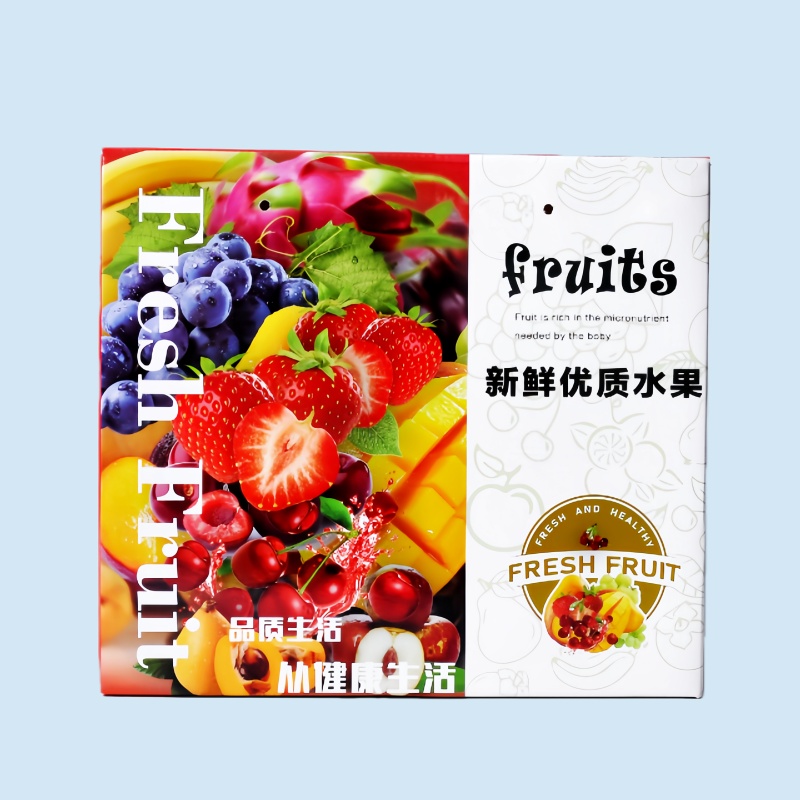
Closed-cell polyurethane, aerogel blankets, and vacuum-insulated panels do the heavy lifting when heat tries to push through a wall or enclosure. Their internal structure leaves almost no room for convective loops, so energy moves slowly through trapped gas pockets or a near-vacuum. Aerogel is especially stubborn in this regard: its silica framework breaks up the mean free path of gas molecules, forcing thermal energy to wander instead of racing across.
The seals matter just as much as the insulation. EPDM, silicone, and butyl-based gaskets hold their shape under repeated compression, keeping a continuous contact line that prevents warm air from sneaking around edges. A seal that takes a set after a few hours turns a small gap into a persistent thermal leak. The best ones resist compression set, ozone cracking, and moisture uptake, so the barrier stays intact through temperature swings and long idle periods.
Hour after hour, the system works because the materials do not drift far from their original dimensions. Insulation stays low-density and dry, seals recover enough to fill the joint, and the two together break the conduction and convection paths that would otherwise let heat move freely. Small gaps get closed before they become shortcuts, and that is what keeps the cold side from slowly warming toward the hot side.
Loading Methods That Stop Warm Air From Settling Around Perishables
Tight pallet grouping and rear void fillers make a measurable difference during loading. Instead of spacing pallets evenly down the trailer, keep them packed toward the front and use load bars, air bags, or bulkheads to block off the empty section near the doors. This reduces the refrigerated space and pushes return air through the cartons, leaving less room for warm air to settle around the product.
Mixed perishables need a different approach. Items with lower respiration rates or tighter temperature tolerances should ride deeper in the cold zone, while produce that can handle slight warming sits closer to the rear. Insulated curtains or strip barriers behind the last pallet help stop warm dock air from rolling along the ceiling and dropping onto the load during every door opening. Pre-cooling pallets before they reach the dock also keeps the initial pull-down time short, so warm air never gets a chance to form stable layers inside the trailer.
Finally, watch the airflow path around the floor and side walls. Load pallets so air can move underneath and up through vented packaging rather than around the outside edges only. If the unit runs long cycles just to satisfy the return sensor while product in the middle stays warm, the loading pattern usually needs adjustment, not the thermostat.
Small Temperature Excursions That Show Up Before Freshness Slips
A carton of berries can still look perfectly fine long after its shelf life has started to erode. The early warning often shows up as a slight, repeated shift in holding temperature, not as visible mold or off-flavors. Those brief excursions, sometimes only a few degrees above the target for an hour or two, quietly begin to wake up enzyme activity and microbial growth.
Because the damage is cumulative, a cooler that drifts from thirty-six to forty-one degrees overnight may not trigger a single alarm, but it can take days off the product's usable life. Teams that track these small movements can adjust airflow, reseal a door gasket, or rotate stock before the loss becomes obvious to a customer.
The most useful signal is usually a pattern rather than a one-time spike. Repeated short cycles around the upper limit tell a different story from a single open-door event, and reading those patterns gives a much earlier indication that freshness is starting to slip.
Why Arrival Time Shapes Shelf Life More Than Most Shippers Expect
A shipment that lands four hours late is rarely recorded as a quality failure, yet those four hours can quietly strip days off the usable life of temperature-sensitive freight. Cold chain records from produce and pharmaceutical lanes show the damage is not linear: a delay early in transit often matters less than the same delay during final handling, when cartons sit on a hot dock waiting for a receiving window. Once product temperature climbs past its narrow band, enzyme activity and microbial growth accelerate, and no amount of re-cooling can restore the lost shelf life.
What catches many shippers off guard is that arrival time gets treated as a timestamp rather than a predictor of shelf life. A pallet that arrives at 9 a.m. and one that arrives at 1 p.m. can look identical on paper, but the later arrival may have spent hours in the warmest part of the day, inside a trailer with reduced airflow. Retail buyers in grocery and pharmacy channels increasingly read those gaps in days of remaining shelf life rather than hours on a clock. If a product loses twelve hours of cold chain stability, the store may reject it or shorten its display window, which turns a small scheduling slip into a much larger loss.
Shippers that treat arrival time as a firm operational target, not just a delivery preference, tend to build more realistic transit plans. That means mapping dock cutoff times, driver break patterns, and cross-dock dwell periods against the product's thermal limits. The benefit shows up later: fewer markdowns, fewer refused loads, and fewer customers quietly switching to suppliers whose fruit, dairy, or biologics simply last longer on the shelf.
From Cold Storage to Storefront Without a Break in the Chain
Temperature logs tell the real story of a product's journey. A pallet can sit in a perfect freezer for weeks, only to spend forty minutes on an unrefrigerated dock because someone forgot to schedule the handoff. When that happens, the food might still look fine, but the texture starts changing at a molecular level. Ice crystals grow, proteins denature, and the shelf life quietly falls apart. The chain doesn't care about excuses; it only records the minutes where the cold was interrupted.
Keeping the line unbroken means treating each transition as a potential failure point rather than an afterthought. The truck's reefer unit needs to be running and at target temperature before the warehouse doors even open. Handheld probes should be used on the product itself, not just the air around it, because warm spots hide inside boxes. Drivers ought to check gasket seals, door opening counts, and defrost cycles as part of the routine, not when something already smells off. A single weak link turns a premium batch into discounted stock.
The final stretch from distribution hub to store shelves is where the discipline gets tested most. Unloading directly into a store's receiving cooler avoids the hazard of leaving carts in ambient air near the back door. If the store's own storage is borderline, the distributor should adjust delivery windows to match lower traffic hours. It's less about fancy equipment and more about refusing to accept small compromises. Every minute inside the safe range is a minute you don't have to explain later, standing over a returned shipment with a thermometer in your hand.
FAQ
They absorb and release heat at set temperatures, so the interior stays within a narrow range instead of depending only on outside air. That matters on long highway routes where conditions shift from humid heat to freezing mountain air.
Many use segmented lids or quick-access panels that expose just one section at a time. The rest of the cargo stays sealed under an insulated layer, which limits temperature swings and protects shelf life.
Some larger units are divided into separate compartments with independent temperature settings. Shrimp can ride close to freezing while spinach stays cool but avoids ice-crystal damage.
The boxes carry enough thermal buffer to hold safe temperatures well beyond the planned trip. Many are rated for 48 to 72 hours of protection, so a delay does not automatically spoil the load.
Data loggers and wireless sensors inside the boxes record temperature at regular intervals. When the shipment arrives, staff can review the full history and catch any temperature excursion before the food reaches the shelf.
They are increasingly offered through pooling programs, so a small fruit grower can rent the right number of boxes for a harvest instead of buying costly equipment. That has opened direct-to-city sales for many rural producers.
Most are built for repeated use with washable liners and replaceable insulation panels. After each trip they are cleaned, inspected, and returned to circulation, which costs less than single-use foam containers over time.
The box itself carries the cold, not the vehicle. A courier can move it on a small electric cart through narrow streets without a refrigerated van, and the food still arrives at the right temperature.
Conclusion
A cold-chain box that holds its temperature across China’s longest routes is not simply a thicker version of a standard insulated container. It combines low-conductivity panels with high-compression seals and careful pre-cooling so heat gain stays gradual instead of sudden. Loading methods matter just as much as materials: pallets are spaced to let chilled air loop around the sides, while void fillers block the pockets where warm air can settle after the doors close. Even a small gap next to a dairy or berry carton can become a hotspot hundreds of kilometers later, so crews check sealing surfaces, drain plugs, and door gaskets before departure rather than assuming the refrigeration unit will cover every mistake.
Once the box is moving, attention shifts to small temperature excursions that show up before visible freshness slips. A two-degree drift for twenty minutes may not harm the product immediately, but repeated cycles add up and shorten the shelf life that retailers expect. Arrival time has an outsized effect because every hour between unloading and refrigerated storage exposes the outer cartons to ambient air. The strongest operations treat the trip as one unbroken chain: the trailer is pre-cooled at the cold storage dock, unloaded through strip curtains or a sealed bay, and handed off quickly at the storefront without leaving pallets on a warm loading platform. That continuity, rather than any single feature, is what keeps perishable food fresh through every mile.
Contact Us
Contact Person: Tan Xiang
Email: [email protected]
Tel/WhatsApp: 8613798906863
Website: https://www.dgkjzx.com