

China Integrated Energy Storage Cabinet 135kW/261kWh Delivers Reliable Commercial Power
2026-11-25
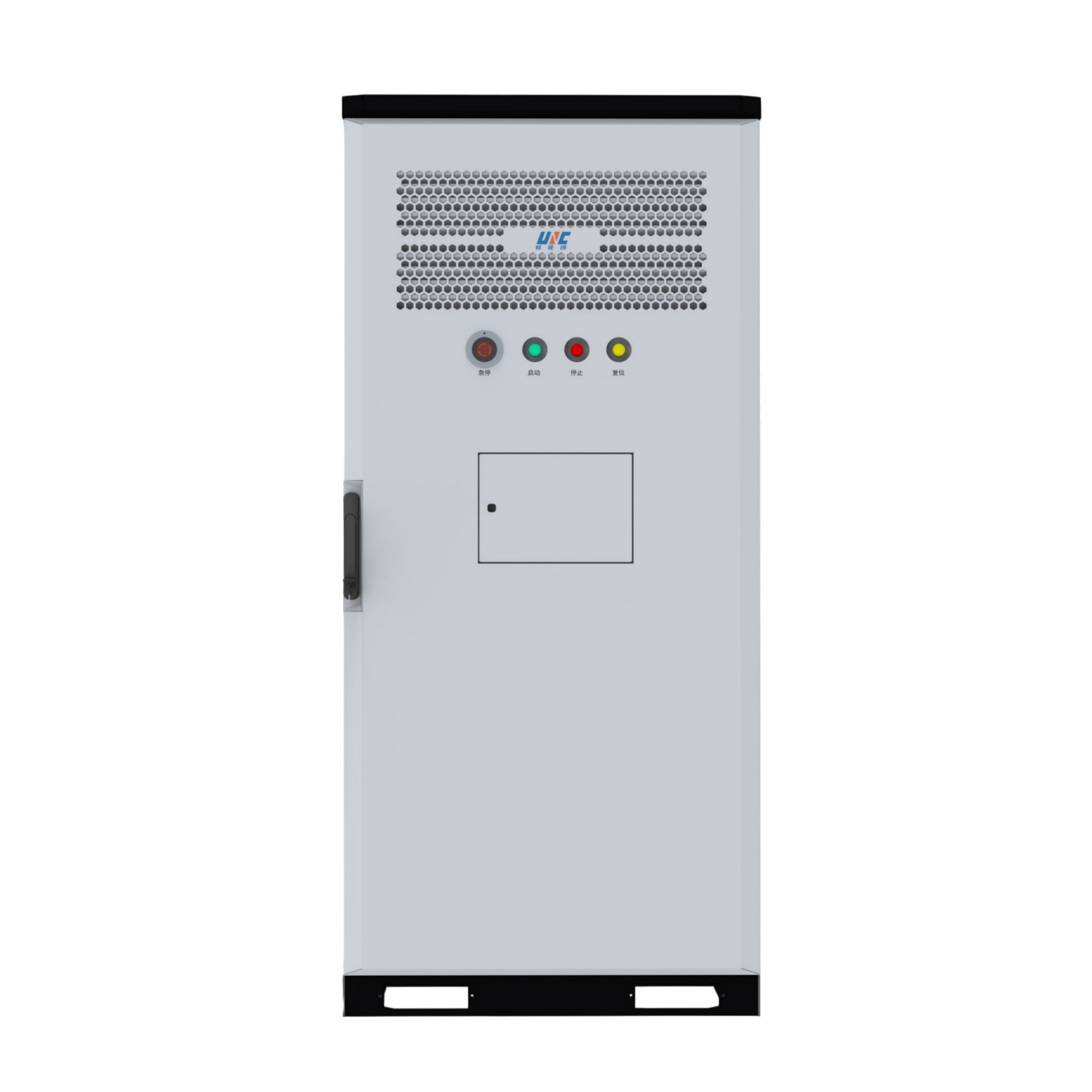
Commercial power rarely fails quietly. It stutters, spikes, and drains budgets before anyone notices. The 135kW/261kWh integrated energy storage cabinet from China is built for that hard reality, not for glossy brochures. UNC packs enough buffer to keep operations steady through peak tariffs and shaky grids, without turning your facility into a science project. Here's what makes this cabinet a practical backbone for reliable commercial power.
What 261kWh Actually Covers When the Power Goes Out
A 261kWh reserve starts to make sense when you match it against the loads that keep a house livable during an outage. A modern fridge usually pulls 1.2 to 2.0kWh per day, while a chest freezer adds another 1.5 to 2.5kWh. LED lights, a router, phone chargers, and the blower on a gas furnace might add 3 to 6kWh combined. That puts a basic overnight and daytime backup load around 8 to 14kWh per day if you avoid large electric heat sources, so the stored energy can easily stretch past two weeks.
The capacity disappears much faster when electric resistance heat, older air conditioners, or water heating enter the picture. A 4-ton central AC can pull 3 to 5kW while running and burn 30 to 60kWh on a hot day if it cycles heavily. An electric water heater typically uses 8 to 12kWh per day for showers and dishes, and a portable space heater can erase 10 to 20kWh in a single evening. If you leave those circuits off, 261kWh covers a working kitchen, lights, internet, a well pump, and even a CPAP or other medical device without much planning. If you run them freely, the same reserve may only last two or three days.
The usable number is also a bit lower than the label suggests. Inverter losses, depth-of-discharge limits, and standby draw from the backup system itself usually shave off 5 to 10 percent, so planning around 235 to 248kWh is more realistic. Starting surges matter too: a well pump or sump pump may use very little energy over a full day, but it needs an inverter and battery able to deliver a sharp burst without tripping. Adding even a small solar array changes the math, since daytime generation can cover baseline loads and leave most of the stored energy for overnight and cloudy stretches.
Why 135kW Is Enough for More Than You'd Expect
Most people picture a 135kW motor and assume it belongs in a compact commuter car, good for errands and little else. That assumption falls apart the moment you realize this output level sits in a sweet spot where everyday usability meets genuine capability. You can merge onto a fast-moving highway without praying for a gap, carry four adults plus luggage without feeling the car strain, and still have enough reserve to make a mountain pass feel routine rather than stressful.
What tends to get overlooked is how much of real driving never asks for peak power. Stop-and-go traffic, suburban streets, and steady 110 km/h cruising all sit far below what 135kW can deliver. That headroom matters because it means the motor isn't constantly working at its limit. You get cooler operation, less wear, and a more relaxed feel behind the wheel. In many regions, this power level also keeps you clear of insurance brackets and tax thresholds that punish higher outputs, which quietly makes ownership easier.
The real surprise comes when you compare it against vehicles from a decade ago. A 135kW motor outperforms many naturally aspirated V6 sedans that were once considered strong family haulers. Yet it does so with instant torque and none of the noise or fuel penalty. Whether you're towing a small trailer, climbing a long grade with the air conditioning running, or simply overtaking a slow truck on a two-lane road, the power is there without drama. That's the point: enough to handle the moments that actually happen, not just the ones on a brochure's spec sheet.
Peak Charges Are Quietly Eating Into the Operating Budget
Most budget conversations focus on the rate per kilowatt-hour, but the real leakage often sits in the demand charge line. Peak charges do not announce themselves the way a utility rate increase does. They accumulate quietly when compressors cycle on at the same time, when a bank of chargers starts after a shift change, or when HVAC settings drift into an aggressive cool-down schedule. Because the charge is tied to a brief interval rather than total consumption, it can look small on a spreadsheet and still reset the entire bill for the month.
A single 15-minute spike can become the reference point for the billing period, which means a few poorly timed minutes carry the same weight as weeks of otherwise efficient operation. Finance tends to see the total line item, while facilities teams see equipment runtimes, and the gap between those views is where the budget erosion happens. The number feels technical, so it rarely draws the same attention as overtime, fuel, or maintenance contracts.
Usually, the lowest-cost change is not a capital project but a shift in timing. Moving a cleaning crew's floor machines to a later window, staging equipment startup in smaller groups, or pre-cooling the space before the peak period can reduce the charge without touching output. Once interval data is matched to actual operations, the line item stops looking like a fixed penalty and starts behaving like a controllable operating decision.
A Cabinet That Lands Ready to Connect, Not as a Component Pile
Opening the crate reveals a cabinet that has already been wired, terminated, and tested at the factory. Power strips are mounted where they are useful, cable paths are secured, and every connection point is labeled in plain terms. There is no parts bin to sort through and no guesswork about which bracket goes where.
The benefit shows up quickly on site. Installers position the cabinet, anchor it, and bring building power and data to clearly marked inputs. In most cases, the unit is live within the same visit instead of waiting for separate assembly steps or return trips to fix missed details.
That approach shifts the work from repetitive field wiring to controlled production. It also makes the final result more consistent because the cabinet leaves with the same checks and torque settings every time, rather than depending on who happens to be turning a screwdriver that day.
Thermal Control and Safety Choices Without the Jargon
Keeping a laptop cool sounds obvious, but it really comes down to giving heat a clear path out. When the internals work hard, they warm up quickly; if that warmth gets trapped near the battery or the keyboard deck, the machine slows down, the fans get loud, and parts age faster than they should. A well-designed thermal setup treats heat like a house with good airflow: cool air enters in one place, moves across the hot spots, and leaves without swirling back in. That means intake vents, exhaust placement, and even the shape of the fan blades matter far more than the number of heat pipes printed on a spec sheet.
Safety choices are often less visible but just as important. Rather than chasing maximum speed for a few seconds, a balanced machine will let the processor run at a pace it can actually sustain, which keeps the surface comfortable and avoids sudden shutdowns. The materials around high-temperature areas, the way the bottom panel insulates your lap, and the sensors that decide when to throttle or stop charging all play a role. In everyday use, this shows up as a laptop that stays quieter, feels cooler under your palms, and does not surprise you with a hot metal edge after a long video call.
The Commercial Spaces That Notice the Difference First
A hotel lobby before the first guest arrives, a conference room ten minutes ahead of a pitch, a boutique aisle just after the morning rush—these are not spaces that wait for a quarterly walkthrough. They register small shifts right away: a dull spot on a stone floor, a faint mustiness near the windows, a handrail that feels slightly tacky under the palm. In these rooms, the details are not decorative. They are the first thing a client reads, often without knowing it.
High-traffic commercial settings do not have the luxury of gradual decline. Staff may not say anything, but their hands, shoes, and eyes notice when a surface loses its original gloss or the air begins to sit a little heavier near the entrance. The difference shows up in an elevator panel, the way light falls across a reception desk, and how a carpet edge behaves near a doorway. When one of these elements falls out of sync, the entire room feels less intentional, even if nothing is obviously dirty.
That is why the most telling commercial spaces treat upkeep as a quiet operating rhythm rather than a scheduled chore. A quick pass on the entry mat, a check of the glass line near the push bar, a moment spent on the seam where wall meets floor—these small readings keep a space from drifting into background noise. It is the difference between a room that simply looks clean and one that still feels considered at two in the afternoon on an ordinary Tuesday.
FAQ
It pairs a high discharge rate with enough stored energy to cover several hours of typical commercial loads, so a business can ride through peak tariff windows or short outages without oversizing the system for occasional use.
Because the power conversion, battery modules, thermal management, and controls are housed in one enclosure, the unit arrives largely preassembled. Most sites only need to prepare a level pad, make grid and load connections, and complete commissioning, which cuts down on wiring and on-site assembly time.
Retail stores, small manufacturing lines, cold storage facilities, office campuses, and hospitality venues tend to benefit most, especially where demand charges are high or where short backup power prevents costly interruptions.
Yes. The cabinet can discharge during the highest-rate periods and recharge when power is cheaper, shifting load away from expensive windows. That approach is often more effective for demand charge management than simply installing more solar capacity.
It includes battery management at the cell level, thermal runaway detection, fire suppression provisions, and a closed-loop cooling design. The enclosure also isolates power electronics from the battery section to limit risk during faults.
The lithium iron phosphate chemistry is designed for repeated cycling, typically retaining the majority of its rated capacity after several thousand cycles at the rated depth of discharge, which suits daily load-shifting routines rather than only emergency standby use.
Yes. It can operate alongside solar inverters and is often used to store surplus daytime generation for evening loads. The system can be configured to prioritize renewable charging, grid charging, or a hybrid schedule depending on local tariffs and site goals.
It means the cabinet can deliver up to 135 kilowatts at any moment, which is enough to run multiple HVAC units, refrigeration equipment, or a small production line. The 261kWh capacity then determines how long that load can be sustained before the battery needs to recharge.
Conclusion
When a blackout hits, most operators assume they need a generator sized for the entire building. That assumption misses what a 261kWh buffer actually does. It keeps registers, lighting, refrigeration controls, security systems, and networking gear running through short outages without forcing a full shutdown. The 135kW output is similarly easy to underestimate because it covers far more than a few circuits—it handles the startup surge of compressors, pumps, and production equipment that would otherwise trip a smaller inverter. In many retail and light industrial settings, the cabinet carries the critical load while the grid recovers, and it quietly shifts demand during peak rate windows. Instead of watching time-of-use charges climb every afternoon, the system discharges stored energy when tariffs spike and recharges overnight.
What separates this unit from a collection of parts is that it arrives as a pre-wired, pre-tested cabinet. There is no drawn-out integration phase, no separate battery rack, inverter, cooling loop, and control panel to coordinate on site. Thermal management and protective features are built into the enclosure, so operators do not need a specialist to decode what is safe or not. The practical result shows up first in convenience stores, small supermarkets, clinics, workshops, and branch offices—places where a few hours of downtime or a sudden demand charge has an outsized financial impact. For those sites, the difference is not theoretical.
Contact Us
Contact Person: Manager Leng
Email: [email protected]
Tel/WhatsApp: 8613764878967
Website: https://www.unc-energy.com