

China Optical Microscope Advancements Are Reshaping Precision in Modern Laboratories
2026-11-25
Walk into any modern lab in China today and you will notice something subtle but profound: the microscope on the bench is no longer just a magnifying tool. It is becoming a precision instrument shaped by rapid local innovation, from smarter optics to quieter automation. This shift is quietly redrawing how researchers approach everything from cell imaging to failure analysis. Among the names driving this change, JATEN has carved out a reputation for building optical microscopes that feel less like generic lab equipment and more like a considered response to real workflow pain points. In this post, we look at the advancements pushing Chinese optical microscopy forward, why they matter for precision work, and what to watch next.
Chinese Objectives Are Quietly Raising the Resolution Baseline
The 4K label used to mean something, but in China it has quietly stopped being a selling point. Mid-range televisions now ship with 8K panels as a matter of course, and streaming apps have started treating high-bitrate 4K as the ordinary tier rather than a premium add-on. None of this arrives with much noise. Supply chains mature, panel costs fall, and suddenly the old ceiling is just the floor.
Phones tell a similar story. Sensor specs matter less because multi-frame pipelines and AI reconstruction do much of the heavy lifting. A handset can claim a hundred-megapixel output while the raw sensor is far smaller, yet the images look cleaner than older hardware ever did. Video uploads get a similar treatment on the platform side, with sharpening and restoration working in the background so that standard 1080p footage holds up on larger screens.
The consequence is a slow reset of what people expect from any screen. Creators who ignore the new baseline risk looking dated without always knowing why. The visible competition has moved on to color, motion, and dynamic range, but underneath it all the resolution floor keeps inching upward.
Better Surface Finishes Are Cutting Stray Light in Daily Imaging
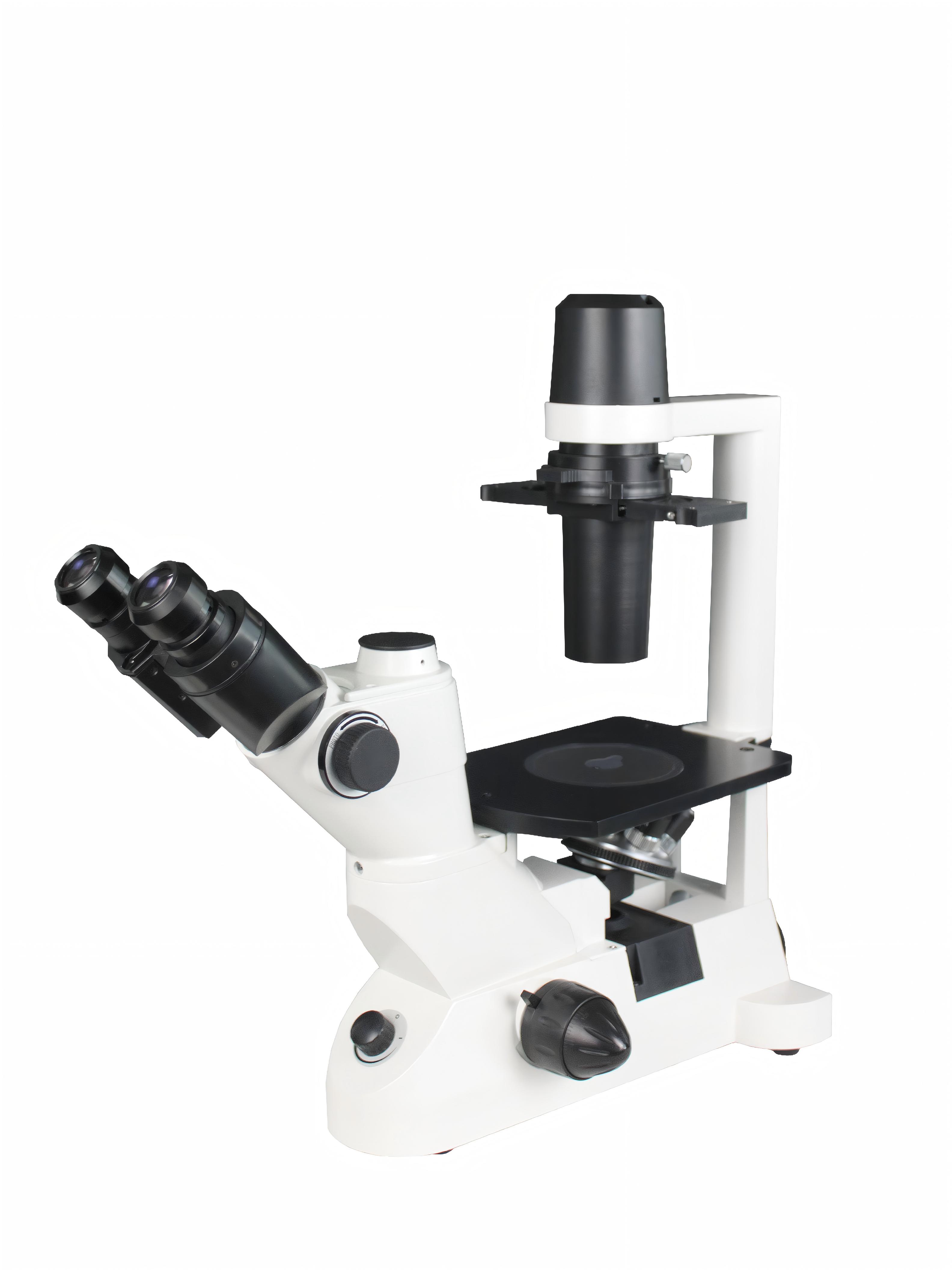
The inside of a modern lens is a quieter place than it used to be. Coatings have gotten so good that reflections between elements no longer announce themselves as obvious flares or hazy ghosts. Instead, what remains is a faint, almost invisible wash of light that settles across the frame, lowering contrast just enough to make a clean capture feel slightly flat. When manufacturers talk about better surface finishes, this is what they are chasing—not the dramatic artifacts, but the subtle loss of clarity that only shows up when you compare two images side by side.
Those improvements are often attributed to multi-coating formulas or exotic glass types, but the physical texture of the surface matters just as much. A microscopically smoother finish lets light pass or reflect with fewer random scattering events. In daily shooting, that translates to deeper shadows next to bright windows, cleaner edges around backlit subjects, and color that holds up in scenes where older designs would have surrendered to a milky veil. It is less about adding something new and more about removing the tiny inefficiencies that accumulate across half a dozen internal surfaces.
What makes this shift easy to overlook is that it rarely gets labeled in marketing sheets. You will not see a badge that says “stray light reduced by 0.4 percent.” But pick up a ten-year-old prime and a current one on the same afternoon, and the difference is there—not in sharpness charts, but in how much harder the shadows fall and how much truer the highlights stay. That is the quiet reward of better polishing and finer control at the surface level: a cleaner starting point before any editing even begins.
Automated Focus Is Removing the Last Manual Variable
For a long time, the focus ring was the one place where a photographer's nerve showed. Every half-press of the shutter carried a small question: is this exactly where I want the eye to land? Automated focus has quietly erased that question. The last manual variable in a modern shooting workflow is no longer a thing you adjust; it is a decision the camera makes before you remember to ask.
What used to require split-second judgment now happens through continuous subject recognition that tracks eyes, faces, and body posture across the frame. It does not wait for you to confirm a point. It predicts motion, ignores foreground distractions, and holds onto a moving subject with a consistency that is hard to reproduce by hand. The result is not just speed, but a different kind of reliability: fewer accidental misses caused by hesitation or a slightly stiff focus ring.
That does not mean the photographer is left with nothing to do. The manual choice has simply moved upstream. You decide what matters in the scene, and the focus system carries that intention through a sequence. Manual focus is still there, but it now behaves more like a stylistic tool than a basic requirement, available for moments when you want the image to feel deliberately imperfect or when the machine cannot know what you are thinking.
Affordable Super Resolution Is Moving Past the Demo Stage
Until recently, seeing a low-resolution clip upscaled to something sharp meant sitting through a tech demo that required expensive hardware and a lot of patience. That mismatch between promise and everyday use is finally shrinking. Cheaper GPUs, leaner models, and smarter preprocessing have turned super resolution into a feature people can actually run on their own machines without watching a progress bar for half an hour.
What changed is less about a single breakthrough and more about a shift in priorities. Developers started optimizing for real-world footage instead of carefully selected test frames. Motion consistency, texture recovery, and color stability now get as much attention as raw pixel count. The result is upscaling that looks natural across an entire video rather than impressive in a side-by-side still.
The practical side is catching up too. Video editors, game emulators, and streaming tools are beginning to expose these upscaling options through simple toggles rather than command-line experiments. As the tooling becomes less intimidating, super resolution stops being a party trick and starts acting like a routine part of the editing and viewing workflow.
Optics Designed for Real Lab Conditions, Not Just the Spec Sheet
Most spec sheets are written in a clean room after a freshly aligned unit has been left to settle overnight. Step into a working lab, though, and the picture shifts: benches vibrate from nearby pumps, temperature drifts through the afternoon, and someone inevitably leans a little too close to the beam path. These optics are built for that reality. The mounts hold alignment after repeated thermal cycles, the coatings shrug off humidity and occasional contact with gloves, and the surfaces are forgiving enough to be cleaned without a technician standing by.
A number that looks perfect on paper means little if it collapses the moment the room changes. We test our assemblies under conditions that resemble messy, populated labs rather than isolated optical tables. That includes running them through temperature swings, mild mechanical shock, and stray light from uncovered windows. The goal is not to chase a single impressive interferogram, but to deliver something that still measures well after months of daily use.
The result is a quieter workflow. You spend less time re-centering, less time wondering whether a dip in throughput is real or an artifact of the setup, and less time babying hardware that should simply work.
Local Supply Chains Are Speeding Up Custom Microscope Builds
When a research lab needs a microscope tailored to an unusual sample stage or a narrow wavelength band, lead times used to hinge on overseas optical shops. That has changed as more local machine shops and coating houses take on short-run work. A bracket can be milled from billet in the morning, anodized by the next day, and bolted onto an existing frame before the week ends. The result is fewer handoffs and less waiting, so a custom build no longer stalls every time a drawing changes.
The tighter loop also changes how engineers approach design. Instead of locking a spec early to protect a 12-week order, they can leave room for adjustment and test two or three mounting concepts in parallel. Local vendors tend to accept smaller batches, and because they are within driving distance, a quick visit to discuss surface finish or tolerances replaces days of email threads. That proximity does not just shorten the calendar; it makes corrections cheaper and more direct, which is often what turns a fragile prototype into a reliable instrument.
FAQ
The biggest shifts come from automated focusing, higher numerical aperture objectives, and computational imaging built directly into the platform. These cut down on operator variation and make subcellular features easier to resolve consistently.
Many have consolidated production of apochromatic objectives and precision stages around domestic supply chains and modular designs. That trims assembly costs while still reaching diffraction-limited performance.
Digital pathology, live-cell imaging, and semiconductor inspection are the most obvious. Those labs get faster stage movement, better fluorescence contrast, and quicker whole-slide scans.
They are. Labs in Europe, Southeast Asia, and Latin America have adopted them for both routine and advanced imaging, often because service contracts are competitive and the systems work well with open-source software.
It is central. Real-time autofocus, deconvolution, and noise reduction based on machine learning recover detail that optics alone would miss. That lets mid-range hardware perform closer to premium instruments.
Repeatability improves the most. Automated calibration and preset routines allow less experienced staff to capture publication-quality images, which frees senior researchers to focus on experimental design.
The main gaps are accessory ecosystems and service coverage in some regions. In core brightfield and fluorescence imaging, though, the performance difference has become much smaller.
Expect closer integration of quantitative phase imaging and automated sample classification inside the microscope workflow, turning these instruments into routine measurement tools rather than purely observational devices.
Conclusion
Chinese optical microscope advances are doing more than adding incremental features; they are resetting expectations for resolution, contrast, and repeatability in everyday lab work. High-quality objectives now deliver flatter fields and higher numerical apertures at price points that let more labs raise their baseline image quality. At the same time, improved anti-reflective coatings and tighter mechanical finishes are cutting stray light and internal reflections, so faint sample details come through instead of being washed out by glare. Automated focus has also moved from a convenience to a genuine time-saver, with smarter algorithms keeping the sample plane locked during long time-lapse runs and across multi-well plates. This removes one of the last manual variables that used to cause inconsistency between operators.
Super-resolution is no longer confined to demo-stage instruments in well-funded core facilities. Affordable systems are entering standard research labs, where the technique is becoming part of routine imaging rather than a proof of concept. Design priorities have shifted too. Instead of optimizing only for spec-sheet performance, manufacturers are paying attention to how microscopes behave in real rooms with temperature drift, vibration, long acquisition times, and varying user habits. Thermal stability, simplified alignment, and robustly engineered stages matter as much as raw resolution. Local supply chains are accelerating custom builds, from bespoke holders to modified optical paths, often cutting delivery from months to weeks. That flexibility makes Chinese manufacturers feel less like distant vendors and more like responsive partners, helping laboratories obtain instruments shaped around their experimental questions rather than forcing workflows to fit a standard platform.
Contact Us
Contact Person: Volien
Email: [email protected]
Tel/WhatsApp: +86 18029161762
Website: https://www.jatentech.com/