

China Sanding Disc Selection Tips for Professional Results
2026-10-04
Sanding discs have a quiet way of deciding whether a finish looks professional or gets redone. If you've ever watched a cheap disc load up, burn through, or leave swirl marks no amount of buffing can hide, you already know the real bottleneck isn't always skill. It's often the disc. In this article, we skip the jargon and break down the China sanding disc selection tips for professional results that actually matter on the job: backing plate flex, grit consistency, bonding type, and heat resistance under pressure. Along the way, you'll see why more professionals are choosing manufacturers like SHENZHEN SUN ABRASIVES over anonymous bulk stock. Get these details right, and the next finish may surprise you.
Grit Charts Lie When You Buy from China
Order a 120-grit wheel from a Shenzhen supplier and the label may promise a narrow particle band, but the powder that arrives often tells another story. Chinese manufacturers frequently rely on older domestic grading systems or repurpose sieves that have drifted from calibration, so the numbers on the chart don't match what a laser particle analyzer would show.
The gap gets wider when you compare a batch sample to the marketing datasheet. You might see spikes in coarse grains mixed into fine grit, or a distribution curve that is far wider than FEPA or ANSI allow. If your process depends on repeatable surface finish, that hidden variance will show up as scratches, uneven stock removal, or premature wheel loading.
Treat the printed chart as a starting point, not a guarantee. Ask for a measured certificate from an independent lab, or run a quick sieve test before committing to a full container. A few extra checks up front are cheaper than figuring out why your finishing step suddenly lost consistency.
The Backing Plate Stiffness You Actually Need
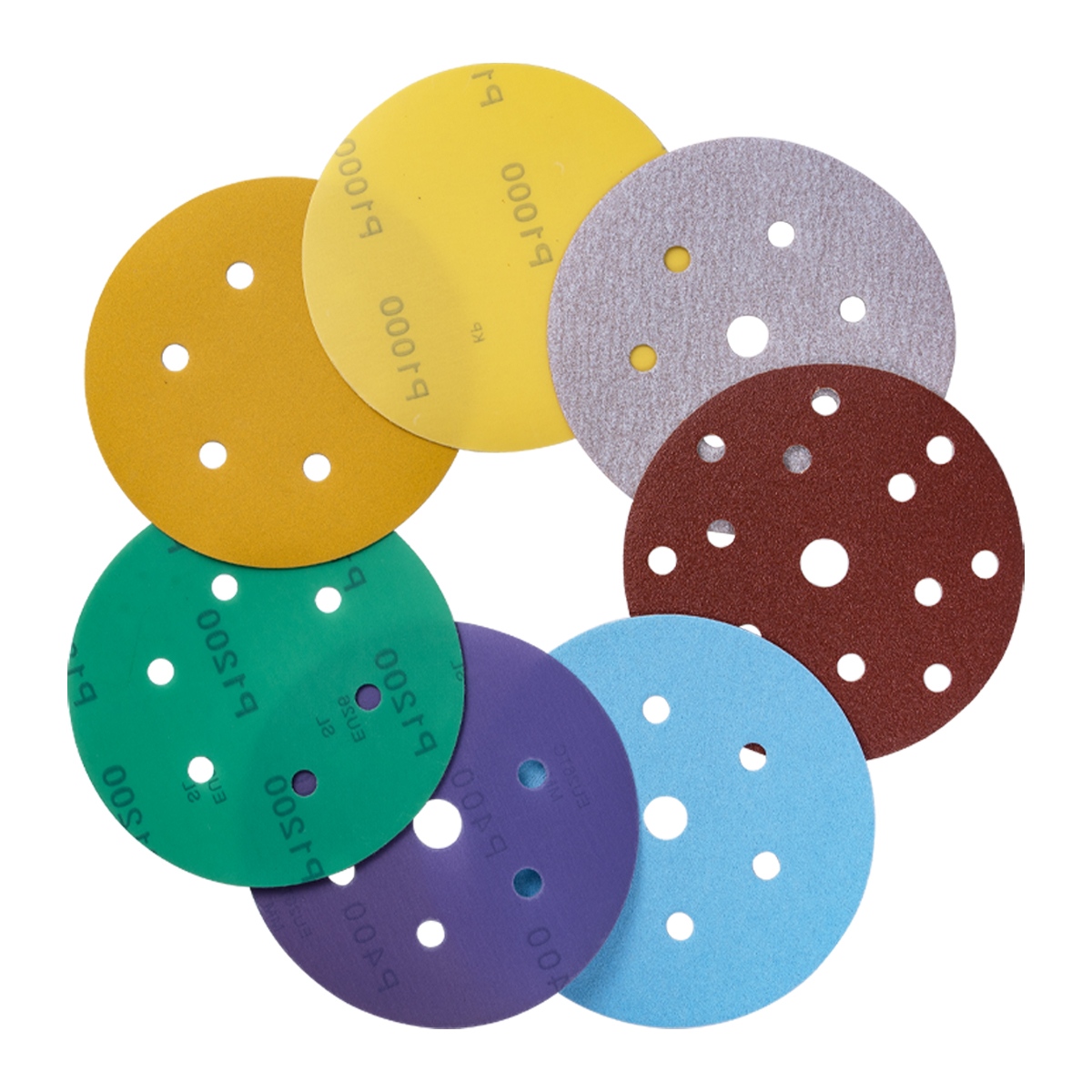
Many brake upgrade guides push the idea that a stiffer backing plate is always better, but that's only part of the truth. The stiffness you actually need depends on the caliper's piston area, pad shape, and how the pad sits in the bracket. If the plate is far stiffer than the surrounding components, it won't flex enough to follow minor disc thickness variation, which can lead to uneven pad deposits and a pulsing pedal.
On the other side, a plate that's too soft will deflect under hard braking, causing tapered pad wear and a spongy lever feel. The sweet spot is usually a plate that's stiff enough to keep the friction material flat against the rotor face, but not so rigid that it becomes a vibration amplifier. For most street performance cars, a medium-carbon steel plate with a well-designed shim layer gets closer to that balance than an ultra-thick race plate.
Instead of chasing maximum stiffness numbers, pay attention to how the plate is attached to the friction material and whether the retaining clips allow slight rotational movement. Real-world testing with your specific caliper and pad compound will tell you more than any hardness rating. If you're seeing uneven wear or noise after switching to a stiffer plate, that's a sign you've overshot what your setup actually needs.
Resin vs. Hybrid Bonds Which Lasts on Imported Discs
When operators first switch to imported cutting discs, they often assume a hybrid bond automatically outlasts a plain resin bond. That is not always the case. The real difference comes down to how the disc is built, not just the label on the package. A well-made resin bond from a reputable overseas plant can easily outlive a cheap hybrid disc that only adds a token amount of metal powder to the mix.
Pure resin bonds remain popular because they cut cool and handle thin sheet metal without burning the edge. On stainless steel or aluminum, a quality resin disc gives a clean finish and resists loading. But push it hard on thick carbon steel or cast iron, and the bond softens from heat. The disc wears faster, and you end up changing it more often. That is where the limits show up in everyday shop work.
Hybrid bonds were designed to fix that heat problem. By blending resin with metal or ceramic particles, the bond holds abrasive grains longer under high pressure and temperature. In heavy grinding or continuous cutting, a true hybrid disc can last two to three times longer than a basic resin disc. Yet the gain is not automatic. Some imported hybrid discs cut corners with low-grade abrasives and uneven mixing, so the extra cost buys you nothing. The only reliable way to know is to test a batch on your own material and watch the wear pattern, not the marketing claims.
Sorting Real Zirconia from Marketing Hype
Walk into any bead show or scroll through a marketplace listing and you'll see "zirconia" attached to everything from $5 earrings to high-end engagement rings. The word itself has become a chameleon. In gemology, zirconia refers to zirconium dioxide—a lab-grown crystal best known in its cubic form as cubic zirconia. It's a real material, but it's not mined from the earth, and it's not the same as the natural gemstone zircon. Sellers often blur that line, so your first job is to check whether the listing says "cubic zirconia" or just "zirconia." If they leave off "cubic," they might be trying to borrow the prestige of natural zircon without actually selling it.
A quick scratch test won't help much—cubic zirconia is hard, but so is zircon, and both can scratch glass. Instead, look at the weight and the sparkle. Cubic zirconia is denser than most natural gems used as diamond simulants, but it's still lighter than a real zircon of the same size. Under a loupe, cubic zirconia often shows slightly rounded facet edges and a blue-orange flash when you rock it. Natural zircon, by contrast, has strong double refraction, so the back facets can appear doubled. If a vendor can't tell you which one they're selling, or calls it "real zirconia" without clarifying lab-made versus natural, walk away.
Price is another honest signal. A pair of "genuine zirconia" studs for ten dollars is almost certainly cubic zirconia, while a one-carat natural zircon with good clarity will be priced more like a mid-range colored gemstone. Marketing hype likes to sprinkle in phrases like "created zirconia" or "synthetic natural zircon"—none of which make sense. Real cubic zirconia is a legitimate, affordable stone; it doesn't need borrowed language. If a seller spends more time convincing you it's rare than showing you the stone's actual properties, that's hype you can leave behind.
Why Your RPM Setting Matters More Than Disc Brand
Most people obsess over which cutting disc to buy, but the real game-changer is the RPM you run it at. A premium disc spun too fast will glaze, burn, or shatter just as quickly as a cheap one. The material you're cutting dictates the sweet spot, and once you find it, even a mid-range disc can outperform a top-shelf brand on the wrong speed.
Think of it like driving: the car matters less than how you handle the gears. Too many RPMs and you build up heat that kills the bond holding the abrasive together. Too few and the disc rubs instead of cuts, wearing down without doing real work. Brand differences are often marketing; RPM is physics.
Next time you're about to swap brands hoping for a miracle, check your tool's speed setting first. Adjusting down a few hundred RPM on stainless or up slightly on thin aluminum will do more for your finish and disc life than any logo on the label.
Edge Wear Patterns That Reveal Disc Quality
A disc's outer edge often tells you more than the braking surface itself. On a well-made rotor, the edge wears into a faint, uniform chamfer with no sudden steps or shiny ridges, even after tens of thousands of miles. If you find a consistent, shallow lip all the way around, that points to even pad contact and a blank that was heat-treated as one piece. Cheap castings rarely hold that uniformity; they develop flat spots, wavy erosion, or a lip that varies by several thousandths of an inch, which you can feel just by running a fingernail around the rim.
Look closely at how grooves and heat checks meet the edge. On a quality disc, any scoring from the pads fades out before it reaches the outer lip, because the rim is denser and harder than the friction face. With low-grade iron, those same grooves cut straight to the edge and sometimes wrap around it, a sign the material is too soft or the casting was overly porous. Fine radial heat checks that appear evenly spaced are normal on a hard-driven rotor, but a quality disc keeps those marks shallow and contained. If you see cracks opening up at the edge or chipping along the outer rim, that's usually a sign of brittle iron or too-aggressive cooling during manufacture.
Corrosion patterns on the edge are another giveaway. After a rainy night, a well-made disc may show light surface rust on the swept area, but the edge lip should stay relatively clean or develop only a thin, even bloom. Pitting or crusty scaling along the outer edge, especially where the lip meets the brake pad's backing plate, indicates the alloy lacks enough nickel or chromium to resist moisture and road salt. A thick, uneven edge lip after modest mileage can also reveal poor dimensional control; quality rotors usually wear the edge gradually, so the lip height stays proportional to how much friction material has been consumed.
FAQ
Focus on abrasive type, backing material, and bond strength. Don't just go by price; check if the manufacturer lists the grit standard (FEPA vs ANSI) and whether the discs are suited for your machine's RPM. Ask for a sample batch before committing to a large order.
Start with 40 or 60 grit to remove weld seams or rust, then step to 80 or 120 for scratch refinement. If you jump straight to 180, you'll spend ages and burn through discs. For stainless steel, use ceramic or zirconia grains and keep the pressure moderate to avoid heat discoloration.
They can be, but consistency varies more between factories. Look for suppliers that export regularly and can provide test reports for grain adhesion and backing tear strength. A factory that refuses to share a sample or hides its abrasive source is a red flag.
For aggressive stock removal, fiberglass or heavy polyester backings resist tearing. For fine finishing or contoured surfaces, use a flexible film or light paper backing. If you're working with both, keep two lines of discs on hand rather than expecting one type to do everything.
Choose an open-coat disc with a stearate coating, which reduces loading. Also lower your speed slightly and let the abrasive do the work; pushing harder just melts the coating into the grit. For aluminum, use a disc specifically rated for non-ferrous metal to prevent galling.
They often order by price per piece alone and ignore the backing thickness or the adhesive type for quick-change systems. Another common error is not specifying the arbor hole size precisely. Both lead to discs that fly off or wobble, which wastes time and creates uneven finishes.
Use a flap disc for blending and light stock removal where you need some flexibility and a cooler cut. Switch to a fiber disc when you need heavier material removal on flat surfaces or a lower cost per part. Fiber discs typically have a harder backing, so they last longer under high pressure but leave a harsher scratch pattern.
Request a small trial pack of 50 to 100 discs across the grit range you use most. Run them on the same job for a week and track disc life, finish quality, and heat buildup. Compare that against your current brand. If the supplier won't do a trial pack, that tells you enough.
Conclusion
When you order sanding discs from China, the printed grit chart rarely matches what arrives. A 120-grit label might cut like 80 or glaze like 220, so test a single disc on scrap before committing to a full batch. Pair that with the right backing plate stiffness — too soft and you lose aggression on flat welds; too stiff and edges dig into curved panels. The plate should flex just enough to follow the surface without killing the abrasive's bite.
Bond type also changes longevity on imported discs. Hybrid bonds tend to shed grit more evenly than straight resin, especially under heat, and you can spot the difference after a minute of grinding: real zirconia leaves a consistent scratch pattern while marketing-grade material burns or loads up. Run the disc at the manufacturer’s recommended RPM range, not the tool’s maximum — speed alters heat, wear, and cut rate more than any brand logo. Watch how the edge breaks down. A quality disc wears gradually from the outer rim inward, while cheap ones chip in chunks or glaze over, forcing extra pressure. These six checks take a few minutes per batch but save hours of rework and wasted inventory on professional jobs.
Contact Us
Contact Person: Amanda Wang
Email: [email protected]
Tel/WhatsApp: +86-13602569854
Website: https://www.sunabrasives.com.cn