

China Trigger Switch Manufacturer Insights for Global Buyers
2026-10-10
Global buyers often treat trigger switches as simple commodity parts—until a batch fails in the field or shows tolerance drift. The sourcing reality in China is far more layered, and missing those layers can quietly eat into your margins. In this article, we pull back the curtain on what actually differentiates Chinese trigger switch manufacturers, drawing on real production and audit insights from KEJIAN ELECTRONICS.
What a Dongguan Trigger Switch Factory Floor Actually Tells You
Walk into any Dongguan trigger switch plant and the first thing you notice isn't the machinery—it's the silence of focus. Workers at soldering stations bend over circuit boards with the kind of patience that can't be trained in a week. The floor tells you this is a place where a fraction of a millimeter decides whether a power tool fires safely or fails in a customer's hand. You see trays of micro-switches waiting for their turn under pneumatic presses, each one a small promise that the trigger will click exactly when it should, every single time.
Look closer and the story gets more specific. Some lines run twelve-hour shifts with barely a pause, while others idle because a client changed their spec on a Tuesday. A supervisor might walk past and tap a gauge without looking, knowing from the vibration alone if a contact gap has drifted. The floor doesn't pretend to be high-tech everywhere—you'll spot hand-labeled bins and taped-up jigs next to laser welders. That mix of improvisation and precision is the real Dongguan signature, not the polished showroom you see at expos.
What the floor actually tells you is that trigger switches are not a commodity. They carry the weight of safety certifications, torque limits, and the expectation of a contractor who uses the same drill for ten years. The women at final inspection don't rush because they've seen what a sticky return spring costs a brand. And if you stay until shift change, you'll hear the quiet tally of rejects discussed like weather—normal, but worth noting. That's the honest signal: this city earns its reputation one plastic housing, one leaf spring, one soldered joint at a time.
The Real Reason Two Quote Sheets Can Be $0.30 Apart
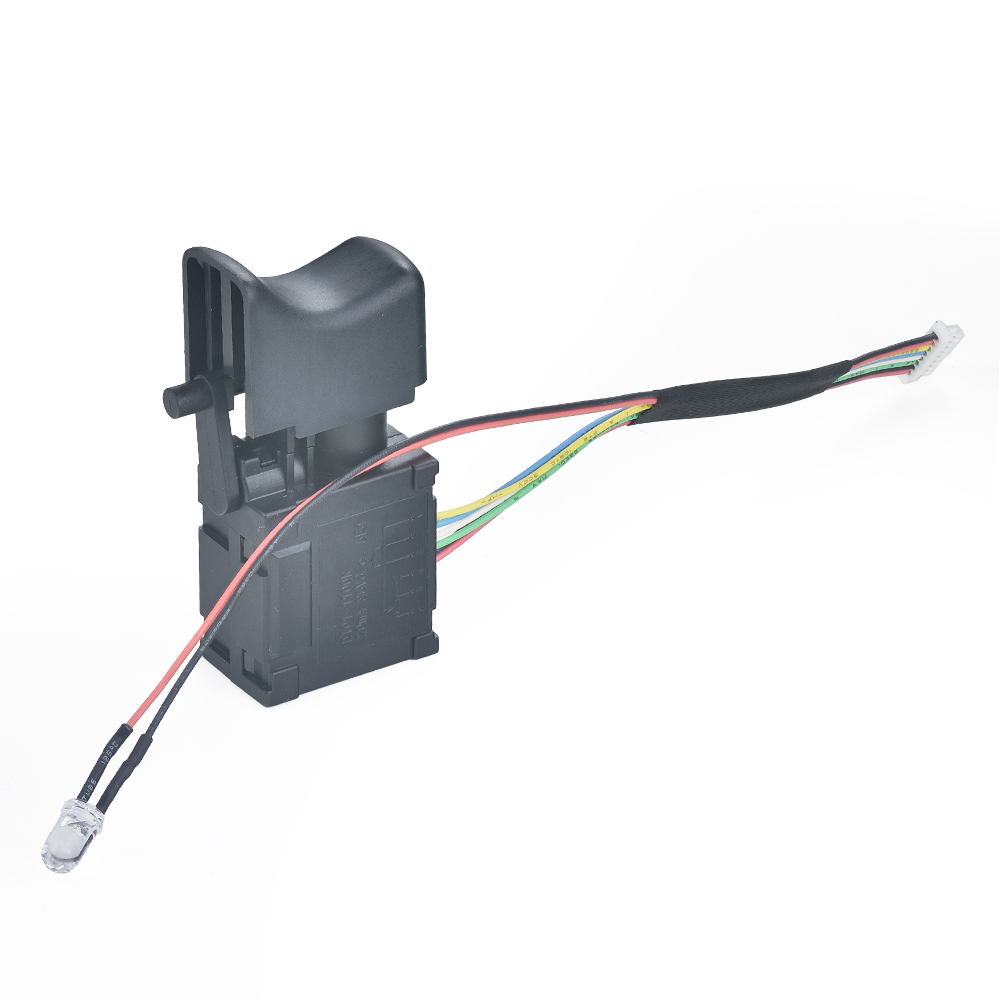
Most people assume the thirty-cent gap comes down to markup or profit margin, but that's rarely the whole story. A quote sheet's final price is driven by tiny choices that don't show up on the spec line: the exact GSM of the house stock, whether the printer runs a digital press at full speed or slows it for tighter registration, and how they handle trim waste on a short run. One shop might be quoting a 100 lb text sheet and another a 90 lb cover sheet that feels similar but costs less per thousand. The difference often isn't a discount—it's a different set of assumptions.
Then there's the setup factor. On a 500-sheet order, a $25 plate or click charge spread across the run can shift the per-sheet cost by a nickel or more, and paper spoilage or inline finishing add another few cents. If one vendor bundles cutting and padding into the base price while the other lists it separately, you'll see a gap that looks arbitrary but is actually just accounting. The real reason two quote sheets can be $0.30 apart is that small-run pricing magnifies every variable, from leftover stock to how many sheets a shop expects to waste dialing in color.
Why Some China Trigger Switch Makers Excel at Consistency—and Others Crash
Consistency in trigger switch manufacturing rarely comes down to a single breakthrough—it’s the accumulated weight of dozens of micro-decisions that separate reliable suppliers from those who ship batches with erratic actuation force or premature contact wear. The best Chinese factories treat raw material sourcing as a non-negotiable: they lock in specific copper alloy grades, spring wire tensile ranges, and injection-molded housing polymers from audited sub-suppliers, rejecting lots that drift even 2% off spec. Meanwhile, lower-tier makers often chase spot-market pricing, unknowingly accepting variation that shows up later as inconsistent click feel, unstable electrical bounce, or shortened mechanical life. The difference isn’t just documentation—it’s a refusal to let marginal savings override predictable output.
Beyond materials, calibration discipline separates the leaders. Top-tier trigger switch lines run automated force-displacement testers on every production batch, not just a sample, logging peak force, travel, and release point into a traceable database. They recalibrate insertion machines twice per shift and use vision systems to reject misaligned contacts before assembly. In contrast, struggling plants often rely on manual feel checks or outdated go/no-go gauges, allowing drift to accumulate until a customer complaint forces a reactive audit. That reactive posture—fixing after failure instead of preventing before shipment—is the clearest sign a maker will eventually crash on a high-volume order with tight tolerances.
There’s also a cultural factor few outsiders see: how a factory handles its own learning curve. Consistent suppliers treat every new trigger switch design as a process to stabilize, not a product to ship once. They run small-batch pilot runs to map how mold temperature, spring winding speed, and contact riveting pressure interact, then lock those parameters into work instructions with alarm limits. Crashers typically skip pilot runs, push straight to full production, and hope that “close enough” passes incoming inspection. Over time, that hope becomes the recurring root cause of field failures, warranty returns, and lost contracts—while the disciplined makers quietly earn a reputation for switches that feel identical from first unit to millionth.
How to Read a Trigger Switch Spec Sheet Without Getting Fooled
Manufacturers love to print the number that makes their switch look toughest, but that headline rating often assumes a resistive load at 25°C with a gentle on/off cycle. The moment you switch a motor, a solenoid, or a capacitive input, the inrush current can spike several times higher than the steady-state figure. Always check the fine print for load type, ambient temperature, and duty cycle. A switch rated at 10A 250VAC might only survive a few thousand cycles if you're actually switching an inductive load, not a toaster.
Pay close attention to the difference between mechanical life and electrical life. Mechanical life just means the spring and pivot can click back and forth a million times with no current flowing; electrical life is what happens when real voltage and current arc across the contacts. Some data sheets bury the electrical life in a footnote or omit it entirely. Look for certification marks like UL or VDE, but don't assume they cover your exact load. Ask the vendor for a derating curve and a test report that states the power factor or time constant used during endurance testing.
When comparing two switches that look identical on paper, force yourself to line up the test conditions side by side. One brand might rate a trigger switch at 15A with a 10% duty cycle, while another rates at 10A with 100% duty cycle. The first switch isn't necessarily better; it's just tested under a less punishing schedule. Also watch for the word 'max' versus 'typical' — a max rating is a limit you shouldn't exceed, while a typical rating is just an average that can drift. If a spec sheet doesn't show a derating curve or won't share the endurance test setup, treat that missing information as a red flag, not a minor omission.
The Unspoken Rules of Lead Times During Chinese Holidays
Chinese holidays don't follow a single nationwide shutdown calendar. While official dates for Spring Festival or National Day are well-known, the actual lead time impact starts weeks earlier and ends days or weeks later. Factory workers often travel home well before the official holiday, and production lines slow down as orders pile up. This means a supplier's quoted "before holiday" deadline is usually the last safe date, not a comfortable target.
The unspoken rule is that you need to confirm three things: the supplier's own holiday schedule, their upstream material suppliers' schedules, and the courier or freight forwarder's cutoff. Many buyers overlook the second one. A factory may stay open a few extra days, but if their anodizing or packaging vendor closes early, your goods still won't ship. Always ask for the real cutoff date, not the official holiday start.
Another rule: don't assume every province follows the same dates. Guangdong, Zhejiang, and Jiangsu have slightly different rhythms because migrant worker travel patterns vary. Shipping before the holiday rush often costs more, but it's cheaper than explaining a three-week delay to your customer. If you need goods in late January or early February, add at least 10 to 14 days to your normal lead time, and keep a small buffer for last-minute line stoppages.
Building a Trigger Switch Supply Chain That Survives Your Peak Season
Peak season failures rarely start with a missing trigger switch. They pile up through overlooked handoffs: a plating shop falls behind, a spring shipment gets rerouted, and suddenly three assembly lines are waiting on the same tiny contact. Map every second- and third-tier supplier that feeds into the housing, spring, and contact plating. Give each node a realistic recovery time based on past disruptions, not the vendor's best-case quote. That tells you which shortages can be covered with a few days of buffer and which ones need a completely different sourcing strategy long before orders spike.
Holding a single large safety stock of finished switches rarely works because demand never spikes evenly across every variant. Instead, split inventory into three tiers: finished goods reserved for known accounts, semi-finished subassemblies that can be configured within a week, and raw materials shared across multiple SKUs. Reorder points should follow lead-time volatility, not just average daily use. A supplier that quotes four weeks but occasionally takes seven needs a larger buffer than one that is reliably two days late, and treating them the same is how backlogs sneak up on you.
Put flexibility into supplier contracts before the rush, not during it. Keep a second source for the plastic housing and the leaf spring running at even fifteen to twenty percent of normal volume. That small share keeps their line familiar with your tolerances and gives you a fast ramp when the primary plant hits maintenance or a resin shortage. Pair this with a weekly sales and operations review that tracks trigger-switch consumption against plan, so a two-day demand swing gets corrected in the same week rather than turning into a month-long shortage.
FAQ
Look beyond the quote. Ask for tear-down samples from current production, not pre-approved ones. Confirm whether the supplier does in-house contact welding and injection molding or outsources them, because that affects consistency. If possible, have an engineer check the plating thickness on terminals and the spring material—cheap substitutions there are common.
Most established factories keep a library of existing housings and contact layouts that can be adapted, which cuts tooling time. For a new shape, expect to discuss travel distance, actuation force, and mounting points early. A good supplier will suggest changes to make the switch easier to assemble and less likely to fail in the field, rather than just copying a drawing.
UL, VDE, CQC, and sometimes ENEC depending on the destination. The exact standard matters more than the logo—many switches are rated under UL 1054 or IEC 61058-1. Ask for the full test report, not just the certificate, and check if the rating covers your specific voltage and motor load.
Sometimes, but only if the customization is limited to things like wire length, connector type, or lever color. If you need a new housing or contact geometry, the tooling cost has to be spread over a larger run. Expect factories to quote a higher unit price below 5,000 pieces, but some will still take smaller trial orders to build a relationship.
Random sampling from the actual production line is more useful than a golden sample. Run a life-cycle test if the supplier has the equipment—ask for a video with the counter visible. Check for intermittent contact by cycling the switch under load, not just with a multimeter. Also feel for excessive play in the trigger after a few thousand actuations.
For standard models with no changes, two to four weeks is common if components are in stock. Custom variants usually add one to three weeks for tooling adjustments and sample approval. The biggest delays tend to come from waiting on customer approval of drawings or samples, so tighten that step more than factory production time.
Yes, a specialized factory is more likely to understand how the switch behaves in a real tool—arcing, dust ingress, and mechanical shock. Traders can be faster on price comparison but often cannot tell you why a switch failed or whether an alternative contact material will fix it. For safety-critical parts, that engineering back-and-forth is worth the extra effort.
More buyers are asking for integrated speed control and soft-start functions inside the trigger assembly, not just a basic on-off switch. Factories are also moving toward automated contact welding and inline testing to reduce labor variance. At the same time, environmental rules are pushing some plating processes to less toxic alternatives, which can slightly change contact resistance.
Conclusion
Walking a Dongguan trigger switch factory floor tells you more than any brochure. Look at how operators handle springs and contacts, whether bins are marked, whether testing stations run constantly. A $0.30 gap between two quote sheets usually hides something: maybe one supplier uses thinner copper or skips a burn-in cycle. The factories that excel at consistency don't rely on heroic workers—they build fixtures that remove guesswork, and they track defect rates per shift. If a spec sheet lists only "electrical life: 10,000 cycles" without specifying load type or actuation speed, ask for the test method. Real data comes from the lab bench, not from a template.
Chinese holidays rewrite lead times in ways calendars don't show. Trigger switch lines slow down a week before Spring Festival and take ten days after to regain rhythm. Plan orders around the lunar calendar, not just your fiscal one. To survive peak season, build a supply chain with overlapping capacity: qualify a second molding partner and a backup contact supplier before you need them. Share rolling forecasts early—even rough ones—so the factory can reserve plating and assembly slots. The buyers who get reliable trigger switches aren't the ones who squeeze pennies; they're the ones who understand that supplier relationships and process audits matter as much as the part drawing.
Contact Us
Contact Person: Anna lin
Email: [email protected]
Tel/WhatsApp: +86 13567768885
Website: https://www.kjele.com/