

Chinese Perkins Generator Set: Dependable Performance and Efficiency for Critical Power Needs
2026-11-24
When the grid fails or the job site sits far from stable power, every second of downtime counts. Chinese Perkins generator sets have earned a reputation for stepping in without hesitation, pairing rugged engineering with fuel efficiency that operations managers notice on the first billing cycle. But dependable standby power is only as strong as the support behind it. That is where Hichai Power comes in, bringing proven Perkins performance into real-world applications where heat, dust, and nonstop demand separate reliable machines from costly compromises. In this guide, we look at what makes these generator sets a practical choice for critical power needs, and why the right sourcing partner changes the long-term equation.
Why Chinese Perkins Generator Sets Handle Critical Loads Without Complaint
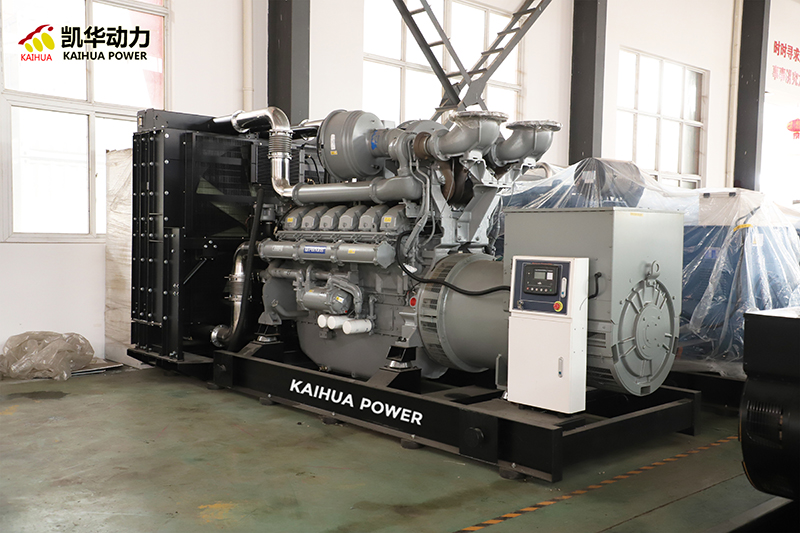
Chinese Perkins generator sets earn their reputation on the back of relentless engineering refinement, not marketing gloss. The Perkins engine blocks, manufactured under license in China, are machined to tolerances that mirror their UK counterparts, but local production adds a layer of practical adaptation: cooling systems tuned for humid, dust-heavy environments, and fuel injection calibrated for variable diesel quality. This is the kind of unglamorous work that keeps a hospital's ICU running through a week-long grid failure, or a data center humming while the city outside goes dark.
The real story is in the load acceptance curve. When a critical load hits—say, a bank's trading floor or a cold storage facility full of vaccines—these generators do not stumble through voltage dips or frequency swings. The alternators are paired with automatic voltage regulators that respond in milliseconds, and the engine governors are set to recover full speed within a fraction of a second. Operators often mention that after the first ten seconds of a sudden load transfer, the Perkins set settles into a steady rhythm as if nothing happened. That composure under stress is not an accident; it comes from testing every unit under simulated step loads before it leaves the factory.
Maintenance habits also play a quietly decisive role. Chinese Perkins sets are built around common parts availability and straightforward service points, which means a technician in Manila or Lagos can replace a filter or inspect the cooling jacket without chasing rare components. Over time, that accessibility translates into fewer deferred maintenance issues and fewer surprise failures. When a generator is expected to handle critical loads without complaint, the least glamorous factor—whether someone can actually keep it running at 2 a.m.—turns out to be the one that matters most.
Fuel Consumption Numbers That Hold Up in Real Running Conditions
Most official fuel consumption figures start to unravel once the test cycle gives way to cold starts, short commutes, and stretches of stop-and-go traffic. A car that posts a tidy number on paper can easily burn fifteen to twenty percent more when the engine rarely reaches operating temperature or when every junction demands another pull away from idle. For a realistic baseline, the numbers worth trusting are the ones gathered over several weeks on the same roads a driver actually uses, rather than a single gentle run with a warm engine and no passengers.
Payload and aerodynamics silently rewrite the results in everyday use. Roof boxes, bike racks, a full boot, or even a set of wider tyres each shave away efficiency in ways the standard tests do not capture. On motorway runs, sustained speed above roughly 110 km/h pushes consumption up quickly, while hilly terrain punishes small turbocharged engines more than their official ratings suggest. The figures that hold up tend to come from mixed driving: some urban crawl, some open road, and a couple of cold mornings thrown in.
Weather adds another layer that no laboratory cycle can fully replicate. In winter, denser air, longer warm-up times, heated screens, and winter tyres all pull fuel use upward. In summer, air conditioning and hotter intake air do their own quiet damage. A believable real-world number therefore sits within a band rather than at a single point. If a driver records the same consumption across several tanks and driving patterns, that figure is far more useful than the most optimistic claim on a specification sheet.
The Perkins Engine Platform Behind Dependable Standby Power
A standby engine rarely earns praise when it works, and that absence of drama is what the Perkins platform is designed around. The engine families used in generator sets take a deliberately conservative path: strong block castings, direct-coupled cooling packages, and fuel maps that favour clean pickup over headline power. Those choices matter most when the unit has been sitting silent for weeks and is suddenly asked to carry a hospital wing or a pumping station without hesitation.
Equipment packagers also keep coming back to the platform because it simplifies integration. Wiring interfaces are consistent, the mounting points are predictable, and the service intervals line up with how facilities actually maintain backup systems rather than how a lab would run them. That may sound unremarkable until a technician has to replace a filter under pressure in the middle of a storm.
Over time, the platform has built a reputation through the less visible side of power generation: governor response during step loads, low oil consumption between scheduled visits, and parts availability in regions where downtime is measured in minutes. Those are the qualities that make it a quiet but persistent presence in critical power rooms.
What Clean Voltage Stability Means for Sensitive Equipment
Sensitive equipment doesn't just need power—it needs power that behaves predictably from one cycle to the next. Clean voltage stability means the waveform arriving at your device holds its shape, amplitude, and frequency without sudden sags, swells, or high-frequency noise riding on top. For a precision instrument, a fluctuation of even a few volts can shift a reading, corrupt a data packet, or push a power supply outside its regulation range long before a breaker ever trips.
The real challenge is that most people only notice instability when something fails outright. By then, the damage may already be done inside microprocessors, sensors, or motor controllers that experienced repeated micro-interruptions. Clean voltage isn't about achieving a perfect sine wave in a lab—it's about narrowing the gap between what the utility delivers and what your equipment actually tolerates. That means addressing common culprits like load switching from nearby machinery, neutral-ground voltage shifts, and harmonics generated by variable-speed drives on the same branch circuit.
In practice, clean voltage stability often comes down to how well the electrical infrastructure isolates one device from another's demands. A dedicated circuit with an oversized neutral, a low-impedance grounding path, and properly rated surge suppression can keep a sensitive analyzer from seeing the electrical equivalent of someone flushing a toilet upstream. When the voltage stays clean, the equipment doesn't have to work harder to compensate—it just does its job, and subtle errors stop accumulating over time.
Service Access and Parts Availability When an Outage Hits
A sudden grid failure or localized blackout rarely arrives with a warning, which means the way you reach support and the speed at which replacement components arrive tend to matter more than any spec sheet. During extended outages, phone lines can become jammed and web portals may be unreachable, so it helps to know whether your equipment supplier runs a dedicated emergency dispatch desk or simply leans on the same general customer service queue as everyone else. The real test is not whether they promise 24/7 coverage in a brochure, but whether a live technician answers quickly on a stormy Tuesday night and can cross-check inventory without putting you on hold for forty minutes.
Parts availability follows a different logic altogether. Many vendors stock deep inventory for their high-volume models, yet critical items like transfer switches, control boards, or specific breakers often sit in regional hubs rather than local warehouses. Ask direct questions before you commit: Where is the nearest depot for your generator's alternator or voltage regulator? How long does a ground shipment actually take when road closures are in effect? A company that can pull a part from a service van or a nearby contractor's shelf will get you back online days faster than one that relies on a centralized distribution center three states away.
Another overlooked factor is modularity and substitution. If a fan motor or fuel solenoid fails, can a technician temporarily install a compatible part from a different model line, or does the unit require an exact match that only the factory can ship? Field improvisation is rarely advertised, but it separates vendors who understand real-world repair timelines from those who treat every outage as a controlled lab scenario. The best way to gauge this is to ask for a specific recent outage case in your area, then listen for whether the answer mentions actual part numbers, depot locations, and truck stock rather than generic reassurances.
Matching Generator Capacity to the Job Instead of Buying Blind
Buying a generator based on a vague wattage guess leads to wasted fuel, premature wear, or a machine that trips the moment the real load kicks in. Instead of treating capacity as a single number, start by listing every device that will run at the same time and note its starting surge. Motors, pumps, and compressors often draw two to three times their running watts for a few seconds, and overlooking that spike is where most sizing mistakes begin.
Once you have the honest peak demand, compare it against the generator's continuous rating rather than its marketing headline. A unit labeled 10,000 watts might only sustain 8,500 watts for long stretches, which matters if you are backing up a workshop or a small commercial kitchen. Matching capacity to the job also means thinking about duty cycle: a generator run near its limit for hours every day will fail sooner than one with a comfortable margin, even if the spreadsheet says both fit.
The practical approach is to buy for the worst realistic scenario, not the theoretical maximum. Add a buffer of 10 to 20 percent above your measured peak, then resist the temptation to go larger just because the price difference looks small. Oversized units burn extra fuel at light loads and can wet-stack diesel engines. A correctly sized generator runs cleaner, lasts longer, and costs less to operate from day one.
FAQ
Look closely at the alternator match, voltage regulation, and cooling layout. The Perkins engine is only part of the picture; a well-integrated Chinese assembly should maintain stable output when large motors start or when load shifts suddenly.
They tend to favor them because the Perkins engine has a strong service network and predictable parts availability. Chinese manufacturers often pair that engine with automatic transfer switch compatibility and fast-start controllers, which reduces the time between grid failure and backup power.
Perkins engines frequently use electronic fuel injection and optimized combustion, so a set running at 50 to 75 percent load can still keep fuel consumption reasonable. The actual result depends on the alternator efficiency and whether the control system adjusts engine speed or runs at fixed speed.
Many Chinese suppliers offer derating guidance and radiator upgrades for high temperatures or altitude. You may need a larger cooling package or a turbocharged Perkins model, but the base designs are often tested in harsh conditions before shipment.
Regular coolant checks, fuel filtering, and battery testing matter more than assembly origin. Because Perkins engines have widespread dealer support, replacement filters, belts, and sensors are usually easy to source.
If the generator sits near a clinic, hotel, or office, a sound-attenuated canopy helps meet local noise limits. Open sets are easier to service and usually cheaper, so they fit industrial yards or remote pumping stations where noise is less of a concern.
The controller monitors oil pressure, coolant temperature, and frequency, then shuts down the set or raises an alarm before a small fault becomes serious. Better systems also support remote start commands and load sharing when multiple units run in parallel.
Yes, but the unit must be rated correctly. Standby ratings allow limited hours per year, while prime-rated sets are built for ongoing variable loads. Confirm that the alternator, breakers, and cooling are matched to a prime-duty cycle rather than just emergency use.
Conclusion
Chinese Perkins generator sets tend to stay composed when a critical load steps on because the engine and alternator are matched for real demand, not just a glossy spec sheet. That matters for sites where pumps, compressors, or HVAC fans start across the line and briefly pull several times their running current. The Perkins engine platform responds without long recovery dips, and fuel use in the field often sits close to the published curves even during messy partial-load operation. Voltage and frequency stay in a narrow window, so sensitive electronics like lab instruments, server stacks, and PLC panels do not see the kind of flicker that forces a reboot or faults a drive.
Maintenance access is another reason these units hold up when an outage drags on. Filters, belts, coolant points, and the control interface are placed within easy reach, and Perkins parts remain widely available through Chinese assembly and service networks, which shortens repair time. Still, buying blind causes most problems. A generator should be sized for surge current, motor starting, and continuous duty together, not just total kilowatts on a label. When capacity is chosen honestly, the set runs cooler, burns fuel more steadily, and avoids wet stacking or constant cycling. That combination of stable output, realistic fuel consumption, and straightforward service makes these Chinese-built Perkins sets a sensible fallback for hospitals, data rooms, water plants, and other operations where power loss is not an option.
Contact Us
Contact Person: Ms. Lu
Email: [email protected]
Tel/WhatsApp: 8618917899306
Website: https://www.hichaipower.com