

Corrugated Rotary Die Making Equipment Supplier for Reliable High-Volume Corrugated Box Production
2026-10-28
When high-volume corrugated box production demands precision and uptime, the choice of rotary die making equipment matters more than most realize. At ADEWO, we've seen how the right tooling transforms a bottleneck into a competitive advantage. But what separates a dependable supplier from a costly gamble? Let’s unpack the essentials.
Rotary Die Geometry That Holds Up When Daily Output Climbs
When production schedules tighten, the geometry of a rotary die becomes the difference between a smooth run and a costly shutdown. Shallow relief angles and tight clearances that work fine at low volumes quickly turn into heat traps as speed increases, causing material to gall and edges to roll. A die that holds up under climbing output needs deeper chip clearance and a slightly negative rake on the cutting edge, so the tool sheds waste instead of hammering it back into the cut.
Long runs also expose weak spots in the land and radius design. A sharp corner looks precise on the drawing, but under continuous rotation it concentrates stress and micro-fractures begin at the root. Shifting to a small radius at the transition, paired with a wider land behind the cutting edge, spreads the load without sacrificing the cut quality. This keeps the die stable when daily output jumps from a few thousand to tens of thousands of parts.
Material choice gets overlooked, but geometry and grade have to work together. A die ground with aggressive clearances in a standard tool steel will snap under the same load that a powder-metal grade shrugs off. Matching the relief angle to the material's toughness, and keeping the web thickness consistent along the entire profile, prevents the kind of uneven wear that forces an early changeover. That is how a rotary die earns its place on a high-volume line.
How Anvil and Blanket Wear Quietly Erode Cut Accuracy
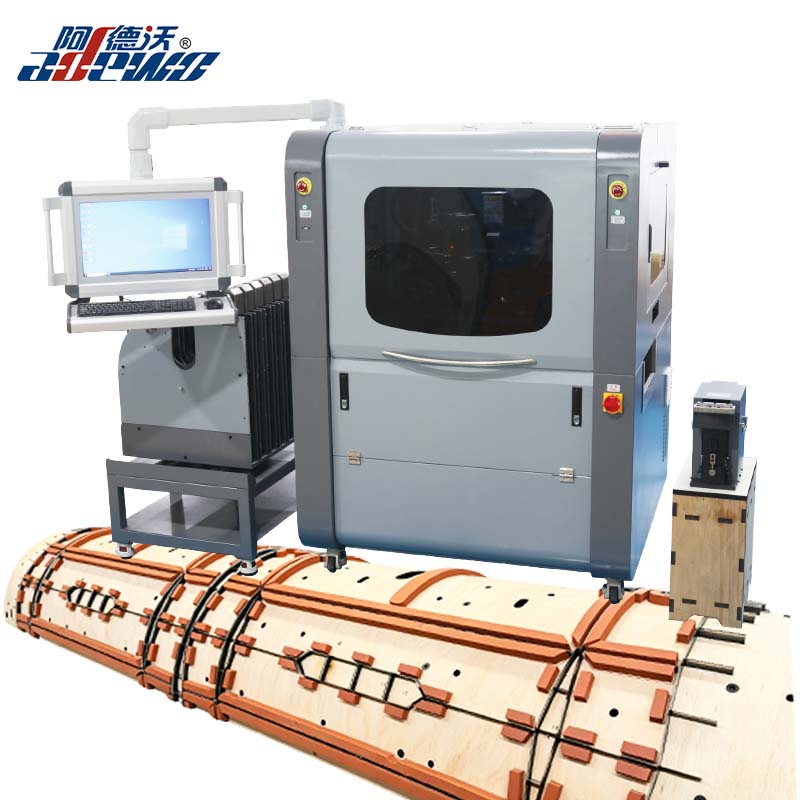
Wear on the anvil and blanket rarely shows up as a sudden failure. Instead, the blanket slowly loses its resilience where the cutting die strikes most often, while the anvil develops faint grooves or a polished track. These changes alter the nip profile in subtle ways—pressure drops in some zones and rises in others, so the blade no longer seats at a consistent depth across the full width.
The result is a gradual drift in cut accuracy. Kiss cuts become inconsistent, some areas barely score the liner while others cut through it. Operators often respond by increasing pressure, but that only masks the unevenness and accelerates further wear. Over time, the cut line shifts because the material feeds slightly differently over the degraded surfaces.
Catching this requires routine measurement rather than visual checks alone. A simple caliper reading across the blanket can reveal thickness variation, and checking anvil runout spots early grooving. Replacing worn components before the tolerances stack up keeps cuts predictable, but ignoring the slow erosion leads to scrap that gets blamed on everything except the real culprit.
What a Supplier Brings After the First Die Lands on Your Floor
Once the die is set on your floor, a real supplier doesn’t just leave a crate and a bill. They arrive with the actual setup sheets, torque specs, and a log of every adjustment made during the last tryout. You get the measured dimensions from the final sample run—not just the CAD numbers—plus notes on what to watch during the first hundred hits, like any tight spots in the stripper or a punch that had to be shimmed a few thousandths.
Beyond paperwork, expect a technician who knows the quirks of that particular tool. They’ll point out where galling showed up in the prototype stage, how the die behaves at full speed, and which wear plates need the most attention. That person should stay through the first production run, checking for heat buildup, slug pulling, or any drift in shut height. If something shifts, they fix it on the spot instead of promising a service call next week.
And if the die has wear-prone details, they’ll leave behind spare punches, springs, and keepers, along with a plain-language maintenance list. Not a forty-page manual—just a short note on what to grease, when to check the shear, and who to call when the first insert needs replacing. That kind of handoff is what separates a supplier from a vendor.
Matching Die Configurations to Board Grade and Flute Profile
Running the same die configuration across every board grade quietly eats away at both edge quality and tool life. The bevel angle on cutting rules, the depth of the crease channel, and the placement of ejection rubber all need to respond to fiber density and caliper. Heavier virgin-fiber boards with high ECT ratings tend to resist the initial penetration, so a longer, more polished bevel and a slightly wider crease matrix prevent the top liner from fracturing. Recycled or lighter-weight boards, by contrast, cut cleaner with a steeper bevel and a firmer crease bar that collapses the flute without crushing the sheet.
Flute height is the next lever. A, C, and B flutes differ not just in thickness but in how much they spring back after creasing. A flute's taller profile calls for a wider crease channel and a shallower depth setting; too deep and the inner liner splits at the fold. E and F microflutes run thinner and denser, so the dieboard slot width and rubber-to-rule clearance can be tightened, but the nip pressure needs more frequent checks to avoid scoring through the bottom liner. Aligning slot widths with flute pitch also reduces the ragged edge tear that shows up on high-speed converting lines.
A practical way to manage this is to build a small test matrix: board grade on one axis, flute profile on the other. Cut a two-rule sample die with adjustable crease channels, measure cut force and fiber pull at the edges, then fold a sample and check the bulge. From there, adjust ejection rubber durometer and height as flute height changes—taller flutes generally need taller, faster-rebound rubber to strip cleanly without distorting the sheet. This keeps the die tuned to the actual board running that shift instead of relying on a single house standard.
Reading Knife Marks and Nick Quality Before a Run Fails
Operators often miss small nicks until edge burrs or breaks show up mid-run. But the cutting edge leaves readable signals before that. Use a 10x loupe to scan along the edge and look for periodic micro-chipping—if the spacing matches a roller diameter, the problem is in the roll, not the blade. Run a fingernail lightly across the edge to feel for tiny rolled-over spots or localized dulling.
Nick quality matters more than count. Conchoidal fractures usually come from a sudden impact, like a splice or hard contaminant. Jagged, stepwise cracks point to fatigue bending. Check the bottom of the nick: if one side shows plastic deformation or displaced material, the impact came from that side. This helps trace the actual force source.
Set action lines before the run fails. When nick depth exceeds 20% of the edge thickness, or you count more than three visible micro-nicks per 10 cm, replace or regrind. Keep a digital photo of each blade change with date and runtime notes. Overlay comparisons reveal wear trends and give you a few hours of warning instead of a surprise shutdown.
The Real Cost of Rework When Dies Are Not Built for Volume
Rework costs rarely announce themselves as a single line item. They hide in overtime wages, scrap material, delayed shipments, and the quiet erosion of customer trust. When a die is engineered for short-run or prototype work but pushed into high-volume production, every cycle becomes a test of its limits. Misaligned guides, premature wear on cutting edges, and inconsistent ejection forces force operators to stop, adjust, and restart. These interruptions feel minor at first, but across tens of thousands of cycles, they compound into a productivity sinkhole that no amount of manual fine-tuning can fix.
The financial damage goes beyond the press itself. A die that cannot hold tolerances over a long run produces parts that drift out of spec slowly enough to pass initial checks but fail at assembly or in the field. Those failures trigger containment actions, freight charges for expedited replacements, and sometimes full field recalls. Meanwhile, the engineering team is pulled away from new program launches to babysit a tool that was never meant for the demand placed on it. In many cases, the true cost of rework equals or exceeds the original tooling investment, yet it never shows up on the capital expenditure report.
Perhaps the steepest price is paid in lost opportunity. Every hour spent fighting a weak die is an hour not spent running a robust one. Capacity constraints ripple through the schedule, forcing overtime on other jobs or turning away profitable work. Customers remember late deliveries and quality disputes long after the invoice is settled. Building a die for volume from the start costs more upfront, but it buys back the most valuable asset in any stamping operation: predictable, uninterrupted throughput.
FAQ
They offer a range of rotary die cutters, including flexo die cutters, standalone rotary die cutters, and high-speed models designed to handle various flute profiles and board thicknesses.
It allows for continuous, high-speed cutting with precise registration, reducing setup time and material waste while maintaining consistent output on long runs.
Check their track record with box plants, the quality of their die boards and tooling, availability of technical support, and whether they offer custom engineering for unique box designs.
Yes, most modern rotary die cutters can be adjusted for single-wall, double-wall, and even triple-wall board, with interchangeable anvil covers and adjustable die pressure.
With proper lubrication and regular inspection of bearings, gears, and anvil covers, these machines can run for thousands of hours before major service is needed.
Absolutely. Many suppliers work from your CAD files or physical samples to produce dies with intricate cutouts, creases, and perforations tailored to your packaging requirements.
Rotary die cutters run continuously at higher speeds, making them better for large orders. They also produce cleaner cuts on corrugated board and reduce downtime between jobs.
They use CNC machining for die boards, laser alignment systems during setup, and often include automated registration controls that keep cuts within tight tolerances throughout the run.
Conclusion
Rotary die geometry either survives the jump in daily output or it quietly fails. On high-volume corrugated lines, the pressure between die, anvil, and blanket never lets up. A slightly off profile or a soft shoulder starts showing up as ragged cuts and crushed flutes within weeks, not months. Anvil and blanket wear are rarely dramatic; they take a few thousandths here and there until the cut accuracy drifts past the point where boxes square up. Board grade and flute profile demand different clearances and rule heights, so a die that runs fine on B-flute may chew through lightweight E-flute or stall on double-wall board. The real cost shows up later in rework, jammed folders, and damaged blanks, not just in the tooling invoice.
That is where a supplier that builds dies for volume separates itself. After the first die lands on your floor, the conversation should shift from specs to symptoms: knife marks on the anvil, nick quality on the scrap, edge crush on the leading flap. Reading those marks before a run fails means the difference between a scheduled adjustment and an unplanned line stop. A die maker who understands daily output asks about your board mix, your folder-gluer settings, and the pressure ramps you actually run, not just the drawings you sent. When dies are not built to hold up under those conditions, rework becomes a recurring expense that no per-die discount can offset. Reliable high-volume production comes from a supplier that treats the die as part of a running system, not a one-time purchase.
Contact Us
Contact Person: KAELYN LEE
Email: [email protected]
Tel/WhatsApp: +86 15012673758
Website: https://www.china-adewo.com