

D Rings Factory Producing Durable D-Ring Hardware for Industrial Applications
2026-10-02
When heavy loads meet harsh environments, the last thing you want is a D-ring that bends under pressure. That's exactly the problem Kingming set out to solve from its factory floor. Specializing in durable D-ring hardware for industrial applications, this manufacturer combines rigorous material selection with precision forging to deliver components that outlast the job. In this post, we'll walk through what makes their D-rings a cut above and why your next project might just depend on that small but critical link.
Before You Buy D-Rings: What Most Load Charts Don’t Tell You
A load chart gives you a clean number—working load limit, breaking strength, maybe a safety factor. What it rarely shows is how quickly that number falls apart when the pull isn’t perfectly straight. Side loading, off-axis angles, or a sudden shock load can cut the real capacity by half or more, and no stamped rating will warn you about that in the field. Before you commit to a D-ring, think about the worst angle you’ll actually use, not just the ideal one on paper.
Material and manufacturing shortcuts are another story load charts stay quiet about. A forged alloy steel D-ring and a cast mystery-metal copy can share the same nominal size and even a similar WLL stamp, but they behave very differently under stress. Castings hide porosity and micro-cracks that grow with every cycle, while a proper forging aligns the grain structure for toughness. If the price seems too good, ask what you’re not being told about the alloy grade or the heat treatment—because the chart won’t volunteer it.
Finally, pay attention to what’s missing from the markings themselves. A trustworthy D-ring should carry a traceable manufacturer’s mark, the WLL, and a reference to a real standard like ASME B30.26 or EN 1677. Load charts often omit the fact that uncertified hardware may never have been proof-tested at all. Buying a D-ring without that traceability is like trusting a bridge with no inspection report: the numbers look fine until the day they don’t.
How We Test D-Rings So They Survive Forklift Impacts
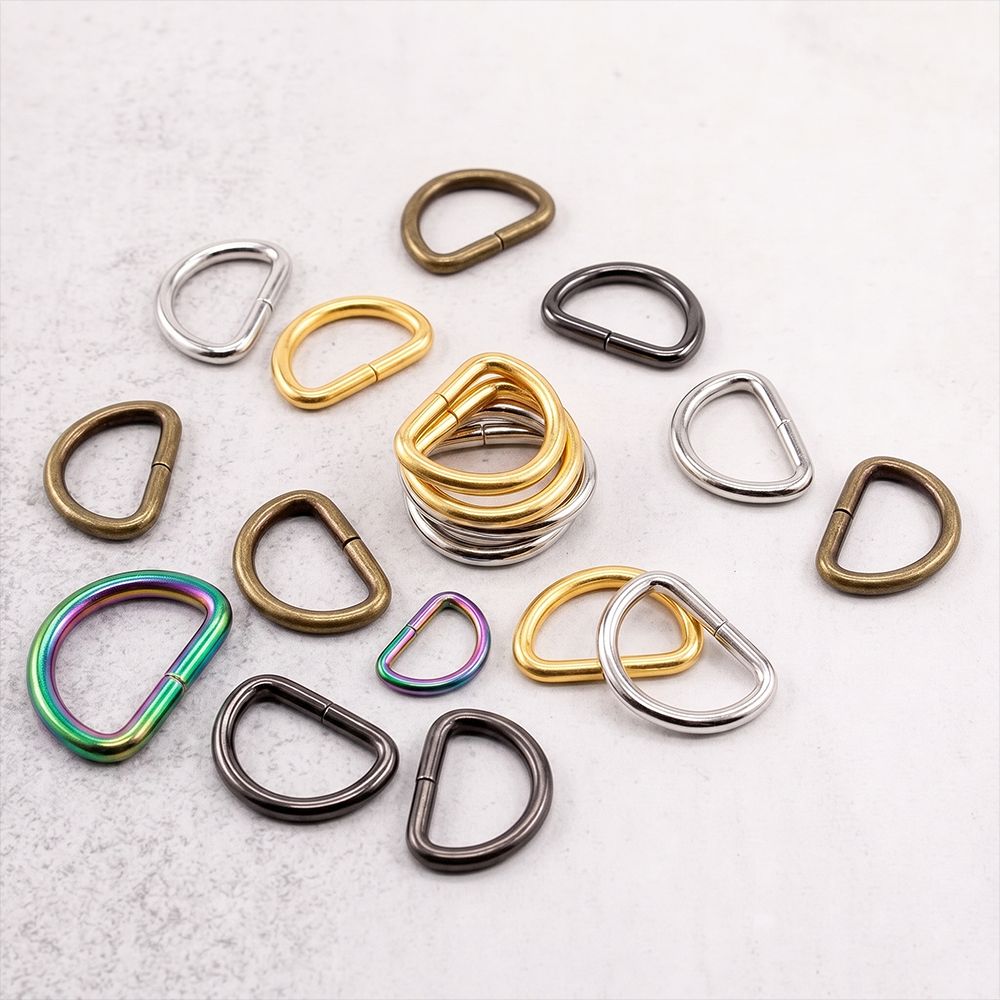
Before any D-ring leaves the floor, we put it through a battering that mirrors the worst a forklift can dish out. A weighted steel carriage slams into the ring at controlled speeds, and we film the whole sequence at 2,000 frames per second. The footage tells us where the metal flexes first, whether the weld holds, and if the base plate twists away from the mounting surface.
We also run a blunt-force drop test using a 900-kilogram impactor from a height that reproduces a loaded fork hitting the ring at full travel. After each hit, we measure permanent deformation and check for micro-cracks with dye penetrant. Rings that pass get cycled another 50,000 times under a 12-tonne rated load to make sure the fatigue life still holds up.
Real dock conditions rarely follow a script, so we finish with a randomized abuse round: off-angle strikes, chain yanks, and cold-weather impacts at -18°C. The D-rings that survive all of this without losing more than 1.5 millimetres of shape are the only ones we stamp with a batch number and ship.
The Difference Between Cheap and Durable D-Rings (It’s Not Just Steel)
Most people assume a D-ring is just a D-ring—a bent piece of metal, nothing more. But the gap between a cheap one and one that lasts years comes down to details you can’t see at first glance. It’s rarely about whether it’s “steel” or not; it’s about how that steel was treated, shaped, and finished before it ever reaches your hand.
Cheap D-rings often use low-grade carbon steel with a thin, uneven coating. They might hold up for a few weeks indoors, but expose them to moisture, salt, or repeated load shifts and the plating starts to flake, the edges wear grooves into your straps, and the weld point—if there is one—becomes the first failure. Durable D-rings, on the other hand, are typically forged or cast from higher-grade alloys, then heat-treated to relieve internal stress. The surface gets a proper zinc or chrome passivation, not just a cosmetic shine, so the ring resists corrosion without becoming brittle.
Another difference shows up in the geometry. A cheap ring might have sharp inner corners or inconsistent thickness, which concentrates stress and slowly cuts through webbing. A well-made D-ring has a smooth, consistent radius and a load rating that actually matches its physical size. That’s why two rings that look identical on a shelf can behave completely differently after a year of real use—one keeps your gear secure, the other quietly becomes the weakest link.
Why Our D-Ring Factory Runs Batch Samples Every Morning
Mornings in our factory bring the most stable conditions for testing. By the time the first shift arrives, the ambient temperature and humidity have settled overnight, so measurements taken at 7 a.m. reflect the true characteristics of the raw materials without thermal drift. That's why we pull samples from the newest D-ring batches before any production runs start, checking critical dimensions with calibrated calipers and running a quick tensile test on each lot. If a batch passes this early gate, we know the rest of the day's output will hold its shape under load.
Running these batch samples at the start of every shift also lets us catch problems while they're still small. A morning test might show a plating thickness that's 0.02 mm under spec, or a weld seam that's slightly off-center. At 7:30 a.m., that's a five-minute adjustment on the line. At 3 p.m., after thousands of units are already stamped and coated, it becomes a costly rework order and a delayed shipment. The early routine saves us from both, and it's why our defect rate has stayed under 0.3% for the past two years.
Finally, the daily ritual keeps every pair of eyes sharp. Operators know their first batch will be inspected within the hour, so they pay closer attention to machine settings and material handling from the very first cycle. On the management side, we review the morning test logs weekly and spot trends that a monthly audit would miss—like a gradual die wear that shows up as a 0.01 mm drift over ten days. Catching that early means we schedule tool maintenance before it ever becomes a quality issue. It's not just a test; it's a conversation between the shop floor and the data, every single morning.
Getting Custom D-Rings Made: A Walkthrough Without Jargon
Getting custom D-rings made doesn’t require an engineering degree or a binder of technical drawings. It starts with a simple question: where will this ring live, and what job does it do? A D-ring on a dog collar faces different stresses than one on a backpack strap or a boat cover. Jot down the rough inside width, the thickness of the strap or webbing that will pass through, and whether the ring will be metal, plastic, or something else. A quick photo of a similar item with notes scribbled on it works better than you’d think.
Next, find a shop that does small-batch hardware or a metal fabricator who’s open to one-off projects. You don’t need to speak their language—just send your sketch or photo and say what material you’re leaning toward, like stainless steel for rust resistance or brass for a vintage look. Ask for a sample before committing to hundreds. Most places will send a 3D drawing or a physical prototype you can hold, bend, and clip onto your actual project. That step catches issues like sharp edges or an opening that’s slightly too narrow.
Once you approve the sample, the rest is mostly waiting. Production time varies, but for a few dozen to a few hundred pieces, expect anywhere from two to six weeks depending on finish and plating. When the box arrives, give them a once-over: run a finger along the inside edge, check that the weld or seam is smooth, and make sure the coating isn’t flaking. If something feels off, a good shop will rework or replace them. That’s the whole walkthrough—no jargon, no mystery, just a few clear steps between you and a D-ring that fits your project exactly.
Real Lessons from Industrial D-Ring Failures (And How We Prevent Them)
A few years back, a rigging crew on a wind farm lost a nacelle cover during a lift. The D-ring failed at the weld, not because the load was over capacity, but because the ring had been quietly bending under repeated side-loading for weeks. Nobody noticed the deformation until it was too late. That incident taught us something gear catalogs rarely mention: D-rings don't just snap from overload—they wear out through fatigue, misalignment, and tiny daily abuses that add up.
We started cutting apart failed rings from job sites to see what actually happened. In nearly every case, the break started at a stress riser: a sharp stamp mark, a weld undercut, or a scratch from dragging across concrete. One common failure we saw came from using a standard D-ring as a lifting point for a chain sling without a shackle—the chain links bit into the ring and created deep grooves. Those grooves became crack initiation sites. So now we teach every crew to inspect rings with a flashlight and a fingernail, not just a quick glance. If you can feel a scratch, it's already a problem.
Prevention isn't complicated, but it is specific. We switched to forged D-rings with smooth, rounded edges and no hard stamping in high-stress zones. We mandate that any ring showing more than 5% permanent deformation gets cut in half and thrown away—no attempts to straighten it. And we changed how we attach slings: always use a properly sized shackle with a cotter pin, never hook a chain directly through the ring. The real lesson isn't about buying stronger gear. It's about respecting the small signs of distress before they become a dropped load.
FAQ
We stock carbon steel, stainless steel, and zinc alloy options. Each can be finished with electroplating, powder coating, or hot-dip galvanizing depending on the load and exposure conditions you're dealing with.
Yes. Send over a drawing or even a rough sketch with the required inner width, thickness, and load rating. Our tooling team can produce a prototype within two weeks for most custom profiles.
They're widely used in cargo securing, safety harnesses, marine rigging, automotive tie-downs, and heavy machinery. Some clients also use them for lifting straps and fall protection systems where a certified weld is mandatory.
On request, we can supply mill certificates, third-party load test reports, and material traceability documents. For safety-critical applications, we recommend specifying the proof load and safety factor upfront.
Stock sizes usually ship within 7–10 days. Custom tooling and finishing may add 15–25 days. We keep raw material for common grades in-house, which shortens delays when you need a reorder quickly.
We focus on the hardware itself, but we can recommend approved webbing partners if you need a complete strap assembly. For welded D-rings, we can include a weld-on bracket or eye plate as part of the same production run.
We run in-process checks on dimensions, surface finish, and plating thickness. Every batch goes through a final visual and dimensional inspection before packing. For high-volume orders, we can add a random sample load test at no extra charge.
Yes, we can send stock samples within a few days. For custom designs, we produce a small pre-production run so you can verify fit and finish before we commit to the full order.
Conclusion
Most load charts for D-rings only list static breaking strength, but real industrial use involves dynamic shocks, off-axis pulls, and repeated impact. That’s why our factory tests every design against simulated forklift strikes and side-load fatigue, not just a straight pull. Cheap D-rings often fail because the raw steel is fine but the heat treatment is uneven, the weld lacks penetration, or the coating is too thin to survive outdoor storage. We run small batch samples every morning, cutting a ring from each heat lot to check grain structure and weld integrity before full production starts.
When you need custom D-rings, the process doesn’t have to be tangled in metallurgy jargon. We walk through load angle, mounting surface, and finish needs, then send a machined prototype within days. Real failures we’ve seen—like a ring snapping at the base weld due to stress concentration or corroding from the inside after salt spray—inform every change we make. By adding larger fillet radii, switching to zinc-nickel plating, and stress-relieving after welding, we prevent the same breakdowns. The result is hardware that holds up under forklift abuse, outdoor exposure, and years of load cycling, without surprises in the field.
Contact Us
Contact Person: Jamie Zeng
Email: [email protected]
Tel/WhatsApp: +86 13728219269
Website: https://www.kmhardware.com