
Flyknit Upper Exporter Sourcing Tips for Footwear Brands
2026-10-01
Flyknit sourcing sounds simple until you’re staring down a third round of failed samples. The difference between a reliable exporter and an expensive headache often comes down to a few overlooked details. In this guide, we share the checks that matter—yarn specs, audit history, and communication cadence—so you can source with fewer surprises. When you’re ready to skip the guesswork, YONGFENG is a name that consistently delivers.
Kick the Tires on Their Knitting Machines, Not Just the Sample Room
When vetting a knitting factory, don't settle for a polished sample room tour. Ask to see the machines that will actually run your bulk order. Check models, gauges, maintenance logs, and whether the yarn feeders and tensioners are in decent shape. A factory with a beautiful showroom but tired production floor will struggle to match the approved sample.
Ask about changeover times, needle replacement schedules, and how they handle tension drift on long runs. If possible, watch a few minutes of live production on the same machine type your order will use. This reveals more than any certificate: consistent stitch quality, clean edges, and whether operators catch defects early.
Also compare machine capacity against your order volume. If their best machines are tied up with other clients, your bulk may be pushed to older or mismatched equipment. Lock down which specific machines are reserved for your run before you place the deposit.
Ask How They Handle Flyknit Upper Stretch Variability Between Batches
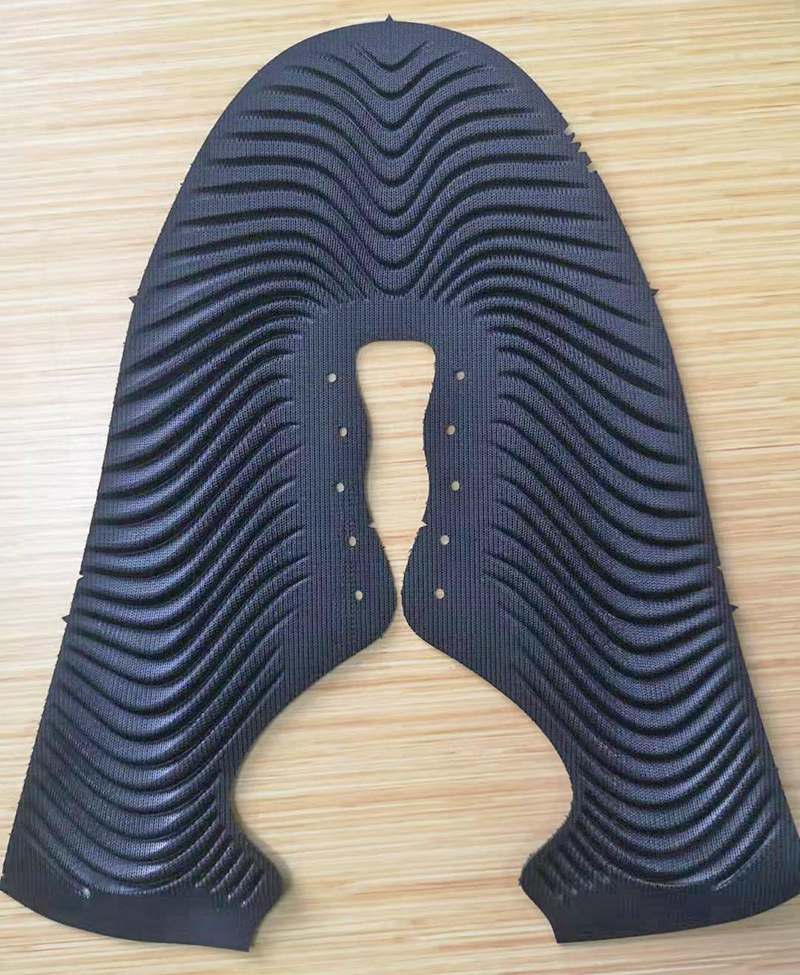
When you're sourcing Flyknit uppers, don't accept a simple 'we control stretch variance' as an answer. Push for specifics: do they log yarn tension per knitting head? Do they run a standardized elongation test on a sample from each batch before cutting? A supplier with real process control will mention things like adjusting needle bed calibration when humidity shifts or re-tensioning the feeder after every lot change. If they can't name at least two of those levers, you're likely to see fit drift between production runs.
The problem often hides in small details. Flyknit stretch is sensitive to how the polyester yarn is stored, how long it sits before knitting, and even the ambient temperature on the factory floor. One batch might come out 4% stretchier than the previous, which translates to a noticeably looser forefoot in the finished shoe. A capable partner will isolate those variables with incoming yarn moisture checks and keep a running stretch map for each upper zone—not just a single number for the whole shoe.
Ask for batch-level documentation. Some factories will attach a small PDF or sticker with an elongation range for the toe box, midfoot, and collar. That kind of transparency lets you flag an issue before it reaches the assembly line. If they only offer a final visual inspection, walk away or build in a much larger tolerance for returns. Inconsistent stretch is one of the quietest ways to erode brand trust.
Request a Production Sample from a Night Shift, Not a Handpicked Run
Night shifts rarely get the same attention as day shifts. Tooling drifts a little further, operators rotate more often, and the pressure to hit quota can nudge shortcuts that nobody logs. When you accept a sample pulled from a carefully managed daytime run, you are not seeing the line the way it will actually run at 2 a.m. Request the sample from the graveyard shift and you will catch the real process, not the polished version.
Make the request before the PO is signed, not after. Ask the supplier to pull a random carton from an unannounced night shift, and require the shift code or timestamp on the label. If they push back or offer to send a "representative" sample from the day crew, treat that as a red flag. A supplier who is confident in their process will not need to stage the evidence. Better yet, have a third-party inspector grab the sample while the line is running, so nobody has time to swap it for a handpicked batch.
This is not about catching anyone off guard; it is about matching your purchase to reality. A night-shift sample shows you how the product holds up when supervision is thin and fatigue is high. If it passes then, it will almost certainly pass on a good day. If it fails, you have just saved yourself from a container full of borderline goods that only looked fine in a staged run.
Dig Into the Yarn Supplier's Traceability Before You Commit
Traceability isn't just a buzzword—it's the thread that ties your brand to every farm, spinner, and dyehouse in your supply chain. Before you sign a purchase order, ask a supplier to walk you through a specific lot from fiber origin to finished cone. A credible partner will hand over batch numbers, processing dates, and even satellite imagery of the fields where the cotton or wool was grown, without hesitation. If you get vague answers like "we source from trusted regions" or "our mills are audited," treat that as a red flag, not reassurance.
Dig into the documentation yourself. Request certificates for organic or recycled content, but don't stop there—cross-check the certifying body's database and confirm the supplier's name matches exactly. Ask about segregation versus mass balance: if they claim recycled polyester, find out whether your yarn actually contains the stated percentage of post-consumer waste or if it's just an accounting trick. Also inquire about chemical compliance under ZDHC or similar frameworks, and request recent wastewater test reports from the dyehouse. A supplier who gets defensive or delays on these details is signaling that their chain has gaps you'll inherit.
Finally, consider a surprise visit or a third-party audit focused solely on traceability. Many suppliers present a polished story during onboarding but struggle to prove it under scrutiny. Look for systems like blockchain ledgers, QR-coded cones, or real-time shipment tracking—not because the technology is impressive, but because it forces every tier to record data honestly. If a yarn supplier can't show you the journey from bale to box with clear, verifiable evidence, walk away. The hidden risks of forced labor, fiber fraud, or illegal dumping will eventually surface on your brand's doorstep, and by then, untangling the chain is far costlier than asking the right questions today.
Negotiate Rework Costs Upfront—Cheap Quotes Hide This Line Item
Many contractors bury rework fees in the fine print or leave them out entirely to keep the initial number low. Before you sign, ask directly how they charge for changes after the first pass—whether it's a flat rate per revision, an hourly add-on, or something baked into a lump sum. A quote that seems too clean usually assumes zero corrections, and that assumption rarely holds once real work begins.
Lock down a written cap on rework expenses before work starts. Even a simple clause stating "first two revision rounds included, additional changes billed at $X per hour" keeps both sides honest. If a contractor refuses to put this in writing, that hesitation often reveals more than their portfolio ever could.
Verify Shoe Last Compatibility with a 3D Scan, Not a Flat Photo
Flat photos hide the subtle curves and volume shifts that determine whether a last truly matches a foot. A 3D scan captures the arch profile, toe spring, and heel cup depth from every angle, laying bare mismatches that a side-view snapshot simply cannot reveal. This method turns guesswork into a measurable comparison, saving both time and material waste.
When you overlay a 3D scan onto the last, areas of excess pressure or unwanted gaps become immediately visible. You can rotate the model, inspect the ball girth, and check the instep clearance without ever touching a physical sample. That level of detail helps you spot issues like a too-narrow toe box or an overly high vamp before cutting a single piece of leather.
Relying on a flat photo often leads to false confidence, because a shoe can look right in profile while being fundamentally off in volume. A 3D scan gives you hard data on circumference, width, and height at critical cross-sections. With that information, adjusting the last becomes a logical step rather than a series of trial-and-error prototypes, leading to a fit that feels as good as it looks.
FAQ
Insist on a live walkthrough of the knitting floor, focusing on machine maintenance logs, yarn storage conditions, and whether tension tests are run hourly rather than just at shift change.
Ask for a yarn lot traceability sheet tied to each production batch, plus a side-by-side elongation and recovery test from the same machine settings used for the original sample—not a generic mill certificate.
Look for evidence of needle bed calibration frequency, air permeability testing on finished uppers, and documented waste yarn recycling flows; these operational details reveal more than a framed ISO certificate.
If the per-unit price is lower than the raw yarn cost from a mid-tier mill, they are likely blending off-spec or recycled fiber; request a transparent cost breakdown by yarn type, knitting time, and finishing chemicals.
Ask for a 30-minute unbranded trial knit using your tension file and compare the output weight, stretch, and loop uniformity against a lab reference—not against their marketing brochure.
Serious ones provide a per-shipment defect mapping report and schedule quarterly technical reviews on tension drift and machine wear; a simple 30-day replacement clause is not enough.
Conclusion
When you're sourcing Flyknit uppers, the showroom samples rarely tell you how the factory will perform at 2 a.m. on a Wednesday. Walk the floor and look at the knitting machines themselves—check their age, maintenance logs, and whether the same operators handle both prototypes and bulk orders. Stretch variability between batches is one of the quietest killers of a good fit, so ask how the mill tracks yarn tension, humidity, and lot-to-lot differences; if they can't answer in specifics, you'll pay for it later in returns. A handpicked run from the sample room is basically a highlight reel. Request a production sample pulled from a night shift, when supervision is thinner and problems surface, because that's the real quality ceiling.
Yarn traceability matters more than most brands expect. Dig into the actual spinner and their batch records before you commit—third-party substitutions are common when demand spikes. On pricing, never accept a quote without a clear rework cost line. Cheap quotes almost always hide it, and once defective uppers start stacking up, the 'savings' disappear into sorting and replacements. Finally, don't trust a flat photo for last compatibility. Get a 3D scan of the upper on your actual shoe last; tiny mismatches in toe spring or heel curvature that look fine in a 2D image will wreck the final shoe.
Contact Us
Contact Person: Mr Deng
Email: [email protected]
Tel/WhatsApp: +86-18926872657
Website: https://www.uniyongfeng.com/