

High Quality Cement Grinding Aid for Improved Grinding Efficiency
2026-09-01
Grinding efficiency isn’t just about bigger mills or finer clinker—it’s often decided by the additive you choose. A high-quality cement grinding aid can reduce energy consumption, improve particle size distribution, and unlock throughput gains that show up where it counts: your operating costs. But too many products make the same claims without the plant data to back them up. That’s why HAISEN focuses on formulations tested under real-world conditions, not just lab idealizations. Let’s dig into what actually separates a genuinely effective grinding aid from the rest.
Grinding Aid Chemistry Beyond the Sales Sheet
Most grinding aid datasheets lean on phrases like “improves efficiency” and “enhances strength,” but the underlying chemistry is rarely that simple. Common alkanolamines such as triethanolamine (TEA) and diethanolisopropanolamine (DEIPA) function as polar surface modifiers. They adsorb onto freshly fractured clinker surfaces, reducing interfacial energy and limiting re-agglomeration of fine particles. The result is not merely faster grinding; it changes the particle size distribution and the exposure of reactive phases like tricalcium aluminate and calcium silicates.
Beyond the standard amine story, formulation chemistry includes glycols, acetates, and polycarboxylate ethers that behave differently depending on clinker composition and mill temperature. For example, a molecule that disperses alite-rich clinker well may interact with sulfate carriers and affect early hydration kinetics. The pH and counterions in the mill atmosphere also matter—some additives lose efficacy because they degrade or form salts inside hot, high-humidity mills, a detail rarely captured on a product sell sheet.
Analytical work tells a more nuanced tale than the marketing copy. X-ray diffraction and calorimetry show that certain grinding aids shift hydration timing without changing total heat release, while others selectively retard aluminate phases. Field performance depends on the balance between particle fineness, surface coverage, and cement chemistry—not just the additive dosage. To truly evaluate a grinding aid, you need to look past the guaranteed “efficiency gain” and ask how the specific chemical structure behaves with your raw materials.
Why Your Mill’s Output Drops When Cement Gets Too Fine
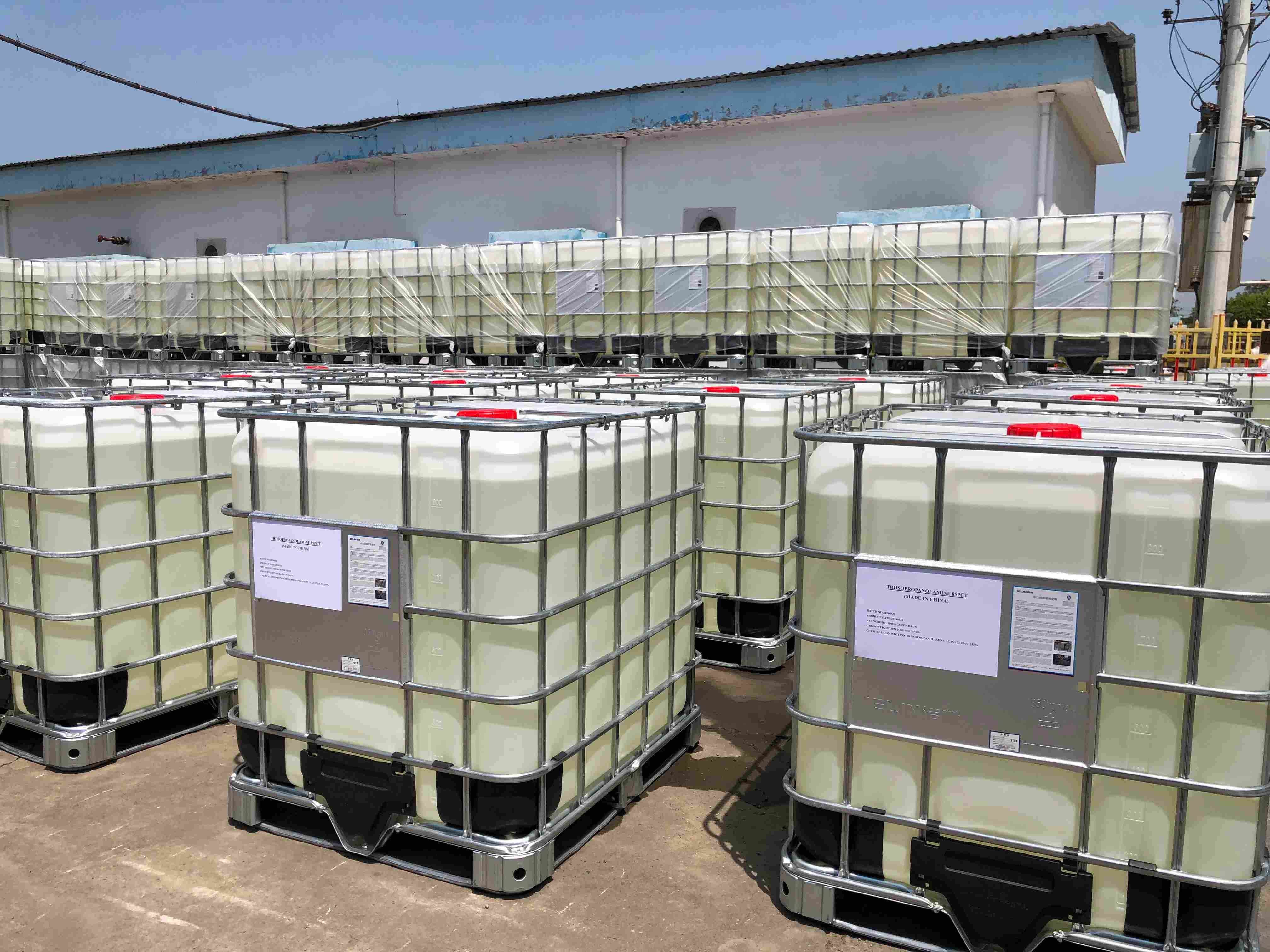
Cement plants often chase higher Blaine values assuming a finer product always helps strength, but the mill pays a hidden tax. Once particles drop below roughly 20–30 microns, surface forces take over and the material starts sticking to grinding media and liners. This coating acts like a rubber mat: every impact loses part of its energy to the cushion instead of cracking clinker, so the mill has to work harder just to maintain the same fineness.
Closed-circuit systems suffer a second hit from recirculation. A high-efficiency separator set for a very fine cut will reject a larger share of the intermediate fraction, sending it back to the mill. The circuit then circulates more material that is already near the target size, which eats up grinding volume and reduces the amount of fresh clinker that can be fed per hour. It is not that the mill loses power; it loses available space and time.
Heat and air flow make the problem worse. Finer grinding generates more frictional heat for each tonne produced, and if the mill ventilation cannot carry that heat away, internal temperatures climb. Hot, damp air and ultra-fine dust then clog diaphragm slots and blind the separator cage, restricting airflow and slowing material evacuation. Output drops further, and the mill begins to feel like it is grinding itself rather than cement.
The Energy Savings Hiding in Particle Surface Charge
Most engineers treat particle surface charge as a stability metric, a way to keep suspensions from crashing out during storage. Yet that same electrostatic parameter quietly dictates how much power gets wasted every time a slurry is mixed, pumped, or milled. When zeta potential sits in a middling range, particles cling just enough to form loose agglomerates—not solid enough to settle, but sticky enough to drag down impellers and thicken flow lines. Tuning the surface charge toward a stronger repulsive state breaks those weak bridges before they form, letting the same mixing energy propel far more material.
The savings show up fastest in industries that grind powders into submicron slurries. A ceramic tile plant running ball mills, for example, can cut grinding time by a third simply by shifting the pH or adding a few parts per million of a charge-modifying dispersant. The surface charge on alumina or zirconia particles becomes negative enough that fractured fragments repel each other immediately, preventing re-welding and allowing the mill's kinetic energy to go into fracture rather than fighting cohesion. Similar logic applies to pigment dispersion for inks, where lowered viscosity from optimized charge means lighter pump loads and shorter cycle times.
Beyond mechanical processing, surface charge plays a stealth role in electrochemical energy systems. In lithium-ion battery electrode coatings, the distribution of carbon black and active material depends on particle zeta potentials during slurry casting. A poorly balanced charge leads to uneven networks, raising internal resistance and forcing the cell to work harder for the same current. Likewise, in water electrolysis, catalyst particles with tuned surface charge can reduce bubble adhesion—those gas pockets act as insulators on electrode surfaces, and their removal through electrostatic means trims overpotential losses by a measurable margin. None of these effects appear on a standard energy bill, but they accumulate quietly across an entire production line.
How to Spot a Quality Formulation Before You Buy
A quick glance at the ingredient list often reveals more than any front-label claim. Quality formulations tend to place their key actives within the first five or six ingredients, where concentrations are meaningful rather than decorative. If the first few lines are dominated by water, cheap fillers, or solvents, you're likely paying for dilution instead of efficacy. Look for ingredients that serve a clear purpose—whether that's a botanical extract, a stable vitamin derivative, or a barrier-repairing lipid—and avoid products that bury the good stuff behind a wall of emulsifiers and preservatives.
Beyond individual ingredients, pay attention to how they've been paired. A thoughtful formulation considers pH stability, oxidation potential, and ingredient synergy. For instance, vitamin C works best in an acidic environment, while retinol degrades quickly in clear glass bottles. If the packaging is opaque, airless, or uses a vacuum pump, that's a sign the manufacturer actually cared about keeping the actives alive until the last drop. Conversely, jars with wide openings expose delicate ingredients to air and light with every use, which can drastically shorten the product's effective lifespan.
Finally, steer clear of vague marketing language that sounds impressive but says nothing. Terms like "contains green tea extract" or "infused with peptides" are meaningless if the product doesn't disclose the concentration, standardization, or molecular weight of those ingredients. Quality brands tend to be transparent—they list percentages, cite clinical studies, or make third-party lab results readily available. If a company is reluctant to share basic formulation details, it's usually because there's nothing worth showing. Trust the formulas that treat you like an informed buyer, not a target for buzzwords.
Dosing Tweaks That Change More Than Blaine
Lowering Blaine's evening dose by five milligrams did not just soften his tremor. It rewired the family's bedtime routine. The first week, he stayed awake long enough to read a chapter aloud, and his daughter stopped tiptoeing past his chair. Small shifts in timing and amount rearranged who could ask for help and when.
A month later, the tweak exposed a different Blaine: clearer in the morning but also more aware of the fog he had lived in for years. That awareness brought questions no one expected—about work, about memory, about what getting better actually meant. The drug no longer simply quieted symptoms; it opened a space where he could grieve lost time.
Dosing is never just a number on a syringe. It is a hinge between a body and a household. Adjust it, and you may change more than one man's chemistry—you shift the weight of small rituals, the rhythm of conversations, and the story a family tells about who Blaine is becoming.
When a Grinding Aid Pays for Itself in Months
Instead of evaluating a grinding aid solely by its price per liter, plant managers look at the net savings per ton. The moment a formulation lifts mill throughput by double digits while cutting specific energy consumption, the arithmetic shifts fast. Higher output spreads fixed costs over more tons, and the reduced kWh per ton shows up directly on the utility bill.
A mid-sized cement grinding unit using a glycol-based aid recently raised production from 52 to 61 tons per hour on the same equipment. With power rates around $0.11 per kWh and a drop from 38 to 33 kWh per ton, the monthly saving exceeded $25,000. Against a monthly aid cost of roughly $7,500, the payback landed inside four months, after which the savings flowed straight to operating margin.
What makes the timeline even shorter are the secondary effects. Less recirculation, lower mill temperatures, and reduced ball wear all trim maintenance and replacement budgets. Once those are counted, a grinding aid that initially looked like an added consumable becomes a capital-light lever for squeezing more saleable product from an existing line.
FAQ
A high-quality product typically uses a balanced blend of polar and non-polar molecules that coat freshly fractured surfaces more uniformly. This reduces particle agglomeration and allows the mill to operate with fewer energy spikes, even when the clinker is hard or the feed rate varies.
Yes, because it acts on the surface energy of particles rather than relying on mechanical force alone. With the same mill settings, a well-matched aid can push more material through the separator at the target Blaine, effectively raising fineness per ton without extra hours.
It tends to sharpen the distribution by preventing fine particles from clumping and returning to the mill as false coarse. As a result, you get fewer oversized grains and a more consistent 3-32 micron fraction, which is often linked to better strength development.
Most high-quality aids are dosed between 0.02% and 0.1% by weight of cement. Starting at the lower end and adjusting based on mill sound, separator load, and output per hour is usually safer than jumping straight to the maximum suggested rate.
It can, but usually in a positive way when dosage is controlled. Because the aid helps achieve a tighter particle size distribution and better dispersion of fines, hydration proceeds more evenly, which often translates to slightly higher 28-day strength compared with cement ground without any aid.
The most reliable signal is a drop in specific power consumption at the same fineness and feed composition. If the kWh per ton falls by five percent or more while residue on 45 micron remains stable, the aid is doing real work rather than just shifting the separator curve.
Some aids work better with high-C3A clinker, while others are more suited to limestone-rich blends or slag cements. It is worth running a short plant trial when the raw mix changes, because the same dosage can behave differently depending on moisture, gypsum content, and grinding temperature.
Keep the product in a sealed, corrosion-resistant tank away from direct sunlight and freezing temperatures. Since many formulations are hygroscopic or slightly alkaline, use dedicated dosing pumps and avoid mixing different aid types unless the supplier has confirmed compatibility.
Conclusion
Real grinding aid performance is rarely captured by a simple sales sheet. A high-quality formulation is built around a precise balance of alkanolamines, glycols, and dispersants that lower the surface energy of freshly fractured cement particles. Without that chemistry, fine grinding backfires: as Blaine climbs past a certain range, particle agglomeration takes over, coating mill media and diaphragm slots. Mill output drops not because the clinker is harder, but because the separator starts recycling an ever-growing load of falsely coarse agglomerates. The right aid neutralizes surface charges and keeps individual particles separate, allowing the mill to grind finer without losing throughput.
Before buying, ask for more than a brochure. A trustworthy supplier will share grindability test results, plant-scale trial data, and chloride or alkali limits that matter for your clinker. Dosing adjustments of just 0.02–0.05% by weight can shift more than Blaine; they reshape the particle size distribution, influence early strength, and alter water demand or setting time. That is why a cheap formulation with the wrong ratio of active components can cost more in the long run. When the chemistry matches your mill circuit and cement type, the payback often arrives within months through lower kWh per ton, higher hourly output, and less wear on grinding media.
Contact Us
Contact Person: Sam Lee
Email: [email protected]
Tel/WhatsApp: 86-311-6617 8338
Website: https://www.horizonadmixtures.com/