

Inkjet Marking System Supplier: How to Choose a Reliable Partner for Your Production Line
2026-08-14
Your production line runs on precision—and the right inkjet marking system supplier can make or break that rhythm. But with so many vendors promising uptime and clarity, how do you separate true partners from order-takers? In this guide, we break down what actually matters: technical support, ink chemistry, integration know-how, and long-term dependability. And when reliability is non-negotiable, a proven name like Danmajet is worth a closer look.
Look Past the Demo Cartridge and Test Inks on Your Actual Line
A demo cartridge can make any ink look decent in a controlled demo room. The conditions there rarely match what happens on your floor: your line speed, your substrate's surface energy, your printhead wear, even the humidity swings near the drying tunnel. None of that is present in a vendor's demo loop.
If you want to know whether an ink will hold edge definition or stay in suspension through a full shift, you have to run it where it counts. Put it in your own printer, on your usual film or board, with operators who aren't paid to be gentle. Watch how it behaves after three hours, not three minutes.
That's where the real decision gets made. Not on a spec sheet, not in a side-by-side demo rig, but on the line you're already running. Test the actual ink in the actual environment before committing to a volume order.
Response Time Is the Real Warranty — Ask for Local Service Benchmarks
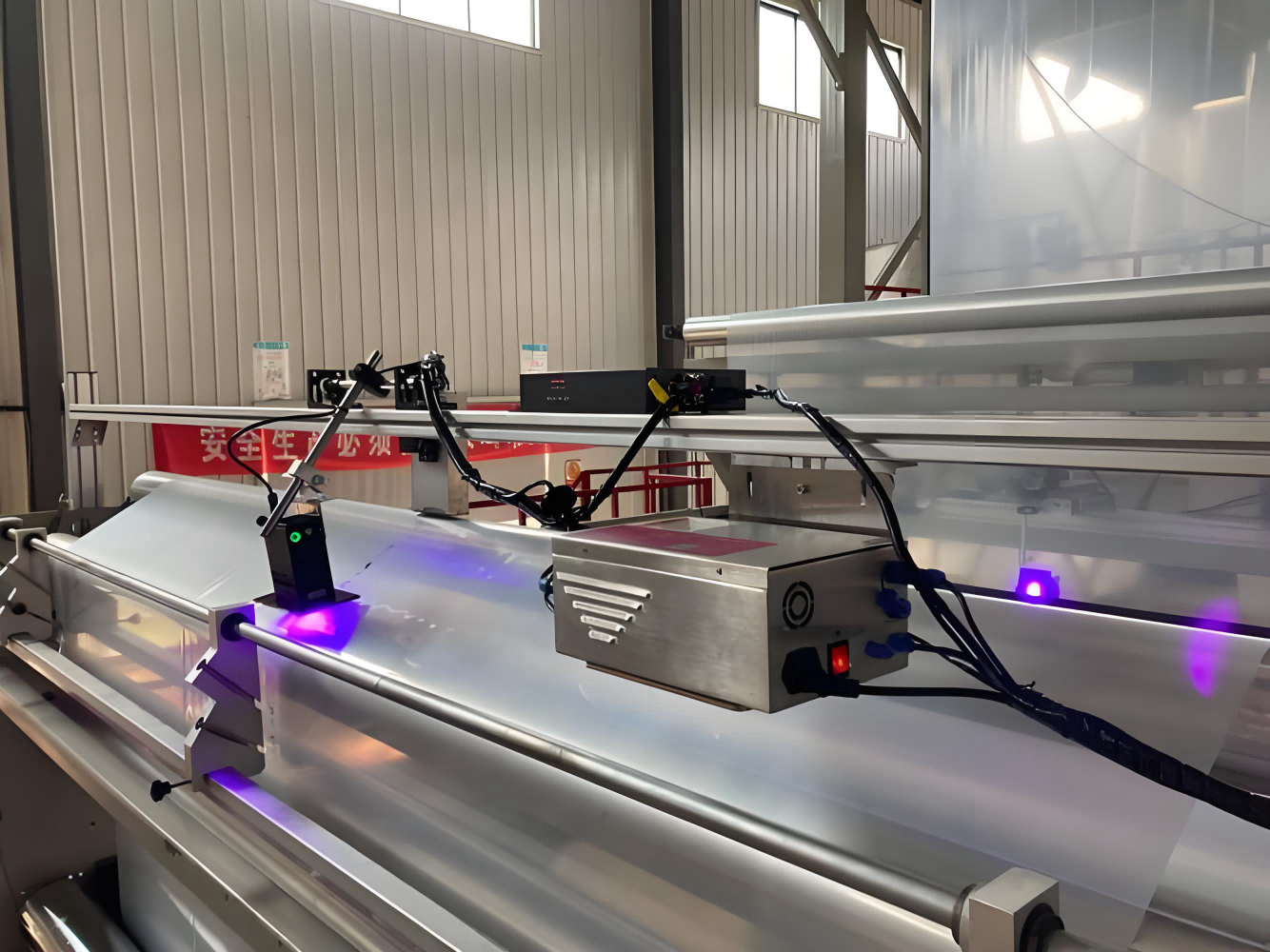
Every vendor promises reliability, but downtime rarely announces itself in a convenient window. What separates a genuine partner from a sales script is how quickly they pick up the phone at 3 a.m. when a production line stalls. Ask any facility manager what actually protects their operation and you'll hear the same thing: a technician on site within hours, not days. That's why local response benchmarks matter more than glossy uptime guarantees.
Don't settle for “24/7 support” as a checkbox. Push for numbers tied to your area: average dispatch time, on-site arrival windows for critical failures, and how many field engineers are stationed within a reasonable drive. A warranty that takes three business days to honor is just paperwork. A local service team that treats your call like an emergency is the real warranty.
Before signing, ask the uncomfortable question: “Can you show me your last ten emergency call logs for facilities in this region?” If they hesitate or pivot to national averages, keep looking. Real service confidence shows up in local response data, not in a brochure.
Integration Headaches Hide in the Controls Layer, Not the Printhead
Often when a new print engine misbehaves, engineers instinctively swap nozzles or recalibrate drop placement. Yet the real culprit frequently sits upstream in the controls layer, where firmware handshakes, motion timing, and data streaming collide. A printhead is a relatively dumb transducer; it will faithfully fire whatever the drive electronics tell it to. The moment a job stutters or banding appears, chasing the physical head wastes hours because the defect actually lives in a missed interrupt or a poorly staged buffer.
The controls stack has to synchronize dozens of asynchronous events—encoder pulses, thermal feedback, ink pressure, and raster data—within microseconds. Those integration points are rarely documented in a single place. One vendor's driver expects a rising-edge index pulse while another toggles on falling edge; a slight mismatch produces artifacts that look mechanical but are purely logical. Unless you instrument the communication path rather than the ink path, you'll keep replacing perfectly good printheads.
The fastest way to defuse these headaches is to treat the controls layer as the product, not an afterthought. Write integration tests that simulate jitter, dropped packets, and out-of-order status responses before committing to a physical head. When the firmware and motion planner can run headless against a virtual printhead and still hit every timing window, the real hardware tends to fall into line quietly.
Batch-to-Batch Ink Consistency Is What Protects Your Code Quality
A code is only as reliable as the ink that carries it. When one batch of ink dries slightly faster than the last, or spreads a fraction wider on the substrate, those subtle shifts accumulate into barcodes that scanners struggle to read. The quiet work of batch-to-batch consistency is what keeps every line, dot, and cell in exactly the right place, so the code remains a precise machine-readable mark rather than a smudge that slows down your operation.
Manufacturers achieve this by testing far beyond what the eye can see. Viscosity, surface tension, and pigment dispersion are measured against strict internal references, not just industry baselines. Each new batch must match the previous one within tolerances that leave no room for drift. That level of control means your printer settings stay untouched, your reject rate stays flat, and the code printed at 9 a.m. looks identical to the one printed at midnight.
In practical terms, this consistency removes the need for constant recalibration. Operators aren't chasing density adjustments or cleaning clogged nozzles caused by unexpected formulation changes. Instead, the line keeps moving, and every carton, label, or component carries a code that holds up under any scanner. The protection of code quality doesn't happen at the printer—it happens long before, in the batch-to-batch discipline of the ink itself.
Preventive Maintenance Should Be a Shared KPI, Not an Upsell
Preventive maintenance often gets sold as an optional add-on, but that framing misses the point entirely. If the equipment fails, everyone pays for it—downtime, emergency repairs, lost productivity. So why is the metric only on the service team's dashboard? Making it a shared KPI forces operations, finance, and leadership to own the outcome together, not just sign off on a quote.
When uptime becomes a collective goal, the conversation shifts from "can we afford this service contract?" to "what's the cost of not doing this?" Teams start planning maintenance around production schedules instead of reacting to breakdowns. Budgets get allocated before failures, not after. And the person who approves the PO is just as accountable for the asset's health as the technician who greases the bearings.
This doesn't mean every department needs a wrench. It means the KPI shows up in operational reviews, capex discussions, and even bonus structures. Once preventive maintenance is seen as infrastructure—not a line item to trim—the upsell disappears. What's left is a system where keeping machines running is everyone's job, and the data proves it.
Regulatory Paperwork Matters Only If It Matches Your Factory’s Reality
A stack of signed forms and outdated SOPs in the office doesn't mean your process is under control. Walk the floor on any given day and you'll see operators running lines faster than the documented cycle times, maintenance logs filled in ahead of schedule, and batch records that don't reflect the actual raw material lot. When the paperwork describes a factory that doesn't exist, it stops being compliance and becomes fiction with a filing cabinet.
Auditors rarely start with the binder. They start at the machine, ask the operator what they actually do, then flip back to your documents. The moment they spot a mismatch—a temperature setting that's never used, a training record for someone who left months ago—they stop trusting the rest of the system. No amount of neatly formatted procedures recovers that credibility.
The only way to keep regulatory paperwork useful is to make it mirror the factory as it runs today. That means revising documents when you change a supplier, adjust a parameter, or redesign a workstation—not waiting for an audit or a recall. Get the people who do the work to write down what they actually do, and the paperwork finally earns its place.
FAQ
Look beyond sales promises. Ask for documented uptime figures from existing customers in your sector, not just glossy case studies. A dependable supplier will happily arrange a site visit or a live video walkthrough of a running installation. Also check whether their service technicians are employees or third-party contractors, because response times and accountability differ sharply.
It should be a major factor. Inks behave differently on glass, film, corrugate, or coated metal. A supplier that has already solved adhesion, drying, and contrast challenges on your material will save you weeks of trial and error. Ask for samples printed on your actual packaging, not only on generic test cards.
Request a detailed throughput calculation for your fastest SKU, including message length, print resolution, and drying time. Then ask about temperature, humidity, and dust tolerance. If they cannot provide a written commitment for the conditions you actually run, that is a red flag. Also confirm the system has headspace for future line speed increases.
Start with a controlled pilot on one line for 30 to 60 days. Measure unplanned downtime, print quality drift, and how quickly the supplier responds to issues. Use your own operators, not the supplier's engineers, for day-to-day tasks. That pilot will show you the true cost of ownership better than any brochure.
Get a clear list of what is included: preventive maintenance visits, firmware updates, spare parts availability, and remote diagnostics. Ask about guaranteed response time and whether it is measured from your call or from when they acknowledge the ticket. Also clarify who pays for travel time and emergency call-outs after hours.
Sometimes yes, if their service territory is close to your plants and they specialize in your industry. A smaller supplier may give you direct access to senior technicians and faster parts delivery in your region. But verify their financial stability and ask how many installations they support per service engineer, because overstretched support ruins the advantage.
It matters if your production lines have different needs—CIJ for high-speed non-porous surfaces, TIJ for lower-cost cartridges and clean break areas. A supplier with both technologies can give neutral advice instead of forcing one solution. Ask them to justify the technology choice for each line, not just push their latest model.
Typically 8 to 14 weeks, but it depends on customization and validation requirements. Expect 2-3 weeks for sample approvals, 3-5 weeks for installation and operator training, then 2-4 weeks for stability testing on your line. If a supplier promises much faster, question what they are skipping in validation.
Conclusion
Selecting an inkjet marking partner starts with ignoring the polished demo and asking to run their inks on your actual production line. A cartridge that performs beautifully in a lab can fail under your specific substrates, line speeds, or drying conditions. Once real-world ink adhesion and code contrast are verified, shift attention to service response. A supplier’s warranty means little if local technicians take days to arrive; instead, request benchmark response times from nearby customers. Equally important is the controls layer—many integration problems never touch the printhead but live in how the system communicates with your PLC, ERP, or vision inspection. Insist on a detailed controls integration plan before signing anything.
Beyond installation, you need a partner that treats batch-to-batch ink consistency as a production risk, not a marketing claim. Viscosity or pigment drift between lots directly affects code legibility and scanner readability. Tie preventive maintenance to shared KPIs like unplanned downtime and rework rate, so the supplier has skin in the game instead of selling routine checks as an extra. Finally, regulatory documents only have value if they reflect what actually happens on your floor—ask for a compliance walkthrough with your own line setup, not a generic certificate package. A reliable supplier proves itself through on-site testing, fast local support, transparent controls integration, and accountable maintenance metrics.
Contact Us
Contact Person: Jacky
Email: [email protected]
Tel/WhatsApp: 086 15000607053
Website: https://www.danmajet.com