

Leather Rivets Manufacturer: How to Choose the Right One for Your Projects
2026-09-19
Are your rivets quietly undermining your leatherwork? A loose cap or a snapped shank can turn a beautiful bag or belt into a warranty claim. Most makers blame their technique, but the real culprit is often the rivet itself. Choosing the right leather rivets manufacturer isn’t about picking a catalog—it’s about knowing which details separate lasting hardware from cheap imitations. Below, we break down the key factors, including why Kingming has become a go-to source for consistent, project-ready rivets.
Rivet Materials That Can Take Daily Wear
When a rivet lives on a jacket cuff or a bag strap, it spends most of its life getting scraped, tugged, and pressed against rough surfaces. Zinc alloy and thinly plated steel start out shiny but rarely survive more than a season before the coating flakes and the base metal pits. For anything meant to be handled daily, solid stainless steel and real brass are the two materials you'll actually want to keep around. Stainless shrugs off sweat, rain, and washing machine cycles without rusting or bending, while brass starts brighter and gradually settles into a duller, warmer tone that hides scuffs better than most people expect.
Solid brass deserves a closer look if you prefer hardware that ages with the garment. It won't chip like a plated rivet because there is no separate coating to peel away. The surface oxidizes unevenly at first, but that mottled patina becomes part of the piece rather than a flaw. Brass is softer than stainless, so heavy abrasion will leave small scratches, but those marks tend to blend into the patina instead of standing out. For denim jackets, leather totes, and work aprons, brass gives you enough toughness for daily use without looking sterile.
Copper and monel are worth knowing about when standard options don't fit the job. Copper is noticeably softer and will deform under constant stress, so it works better for decorative spots or low-tension areas like pocket corners. Monel, a nickel-copper alloy, handles salt air and constant moisture better than almost anything else, which is why you see it on marine gear and outdoor equipment. Titanium is another choice if weight matters more than cost; it's strong and corrosion-resistant but can feel overkill for everyday clothing. Whatever you pick, avoid hollow rivets and anything described only as 'metal finish' if you want the hardware to outlast the fabric around it.
Custom Finishes Without the Usual Delays
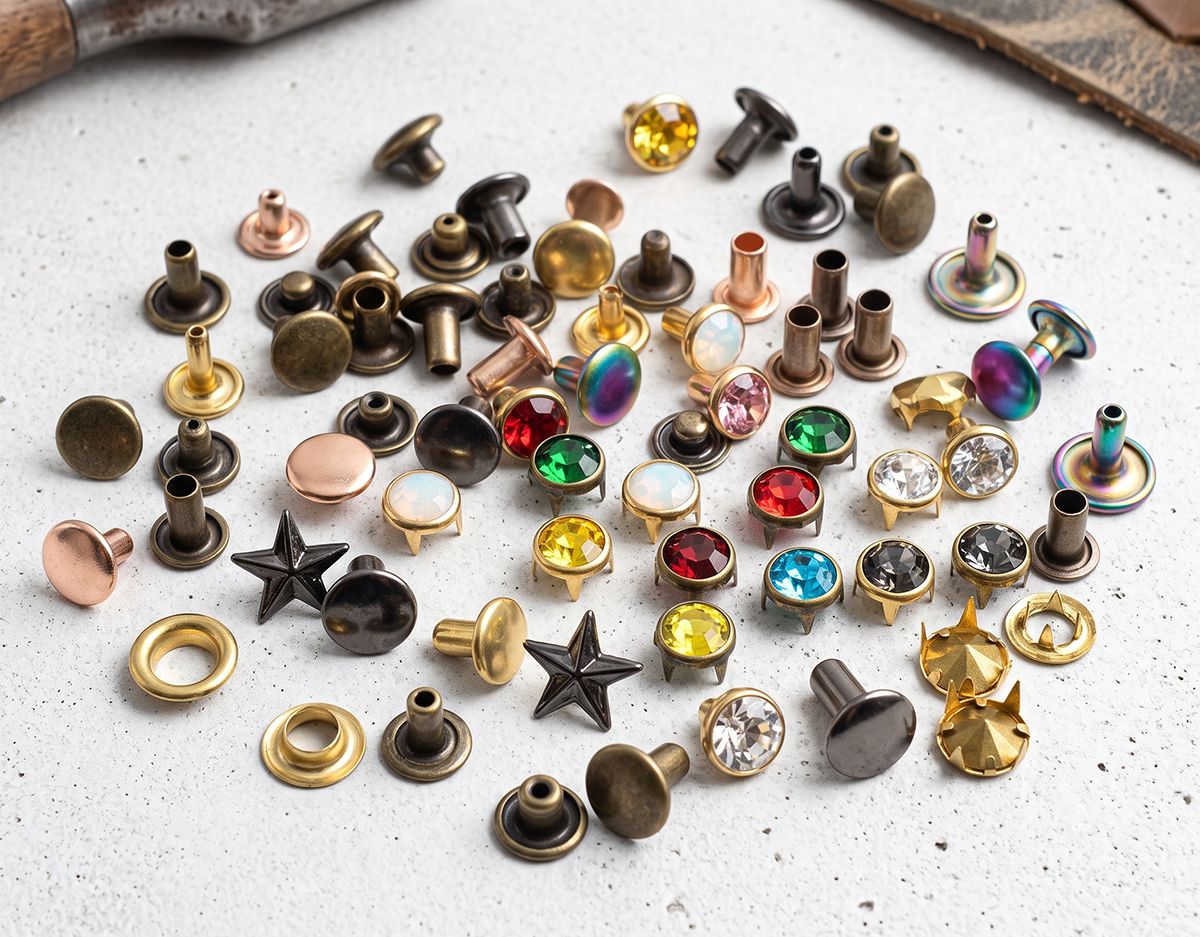
Getting a truly custom finish often means waiting weeks for samples, approvals, and production slots. We collapsed that timeline by keeping a curated palette of specialist coatings, patinas, and grain effects in stock, so most requests move from spec to sealed surface within a few working days. Instead of sending out for every texture or tone, our finishers work from a pre-tested matrix of base materials and cure schedules, which removes the back-and-forth that typically slows things down.
The real difference is in how the schedule is managed. Standard projects are grouped by material compatibility rather than order date, so a small batch of brass hardware or a single walnut tabletop can ride along with larger runs without getting stuck in a queue. Rush requests don't require pulling people off other jobs; they're absorbed into an open slot reserved for short custom cycles. That means you get the exact sheen, color depth, or weathered texture you asked for, while the calendar stays predictable.
Minimum Orders That Fit How You Actually Work
Most suppliers still cling to a magic number—hit it or go home. That approach ignores the way you actually restock, test new lines, or manage shelf space. Here, minimums flex around your buying rhythm instead of forcing you into a bulk commitment that doesn't match demand.
You can start with a tighter order to sample a new category, then scale up once it earns its place. Reorders stay straightforward, so you're never stuck padding a cart just to clear a threshold. The result is simple: stock what you need, prove what works, and grow at a pace that makes sense for your operation.
Timelines You Can Put on Your Calendar
Mapping out a timeline you can actually pin to your calendar isn't just about picking start and end dates. It's about breaking the work into chunks that match how your week actually flows. Think of it as drawing a line through real days, not abstract phases. You want milestones that land on Tuesdays when you have focus time, and review points that sit just before a long weekend so nothing gets lost in the holiday gap.
A useful approach is to start from the deadline and walk backwards. If the final deliverable needs to be in someone's inbox by the 15th, ask what has to be true by the 8th, then the 1st. Write those as calendar events with clear names like 'Draft ready for internal read' instead of vague labels like 'Phase 2'. That way, anyone glancing at a shared calendar can see whether things are on track without needing a separate status meeting.
One trick that keeps a timeline honest is to leave visible buffer zones between major tasks. Not hidden slack, but actual calendar blocks labeled 'unplanned work' or 'catch-up'. When something slips—because something always slips—the buffer absorbs the hit without knocking every downstream date off the wall. Over time, you'll learn how much padding your team realistically needs, and that makes the next timeline feel less like a guess and more like a plan you can stand behind.
Physical Samples Before You Commit to Volume
Ordering a bulk shipment without ever touching the actual product is a gamble that rarely pays off. A physical sample lets you feel the weight, check the stitching or surface finish, and see the real color under normal lighting—things a spec sheet or digital mockup simply can't convey. It’s the difference between assuming you know what you're getting and actually knowing it.
Samples also reveal how the item survives real-world handling. You can test zippers, stretch fabric, drop a component, or run it through a wash cycle before you're stuck with a thousand units that fail after the first use. If anything falls short, you’ve only lost a few dollars and a few days—not your entire inventory budget.
Most reputable suppliers will send a sample for a small fee or even free if you plan to place a large order. Don’t skip this step just because it feels slow. The hour you spend inspecting a sample can save you months of dealing with returns, complaints, and a warehouse full of products you can’t sell.
A Team That Stays Reachable After Shipping
Shipping is rarely the end of the conversation. We keep the same direct lines open once the work goes live, so a question three weeks later doesn’t turn into a support ticket labyrinth. You can reach the people who actually built the thing, not a rotating cast of handlers.
That means no handoff scripts or “your call is important to us” loops. If something breaks or an edge case shows up, we pick it up, look at the code, and tell you what we found. Sometimes the fix lands the same afternoon.
It’s a small habit that changes how the work ages. Clients tend to stay because the team doesn’t evaporate after the invoice clears.
FAQ
Ask for the exact alloy or metal composition—solid brass, copper, and stainless steel hold up far better than zinc castings or plated mystery metals. Request a cut sample or cross-section photo if possible, and check whether the surface plating is thick enough to withstand bending without flaking.
Look for someone who sends drawings or 3D renders before tooling starts, not just a price quote. A good sign is when they ask about your leather thickness and the setting method you'll use, because custom shank lengths and head shapes need to match the actual material, not just look nice in a catalog.
High MOQs often force you into overstock that sits around gathering dust or losing finish. For small runs, find a supplier that offers lower minimums or a sample-to-production path. You'd rather pay a bit more per piece initially than tie up cash in thousands of rivets you won't use for months.
A capable shop should be able to discuss raw brass, antique brass, nickel, matte black oxide, and sometimes custom plating. The real test is whether they can tell you how each finish ages with leather contact, sweat, and humidity—not just list names from a swatch sheet.
It often trumps price. A maker who responds with clear timelines, updates you on delays, and doesn't disappear after the deposit is worth more than a cheaper quote from someone who ignores your messages. Ask for a realistic production window and what happens if they miss it.
Yes, and you absolutely should. Pay for a small batch or a sample pack and test them in your actual leather, with your actual setting tools. Rivets that look fine in photos can split the leather or spin loose when set, so a hands-on test is the only way to confirm the shank diameter, head height, and plating adhesion.
Depending on your market, you may need lead and cadmium compliance, especially for bags or garments. Ask for an XRF test report or RoHS-style documentation. For heavy-duty projects, inquire about pull strength or salt spray test results if the rivets will face outdoor exposure.
Cheap rivets fail in predictable ways: the cap pops off, the plating rubs away, or the shank bends during setting. Calculate cost per finished item rather than cost per thousand rivets. Spending an extra cent or two per piece is usually cheaper than reworking a batch or dealing with a customer return.
Conclusion
A dependable leather rivets manufacturer starts with materials that hold up to daily abuse—not just standard brass or nickel, but alloys tested for friction, moisture, and repeated handling. Ask about coating adhesion, salt spray resistance, and how the rivet head wears against finished leather. If you need custom finishes, look for shops that run small-batch plating or PVD in-house rather than outsourcing every order; that usually means you get the color or black oxide tone you want without waiting weeks longer than quoted. Minimum order quantities should mirror how you actually work. A supplier comfortable with 500 pieces for a pilot run, without penalizing you with steep setup fees, gives you room to test new designs instead of locking cash into inventory you don't need yet.
Before committing to volume, request physical samples of the exact rivet spec—not a catalog photo or something close from last year. Test them on the leather you actually use, with your own setting dies and production pace. Once shipping starts, the real test is whether the manufacturer stays reachable. A batch with slight finish variance, a last-minute change to your PO, or a question about reorder lead times shouldn't mean days of silence. Choose a team that treats troubleshooting and repeat orders as part of the working relationship, not an upsell. The right partner proves itself through honest timelines, realistic MOQs, sample-first process, and post-sale responsiveness—so your rivets stop being a sourcing headache and start being a reliable part of your product.
Contact Us
Contact Person: Jamie Zeng
Email: [email protected]
Tel/WhatsApp: +86 13728219269
Website: https://www.kmhardware.com