

Mining Air Compressor Factory: How to Choose a Reliable Partner for Heavy-Duty Operations
2026-08-10
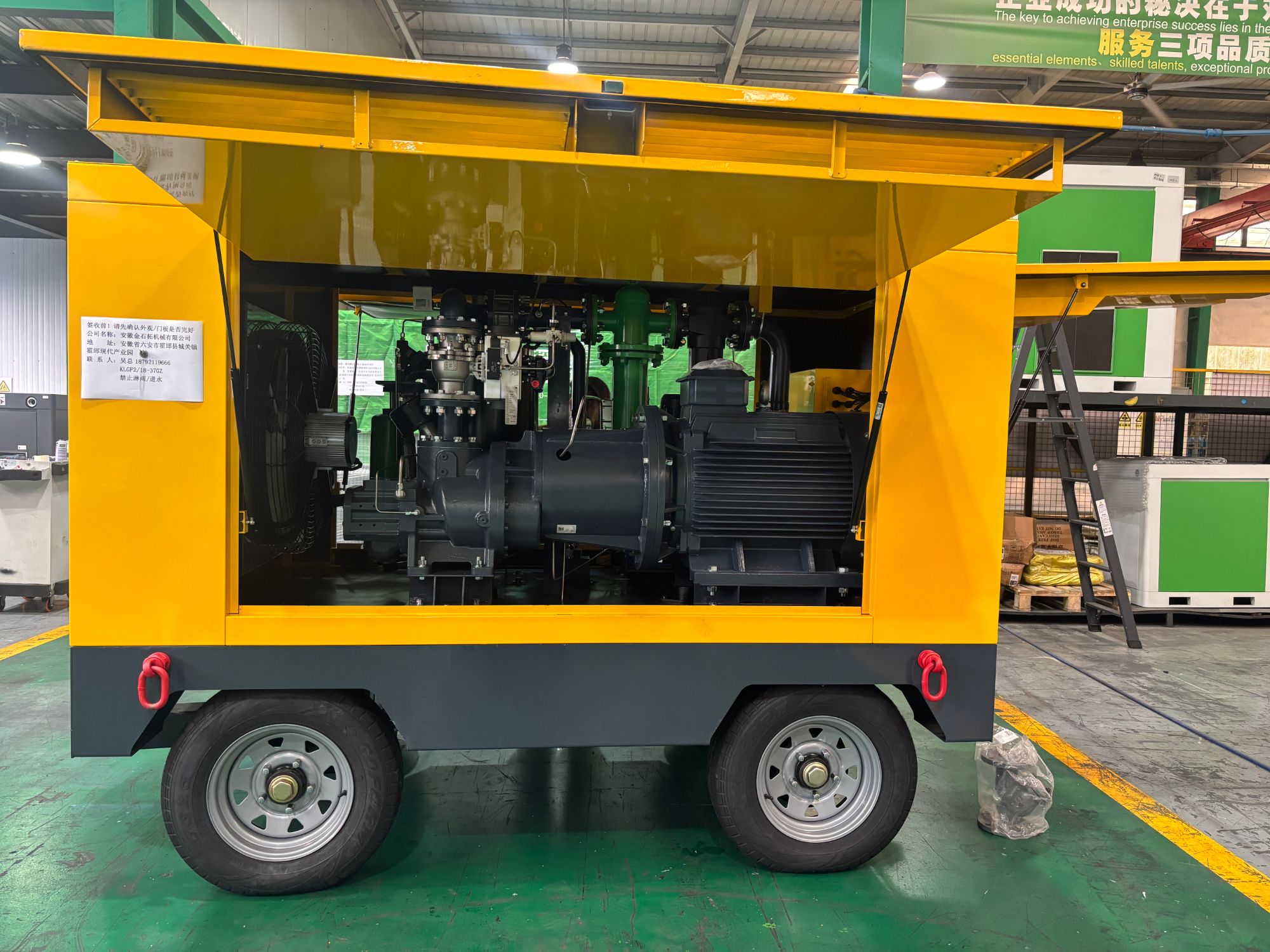
In the demanding world of mining, compressed air isn’t just a utility—it’s the lifeblood of heavy-duty operations. But when every hour of downtime costs thousands, choosing the right air compressor partner becomes a decision that separates thriving sites from struggling ones. A factory that cuts corners or lacks field expertise can leave you stranded with brittle performance and spiraling maintenance. That’s where Seize Air redefines reliability. With decades of engineering grit poured into every unit, their compressors are forged for the relentless dust, heat, and pressure of the planet’s toughest job sites. So, how do you spot a partner who won’t buckle under the load? Let’s dig into what truly matters before your next investment shakes the ground.
Beyond the Spec Sheet: What Real-World Mine Sites Demand from a Compressor
A glossy brochure will list the PSI, CFM, and horsepower figures with tidy precision, but it never captures the way fine dust settles into every crease of a machine after a single shift, or how a sudden temperature plunge at night can turn hydraulic oil into treacle. Out here, the compressor doesn’t just need to meet a rated output on a test bench; it has to do it while vibrating on uneven ground, swallowing air thick with silica, and shrugging off the kind of moisture that condenses inside pipes two hours before dawn. Designs that look clever in a climate-controlled workshop can become liabilities when the only tool for a quick repair is whatever happens to be on the back of the service truck.
The awkward truth is that uptime doesn’t hinge on just the duty cycle listed in the spec sheet. It depends on how fast the nearest genuine filter kit can reach a site located three hours down a corrugated gravel road, and whether the local supplier keeps a technician who actually understands what a flashing fault code means when the satellite link can’t reach the manufacturer’s server. Sites that run 24/7 stop asking about theoretical lifespan and start caring about things like whether the drain valves can be cleaned without removing a dozen panels, and whether the belt tension needs a special tool or just a wrench that can be found in any toolbox.
Real operating costs start to pile up when a compressor set rated for 75 percent efficiency on paper can only manage 60 percent at 3000 meters, or when the control panel is so laden with nested menus that an operator in muddy gloves gives up and runs the unit in manual bypass. What keeps a mine humming is not the most sophisticated inverter drive, but a machine that tolerates voltage spikes from a tired generator, cools itself reliably when the ambient air tops 45 degrees, and doesn’t punish the maintenance crew with hidden grease points. In the end, the spec sheet sells the first unit, but it’s the things left unprinted that determine whether the second order ever comes.
The Hidden Costs of Downtime: Why Response Time Matters More Than You Think
When a system goes down, most businesses immediately calculate losses in revenue per minute. But that's just the visible tip of the iceberg. The deeper damage often creeps in unnoticed: customers who silently leave, never to return, after staring at a spinning loader for what feels like an eternity. Their trust erodes not in the hours of outage, but in those first few critical seconds of uncertainty.
Consider the domino effect of a sluggish response. Teams scramble, communications fracture, and minor issues spiral into full-blown crises simply because no one had a clear signal fast enough. The cost isn't just in lost transactions—it's in the overtime pay, the rushed fixes that create new bugs, and the reputational hit that makes your next sale ten times harder. All because response time was measured in minutes instead of moments.
We've normalized downtime as a technical metric, forgetting it's fundamentally a human experience. Every extra second of waiting chips away at the perception of competence. In an age where attention spans are shorter than ever, your response time doesn't just affect systems—it shapes how people feel about your brand. Those invisible emotional costs compound, often surfacing long after the incident is closed.
Engineering for Extremes: How Customized Designs Survive Underground Conditions
Underground environments don’t forgive generic solutions. From the crushing pressures of deep mines to the corrosive humidity of subway tunnels, each site demands a design that’s been shaped by its own set of hostile parameters. Standard off-the-shelf equipment simply buckles—literally and figuratively—under conditions that weren’t part of its original brief. Customization here isn’t a luxury; it’s the starting line.
The trick lies in material selection and structural reinforcement that go beyond textbook ratings. For instance, in a tunnel boring project through abrasive rock, we swapped conventional steel for a carbide-infused alloy on cutter heads and integrated wear sensors directly into the housing. That single change extended service intervals by a factor of three. Elsewhere, against groundwater ingress, we developed a segmented sealing system with redundant elastomer layers that adapt to shifting ground pressures—something a standard gasket could never handle.
It’s not just about brute strength. Cooling, vibration damping, and even maintenance access get rethought. A recent design for a deep geothermal installation used passive heat pipes embedded in the casing to stabilize internal electronics, while the outer shell was contoured to shed falling debris. These aren’t features you’ll find in a catalog; they’re born from marrying engineering fundamentals with the specific brutal personality of a place.
The Service Lifecycle: From Installation to Ongoing Support in Remote Locations
Deploying equipment in remote areas begins long before the first bolt is tightened. Site surveys account for terrain, climate, and accessibility challenges that urban projects rarely face. Teams often rely on local knowledge to anticipate logistical hurdles, from seasonal road closures to limited power sources. This groundwork ensures that installation crews arrive with a clear plan, minimizing delays and avoiding costly improvisation under harsh conditions.
Once systems are live, the focus shifts to sustaining performance where conventional support models fall short. Remote diagnostics and predictive maintenance tools track asset health, but they mean little without trained on-site personnel who understand the unique environment. Stocking critical spare parts nearby and establishing clear escalation paths prevent minor glitches from snowballing into prolonged outages. True reliability comes from blending technology with a deep respect for the place—and the people—that keep operations running.
Long-term success in isolated sites depends on evolving support strategies that go beyond reactive fixes. Regular capability reviews, community engagement, and knowledge transfer programs build resilience against staff turnover and changing conditions. By treating the service lifecycle as a continuous loop rather than a linear process, organizations turn remote challenges into a competitive advantage, where each location learns from the last, and every mile of distance strengthens the commitment to uptime.
Efficiency Under Load: Separating True Performance from Inflated Claims
It's easy to slap an impressive efficiency rating on a spec sheet, but the real question is what happens when the system actually has to work. Too many products are benchmarked in ideal conditions that rarely reflect real-world demands, turning those numbers into little more than marketing fluff. Under sustained load, thermal throttling, power delivery inconsistencies, and algorithmic shortcuts can slash performance, leaving users with a gap between promise and delivery that only becomes clear once it's too late.
Genuine efficiency isn't about peak numbers achieved in a sterile lab; it's about consistency and resilience. When evaluating any tool or component, look beyond the advertised watt-per-task ratios and seek out third-party stress tests that mimic prolonged usage. Pay attention to how performance degrades over time, how cooling solutions hold up, and whether energy draw spikes unexpectedly. That's where you'll find the line between clever marketing and engineering that actually holds its own when the pressure is on.
Trust Built on Proof: How to Verify a Factory’s Track Record in Heavy-Duty Applications
When evaluating a factory for heavy-duty components, paperwork alone rarely tells the full story. Start by requesting a detailed project list spanning at least five years, focusing on assignments that closely mirror your own requirements—be it mining equipment, marine propulsion, or industrial gearsets. Pay attention to the scale and complexity of these projects, not just the number of units shipped. A manufacturer that has consistently delivered castings or forgings for high-stress, high-cycle applications will have accumulated insights that go far beyond standard certifications. Ask for specific case summaries that highlight challenges faced and how they were overcome, such as adapting a design to reduce fatigue failure or meeting tight tolerances under extreme thermal conditions.
On-site verification remains irreplaceable. During your visit, move beyond the polished presentation and head straight to the production floor. Observe how they handle in-process quality checks: are they using advanced NDT methods like phased array ultrasonics or just visual inspection? Inspect their calibration logs and maintenance schedules for critical equipment. A transparent factory will let you talk directly to the metallurgists and process engineers, not just sales staff. Gauge their problem-solving culture by asking about recent non-conformance reports and how they were resolved. The willingness to discuss past failures openly—and demonstrate systematic improvements—is a powerful indicator of trustworthiness in heavy-duty supply chains.
Finally, examine the data trail. Modern heavy-duty manufacturers should offer real-time access to quality metrics, from melt chemistry to final dimensional reports. Look for patterns: a consistent CpK above 1.67 on critical features, or a steady reduction in rework rates over time, suggests deep process control. Contact their material suppliers and end users when possible; a forging shop's reputation often surfaces in conversations about how their parts perform after 10,000 hours of service. References that willingly share maintenance records or failure analyses give you an unfiltered view of what to expect. Remember, a factory's true track record is etched not in their sales brochures, but in the long-term reliability of components operating under punishing conditions.
FAQ
It's more than just the price tag. You'll want to dig into their track record with heavy-duty equipment, how they handle after-sales support, and whether they truly understand the relentless demands of mining environments. Look for proven engineering, not just sales promises.
Check the design details—reinforced frames, heavy-duty filtration, and cooling systems that can handle dust and high ambient temperatures. Ask about the testing they do: vibration, thermal cycling, and continuous load runs. If they're not transparent, walk away.
Big names can be reassuring, but sometimes smaller specialized factories offer more flexibility and direct engineering support. The key is to see if they've served mines similar to yours and how quickly they respond when things go wrong. Don't assume size equals reliability.
A reliable partner will have a clear spare parts strategy—either local stock or fast dispatch—and service technicians who know mining equipment inside out. Ask for average response times and how they handle urgent breakdowns. If they hesitate, that's a red flag.
Request detailed quality certifications, inspection reports, and even video walkthroughs of their production and testing areas. A trustworthy factory will also share references from existing mining customers you can talk to directly.
Focusing too much on the upfront cost and ignoring lifecycle expenses. A cheap compressor that fails often or consumes excessive energy will cost far more over time. Always calculate total cost of ownership, including maintenance and downtime.
Compressed air can be one of the biggest energy drains in a mine. An efficient compressor doesn't just cut electricity bills—it reduces heat load and strain on other equipment. Ask about specific efficiency metrics at partial load, because mines rarely run at full capacity 24/7.
Conclusion
Selecting a mining air compressor factory goes far beyond comparing horsepower and pressure ratings on a data sheet. Real underground and open-pit operations demand equipment that can swallow dust, shrug off moisture, and keep cycling in ambient temperatures that swing from scorching to freezing within a single shift. The metric that truly separates reliable partners is how they engineer for those unpredictable extremes—not with off-the-shelf tweaks, but through fully customized intake filtration, corrosion-resistant coolers, and vibration damping that is validated at altitude. Equally telling is their honesty about efficiency: many factories tout laboratory performance curves that collapse under partial loads or high inlet temperatures. A trustworthy supplier will provide witnessed factory tests simulating your actual duty cycle, so you can separate inflated claims from genuine full-load efficiency before a compressor ever touches site.
Yet even the best machine becomes a liability if the support chain breaks. In remote mining territories, a 48-hour response to a breakdown can hemorrhage hundreds of thousands in lost production—costs that dwarf any upfront price premium. That is why the service lifecycle must be interrogated as rigorously as the hardware: does the factory stock wear components in-country, offer on-site diagnostics that avoid lengthy trips to a rebuild center, and provide technical training that turns your crew into first responders? Ultimately, trust is built on a documented track record in heavy-duty applications. Insist on touring reference sites where the same compressor model has logged years of continuous service, and ask to see maintenance logs rather than polished case studies. A factory that willingly opens its service history for scrutiny proves that its commitment endures long after the purchase order is signed.
Contact Us
Contact Person: Mia
Email: [email protected]
Tel/WhatsApp: +86 19821985894
Website: https://www.seize-air.com