
OEM Drive Pulley Supplier: How to Choose the Right Partner for Your Industrial Needs
2026-05-08
Selecting the right OEM drive pulley supplier can make or break your production line. With so many options on the market, how do you identify a partner that truly understands your industrial demands? At XAN, we know that the best partnerships are built on engineering precision, reliability, and a deep commitment to your operational success. In this post, we’ll explore what matters most when choosing a supplier, so you can avoid costly downtime and keep your systems running smoothly.
More Than a Quote: What You Learn from a Supplier’s First Call
That initial conversation with a supplier often gets reduced to a simple number—but if you’re paying attention, it can tell you so much more. Listen to how they respond to your questions: do they sound rushed, evasive, or genuinely interested in solving your problem? A quote is just the starting point; what you’re actually sniffing out is their communication style, attention to detail, and whether they’ll be a partner or just another vendor on a spreadsheet.
You’ll also pick up on subtle cues that no spec sheet can capture. Maybe they ask smart follow-ups that show they’ve really thought about your project, or perhaps they overpromise before understanding your constraints. That call is a small window into their reliability—miss a callback now, and they’ll probably miss deadlines later. Long before you see a sample or sign anything, that first chat gives you a gut check on whether this relationship has legs.
The Blind Spot in Most Drive Pulley RFP Evaluations
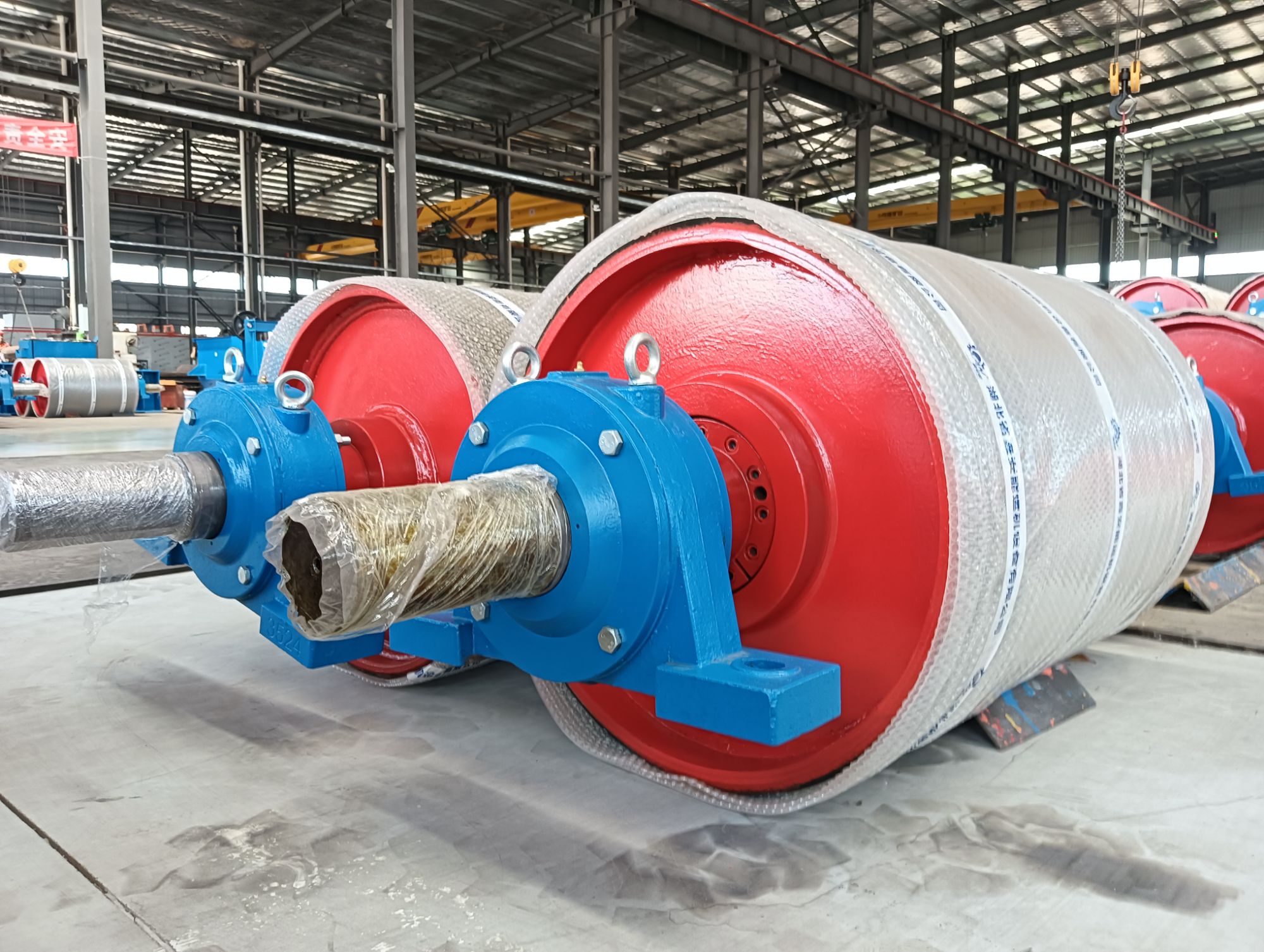
When procurement teams parse drive pulley RFPs, they obsess over torque ratings and bearing life, but hardly anyone checks how the pulley shell interacts with the belt under dirty, real-world conditions. It's not in the spec sheets because it can't be boiled down to a single number. Yet that interface is where slippage, uneven wear, and unscheduled downtime breed.
The standard evaluation playbook misses how material buildup and moisture change the friction profile across the face width. A pulley that tests perfectly on a clean bench becomes a liability once tramp material embeds in the lagging or corrosion pits the shell. The few operators who track downtime root causes often find that the failure chain starts not with a seized bearing but with a belt mistracking because the drive pulley lost its grip asymmetrically.
Fixing this blind spot doesn't require exotic sensors. It starts with asking for field data from similar applications—specifically, how the lagging holds up after 5,000 hours, not just its durometer on day one. That question alone reshapes supplier conversations toward operational honesty and away from catalog fantasy.
How Over-Engineering Can Be Just as Risky as Under-Engineering
Building for hypothetical scale often leads teams to construct elaborate frameworks that never pay off. A startup might spend months implementing a distributed caching layer, message queues, and a microservices architecture for an application that will realistically serve a few hundred users. The time and energy poured into these speculative optimizations divert resources from validating core assumptions, leaving the product vulnerable to competitors who shipped simpler solutions faster. It's akin to installing industrial-grade plumbing for a garden shed—impressive in theory, but a costly mismatch when a basic hose would have sufficed.
The hidden cost of over-engineering surfaces during maintenance and onboarding. Each abstract factory or dependency injection container may seem elegant in isolation, but collectively they create a cognitive labyrinth. When a bug arises or a small feature tweak is needed, developers must trace execution paths through layers of indirection, often fixing three unrelated components for one change. This drags down morale and slows iteration to a crawl, making the system brittle not despite its sophistication, but because of it. The very structures meant to future-proof the codebase become the friction that prevents rapid adaptation.
Perhaps most insidiously, over-engineered systems stifle experimentation. When a platform is so intricate that even the architects hesitate to touch certain modules, incremental improvement grinds to a halt. Teams avoid refactoring, accumulate tech debt in supposedly "clean" code, and lose the fearless refactoring culture that keeps software healthy. Meanwhile, the market doesn't award points for architectural purity; it rewards working solutions that evolve with user needs. A modest design that can be reshaped quickly often outlasts a monumental one that collapses under its own rigidity.
When a Supplier’s Track Record Speaks Louder Than Their Pitch
Grand promises and glossy presentations can only take a supplier so far. What truly separates a reliable partner from the rest is a history of consistent performance. A track record isn’t just a list of past projects—it’s a window into how a supplier handles pressure, adapts to unexpected challenges, and delivers on commitments when it matters most. While a compelling pitch can spark interest, it’s the unspoken proof of repeated success that builds lasting confidence.
Seasoned buyers know that the real story lies in the details: on-time delivery rates, how disputes were resolved, and whether the supplier stood behind their work long after the invoice was paid. These patterns reveal more about future behavior than any sales narrative ever could. A supplier with a solid track record has already weathered the storms you’ll likely face together, making their history a far more reliable compass than a well-rehearsed elevator pitch.
In the end, a pitch is merely an aspiration; a track record is a reflection of reality. When evaluating potential partners, focusing on what they’ve actually accomplished—especially under tough conditions—can save you from being dazzled by style over substance. The most effective collaborations often come from suppliers who let their work speak first and their words follow.
Why the Right Partner Asks Questions You Never Expected
A question you never expected can feel like a gentle intrusion—one that bypasses your usual defenses. The right partner doesn’t just dig for facts; they traverse your mental map and pause at the blank spaces you’ve never had reason to fill. When they ask, “What did you actually want to be when you were seven, before anyone told you it wasn’t practical?” it’s not idle curiosity. It’s an attempt to meet a version of you that you’ve long since shelved. These questions don’t seek easy answers; they invite you to revisit forgotten corridors of yourself, often stirring discomfort simply because they reveal how little of your inner territory you’ve consciously charted.
More than self-discovery, such questions shift the dynamic between two people. Instead of trading polished anecdotes, you find yourself co-creating a raw, unscripted dialogue. When a partner asks, “What’s the one thing you wish I would argue with you about?” it exposes the quiet corners where you crave more friction—or more clarity. It bypasses performance and nudges you toward the honest mess beneath. The surprise isn’t the question itself; it’s realizing that someone cares enough to challenge the narrative you’ve repeated so often it feels like identity. And in that space, the relationship stops being a play with rehearsed lines and starts being an improvisation that actually goes somewhere.
The Long-Term Cost of a Pulley Supplier Who Doesn’t Listen
When a pulley supplier stops paying attention to your requirements, the consequences don’t always appear on day one. A slightly off-center bore or a less durable material might go unnoticed during installation, but over months of continuous use, those small oversights amplify. Bearings wear faster, belts slip, and the entire system loses the efficiency it was designed for. What began as a modest saving on unit price turns into a steady drain on operational budgets through increased energy consumption and unplanned maintenance. The real cost isn’t the part itself—it’s the hours of productivity stolen while your team troubleshoots a problem that never should have existed.
Beyond immediate downtime, a supplier who doesn’t listen gradually erodes the trust that holds a supply chain together. You start holding extra inventory as a buffer against inconsistent quality, tying up capital that could be used elsewhere. Engineers begin designing around the supplier’s weaknesses instead of optimizing for performance, and that quiet adjustment limits what your products can achieve. Over years, this complacency seeps into your own reputation—customers feel the difference, even if they can’t pinpoint the cause. A pulley is a simple component, but ignoring your voice in its selection and design can quietly reshape your business in ways that are very expensive to undo.
FAQ
Start with their track record in your specific industry. If they’ve consistently delivered for companies like yours, that’s a reassuring sign. Request case studies or client references and pay attention to how openly they share details about past projects and challenges.
Ask for material certificates and batch inspection reports. A supplier who’s confident in their sourcing will provide these without hesitation. Also, check if they follow international standards like ISO or ASTM—it’s a practical shortcut to gauge consistency.
Local support cuts down on lead times and simplifies communication when things deviate from the plan. If a custom pulley needs a quick tweak or you face an urgent replacement, having someone in your time zone can prevent costly downtime.
Watch out for generic catalog offerings with no room for modification. A real OEM partner asks about your operating conditions, load cycles, and alignment tolerances. If they don’t probe beyond dimensions, they’re likely just a reseller.
Send them a non-standard request early on—something with unusual bore sizes or a specific coating. Their response time, the technical questions they ask, and whether they propose practical alternatives will tell you more than any brochure.
Often yes, especially if you use pulleys, bushings, and belts together. Compatibility issues shrink when one engineering team owns the mating parts. Just make sure they don’t treat your pulley order as an afterthought.
After-sale engineering support. Many buyers focus on upfront cost and delivery speed, but six months down the line, when mounting patterns lead to belt wear, you’ll wish you had chosen a supplier who proactively suggests improvements.
Request a lifecycle cost breakdown, not just unit price. Include expected maintenance intervals, failure rates from their historical data, and any efficiency guarantees. A slightly higher upfront spend often pays for itself in reduced production stoppages.
Conclusion
Choosing the right OEM drive pulley supplier goes far beyond comparing price tags. That first phone call often reveals more than a quote—attentive suppliers dig into your application, ask about load cycles, environmental factors, and maintenance hurdles, showing whether they truly understand your operational reality. Many RFP evaluations suffer from a critical blind spot: they focus on specs and cost while ignoring how the pulley integrates into the broader system, which can lead to mismatches and premature failure. Furthermore, the risks are not one-sided. Over-engineering can inflate costs and add unnecessary weight, while under-engineering invites breakdowns and safety hazards. The sweet spot is a supplier who balances design precisely to your needs.
A partner’s track record matters far more than a slick sales presentation. When a supplier’s history in similar industries demonstrates consistent quality and on-time delivery, you gain confidence that their promises translate into performance. The best suppliers ask unexpected questions—about your future capacity plans, material handling changes, or even your pain points with previous suppliers—because they aim to prevent problems rather than just sell a part. Conversely, a supplier who doesn’t listen can generate hidden costs that accumulate over years: frequent replacements, unplanned downtime, and inefficient operations. Ultimately, the right partner is one who collaborates proactively, treats your goals as their own, and safeguards your production line long after the purchase order is signed.
Contact Us
Contact Person: Anna Lu
Email: [email protected]
Tel/WhatsApp: 8618561668850
Website: https://www.x-conveyor.com