

Pharmaceutical Cleanroom EPC Manufacturer: Delivering Turnkey Solutions for Sterile Drug Production
2026-07-31
In the high-stakes world of sterile drug manufacturing, the cleanroom is more than just a controlled environment—it's the backbone of product safety and regulatory compliance. Yet, finding a partner who can deliver a fully integrated, turnkey cleanroom solution is no small feat. That's where GENO Pharmatech steps in. As a premier pharmaceutical cleanroom EPC manufacturer, we combine engineering mastery with deep industry knowledge to build facilities that meet the strictest sterile production standards. But what truly sets us apart? Let's explore the seamless, end-to-end approach that's reshaping how the industry thinks about cleanroom construction.
Precision Engineering for Next-Gen Sterile Facilities
Achieving true sterility in next-generation facilities demands more than just advanced filtration—it requires a symphony of meticulously engineered systems. Every surface, every air current, and every procedural touchpoint is designed with a zero-tolerance mindset. From unidirectional airflow patterns that shepherd particles away from critical zones to seamless, crevice-free construction materials, the goal is to eliminate microbial footholds. This level of precision transforms cleanrooms into active guardians of product integrity, where even microscopic disruptions are preemptively neutralized.
The evolution of modular cleanroom architectures has introduced a new dimension of control. Prefabricated, plug-and-play panels with integrated HVAC and monitoring sensors allow for rapid deployment without sacrificing sterility. These systems are engineered to maintain positive pressure cascades, ensuring that contaminants always flow from cleaner to less clean areas, never the reverse. Coupled with real-time particle counting and environmental surveillance, operators can now pinpoint and address variances before they escalate, turning data into an invisible shield.
Beyond hardware, precision engineering extends to the very workflows that animate a sterile facility. Robotic handling, restricted-access barrier systems, and single-use technologies are reducing human intervention to an irreplaceable minimum. Material transfer ports now feature double-door designs with vaporized hydrogen peroxide decontamination cycles, creating a guaranteed break in bioburden. These advances aren't merely additive—they represent a fundamental rethinking of how we construct and operate environments where sterility is non-negotiable.
Why Modular Cleanrooms Are Reshaping Pharma Manufacturing
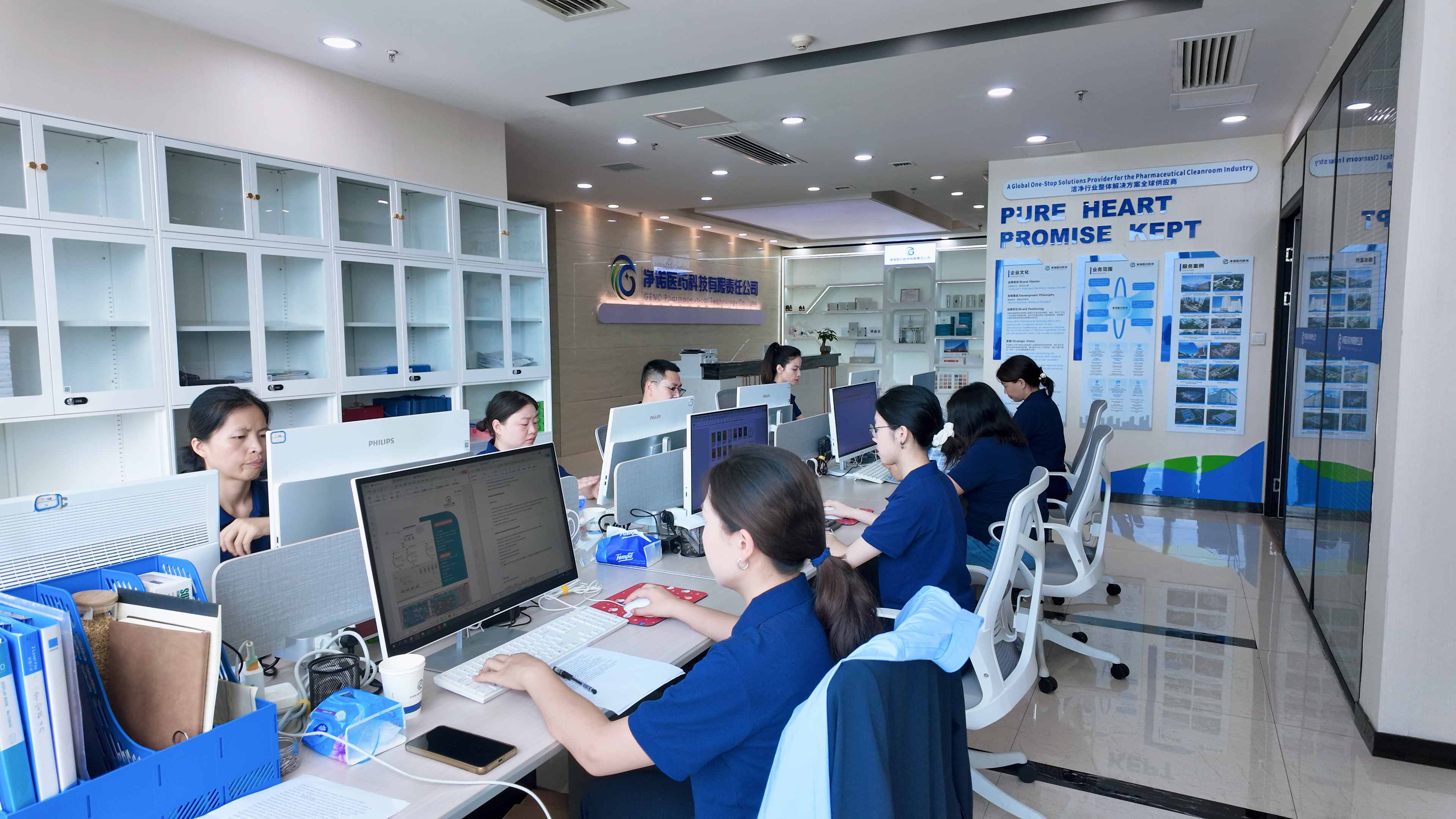
Pharmaceutical manufacturing has long relied on traditional stick-built cleanrooms, but the shift toward modular solutions is gaining momentum for compelling reasons. Unlike conventional construction, modular cleanrooms are prefabricated off-site and assembled rapidly, drastically reducing project timelines from months to weeks. This speed doesn't come at the expense of compliance—these systems are engineered to meet stringent ISO classifications and GMP standards, with integrated HVAC, filtration, and monitoring that ensure consistent environmental control from day one.
Flexibility sits at the core of their appeal. In an industry where product demands and regulatory landscapes shift unexpectedly, modular cleanrooms offer unmatched adaptability. They can be expanded, reconfigured, or even relocated with minimal disruption, allowing manufacturers to pivot production lines without major capital reinvestment. This agility is particularly valuable for personalized medicines and small-batch productions, where rigid facilities would otherwise become a bottleneck.
Cost-effectiveness rounds out the transformation. By reducing on-site labor, material waste, and construction-related downtime, modular systems significantly lower both initial outlay and long-term operational expenses. Maintenance is simplified through standardized components and easy access to utilities, while energy-efficient designs cut ongoing utility costs. As pharma companies face increasing pressure to bring therapies to market faster and more economically, modular cleanrooms aren't just an alternative—they're quickly becoming the standard.
Integrating Containment and Compliance from Day One
From the moment a project takes its first breath, embedding compliance and containment isn't just a checkbox—it's a fundamental design principle. Early-stage architecture reviews aren't bureaucratic hurdles; they’re the scaffolding that prevents costly retrofits when regulatory auditors come knocking. By threading data sovereignty, encryption standards, and access boundaries into the initial blueprints, teams sidestep the reactive scramble that plagues so many deployments. Think of it as building a moat before the castle is complete—not an afterthought once the drawbridge is already down.
Operationalizing this means treating policy as code and infrastructure as immutable. Instead of relying on periodic audits that catch violations weeks after they occur, continuous control monitoring baked into CI/CD pipelines catches misconfigurations before they merge. Automation isn’t about replacing human judgment; it’s about ensuring that every commit respects the same rigorous standards without manual fatigue. When developers inherit pre-configured templates that enforce encryption by default and restrict data egress, compliance becomes a natural byproduct of the workflow—not a bottleneck at the finish line.
The payoff extends beyond passing audits with fewer findings. Teams that weave these practices into the fabric of their development cycle often ship faster because the typical compliance-related rework evaporates. Security and governance stop being the department of “no” and start being the silent partner that accelerates delivery. When a breach attempt surfaces—and it will—the layered defenses built into the system’s core from day one mean containment is automatic, not an incident response retrofitted under duress.
The Hidden Cost of In-House Cleanroom Design
Designing a cleanroom internally often appears as a straightforward path to cost savings. The initial budget covers architectural plans, modular wall systems, and HVAC integration, with the assumption that in-house engineering teams can manage the complexity. Yet, the expenses that don't make it onto the spreadsheet start accumulating quietly—unplanned redesign cycles, procurement delays for specialized components, and the gradual realization that ISO classifications demand precision that generic construction practices rarely deliver.
Operational pitfalls become visible only after the first certification attempt falls short. Particle counts drift out of spec because airflow patterns weren't modeled to account for equipment heat loads or personnel movement. Retrofitting a completed space to fix these issues bleeds money into additional filtration upgrades and extended downtime. Meanwhile, the team tasked with managing the project spends months away from their core responsibilities, creating a vacuum in other critical areas of the business.
Long-term, the expense of maintaining a compromised cleanroom eclipses the savings from skipping external expertise. Higher-than-expected energy consumption from an oversized HVAC, persistent gowning protocol failures, and repeated product batch rejections eat into operational margins. Many organizations end up paying for a third-party remediation anyway, often at a premium due to the constraints of fixing an occupied or partially validated space. The true cost isn't just financial—it's measured in lost agility and compromised compliance posture.
From Blueprint to Batch: The True Turnkey Advantage
Imagine translating a concept straight into a flawless production run without the usual bottlenecks. That's the heart of a genuine turnkey solution—it's not just about handing over equipment, but orchestrating every phase so seamlessly that the distance between a drawing and a finished batch feels almost nonexistent. When engineering, component sourcing, assembly, testing, and final integration are woven into a single thread, you sidestep the finger-pointing that plagues multi-vendor projects and instead gain a partner who owns the outcome as fiercely as you do.
This holistic approach dissolves the common friction points that slow innovation. Instead of juggling separate timelines for enclosure fabrication, PCB population, cable harnessing, and firmware validation, you're looking at a synchronized workflow where each element matures in lockstep. The result? Prototypes that look and perform like production units from day one, and transition into full-scale manufacturing with zero re-engineering surprises. It’s about creating a continuity where the lessons learned in the pilot phase are inherent in the final design, not patched in afterward.
What really sets the true turnkey model apart is the unburdening of your internal resources. Your team stays focused on the core technology and market differentiation while the manufacturing partner absorbs the complexity of logistics, quality control, and lifecycle management. That means accelerated time-to-revenue, consistent product identity across builds, and the freedom to iterate without rebuilding the supply chain each time. In an industry where speed and precision define winners, having a cohesive journey from blueprint to batch isn’t a luxury; it’s the baseline of staying competitive.
Future-Proofing Your Facility Against Regulatory Shifts
Regulatory landscapes rarely shift overnight, but when they do, facilities built on rigid assumptions often find themselves scrambling. The key isn’t to predict every policy twist—it’s to bake adaptability into your physical infrastructure and operational DNA. That might mean installing modular utility hookups that can accommodate future emission-control retrofits without tearing out walls, or designing floor layouts that segment processes so a single new wastewater rule doesn’t halt an entire production line. Small upfront investments in flexible engineering can later translate into weeks saved on compliance overhauls.
Another layer is embracing data transparency long before it becomes a mandate. Real-time monitoring of energy, water, and waste streams doesn’t just simplify reporting—it reveals inefficiencies you’d otherwise miss, often paying for itself while keeping you ahead of disclosure requirements. Pair that with a habit of quarterly “regulatory stress-testing,” where a cross-functional team games out hypothetical policy changes, and you build an organizational muscle that reacts with speed rather than panic. Suppliers and partners often appreciate this rigor too, especially when they see it reflected in consistent operating permits.
Finally, avoid the trap of treating sustainability and resilience as separate checklists. A facility that reduces its reliance on grid power through on-site renewables, for instance, isn’t just lowering its carbon footprint—it’s insulating itself from future carbon taxes or grid instability. Likewise, capturing and reusing process heat protects against shifting thermal discharge limits. By tying every resilience measure to a clear business advantage, you shift the conversation from mere compliance to strategic durability, making it easier to win internal buy-in for ongoing investments.
FAQ
An EPC manufacturer in this field takes full responsibility for designing, procuring all necessary materials and equipment, and constructing a cleanroom facility tailored to sterile drug production. They deliver a fully operational environment, from initial concept to final validation, ensuring compliance with strict regulatory standards.
Turnkey solutions simplify project management by providing a single point of accountability. This integrated approach reduces delays, minimizes the risk of miscommunication, and ensures that all components—air handling, filtration, surfaces, and monitoring systems—work seamlessly together from day one.
Services cover the entire lifecycle: feasibility studies, cleanroom design and layout, HVAC and utility engineering, procurement of ISO-compliant materials, construction, commissioning, validation (IQ/OQ/PQ), and sometimes ongoing maintenance or training for on-site staff.
They follow strict design protocols, such as specifying appropriate air change rates, terminal HEPA filtration, and pressure cascades. Materials with non-shedding, cleanable surfaces are selected. The entire build is documented and tested against standards like ISO 14644 and relevant GMP guidelines. Third-party certification is often part of the validation phase.
Unidirectional airflow patterns, ceiling-mounted HEPA filters, sealed cleanroom panels, pressure differentials between zones, pass-through chambers, and integrated environmental monitoring. These elements collectively control particulate and microbial contamination.
Look for proven experience in sterile injectables or biotech facilities, strong regulatory knowledge, a portfolio of completed projects with similar cleanroom classifications, in-house validation expertise, and a transparent project management approach. References from previous clients are highly valuable.
Timelines vary based on scale and complexity, but a mid-sized project might range from 8 to 16 months. This includes design approval, procurement, construction, commissioning, and full validation. A good EPC manufacturer will provide a detailed schedule that accounts for regulatory reviews.
Conclusion
A pharmaceutical cleanroom EPC manufacturer that truly delivers turnkey solutions does far more than erect walls and install HVAC—it orchestrates a seamless journey from initial concept to fully operational sterile drug production. Precision engineering sits at the core, where every square meter is designed around the specific process flow, equipment heat loads, and personnel movements of next-gen therapies. Instead of retrofitting generic spaces, these specialists embed containment and compliance from day one, integrating isolators, restricted access barriers, and unidirectional airflow patterns as inherent features rather than afterthoughts. This proactive approach eliminates the hidden costs of in-house cleanroom design, where internal teams often underestimate the complexity of material selection, pressure cascade validation, and the ripple effects of a single design change on HVAC sizing or structural reinforcement. By contrast, an experienced EPC partner brings proprietary modular systems that drastically shorten construction timelines while maintaining ISO 5–8 performance, all backed by a single point of responsibility that spans architecture, MEP, automation, and qualification.
The true turnkey advantage becomes tangible when blueprints evolve into batch-ready environments without the client managing a dozen subcontractors. Modular cleanroom technology is reshaping pharma manufacturing not simply because it's faster, but because it introduces a level of flexibility that conventional stick-built facilities lack: walls can be reconfigured, utilities replumbed, and monitoring systems updated with minimal disruption. Future-proofing against regulatory shifts is built into this model—an EPC manufacturer that lives and breathes Annex 1 and FDA aseptic guidance designs every surface finish, air change rate, and transfer hatch to not just meet today’s requirements but to accommodate tomorrow’s stricter interpretations. This goes beyond technology; it's about a partnership where the manufacturer assumes cradle-to-validation accountability, turning a complex capital project into a predictable outcome. The result is a facility that accelerates time-to-market for life-saving sterile products, reduces total cost of ownership, and gives pharmaceutical companies the confidence that their cleanroom is a strategic asset, not a continuous headache.
Contact Us
Contact Person: Amy Yang
Email: [email protected]
Tel/WhatsApp: 008619330882686
Website: https://www.genopharmatech.com/