

Pharmaceutical Facility Manufacturer: Inside Modern Drug Production Plants
2026-09-16
Stepping inside a modern pharmaceutical production plant feels like entering a different world—where precision, technology, and human expertise converge to turn molecules into life-saving medicines. Behind every sterile corridor and automated filling line stands a dedicated pharmaceutical facility manufacturer, orchestrating the design, construction, and validation of these highly regulated environments. As the industry evolves with stricter compliance demands and advanced therapies, choosing the right manufacturing partner has never been more critical. At GENO Pharmatech, we’ve witnessed firsthand how cutting-edge facility planning can transform drug production—turning complex challenges into seamless, compliant operations. In this blog, we pull back the curtain on what really goes on inside these plants and why the people who build them matter just as much as the scientists who use them.
Airflow Patterns That Override Human Instinct
A well-tuned air current can steer people without them noticing. A slow, ceiling-level downdraft in a store makes the space feel more alert and keeps shoppers moving, while a soft lateral breeze near a display can trigger a subconscious impulse to pause. These patterns work below conscious awareness, overriding the instinct to stick to familiar paths or avoid open areas.
One clear example is the air curtain at a building entrance. The moment someone feels a sudden gust, the natural reaction is to flinch or step back. Modern air curtains are tuned to deliver a wide, low-velocity stream that reads more like a gentle outdoor breeze than an artificial barrier. As a result, people walk straight through without hesitation even though the air is actively separating two different environments.
In operating rooms and cleanrooms, vertical laminar flow does something similar for medical staff. Doctors and nurses instinctively lean toward the patient or the instrument tray, and their body movements can stir up airborne particles. Instead of demanding that people change those instinctive motions, the airflow is designed to wash downward continuously, sweeping contaminants away before they rise. The system adapts to human behavior rather than the other way around, quietly neutralizing instincts that would otherwise compromise sterility.
The Fill-Finish Suite Without the Usual Myths
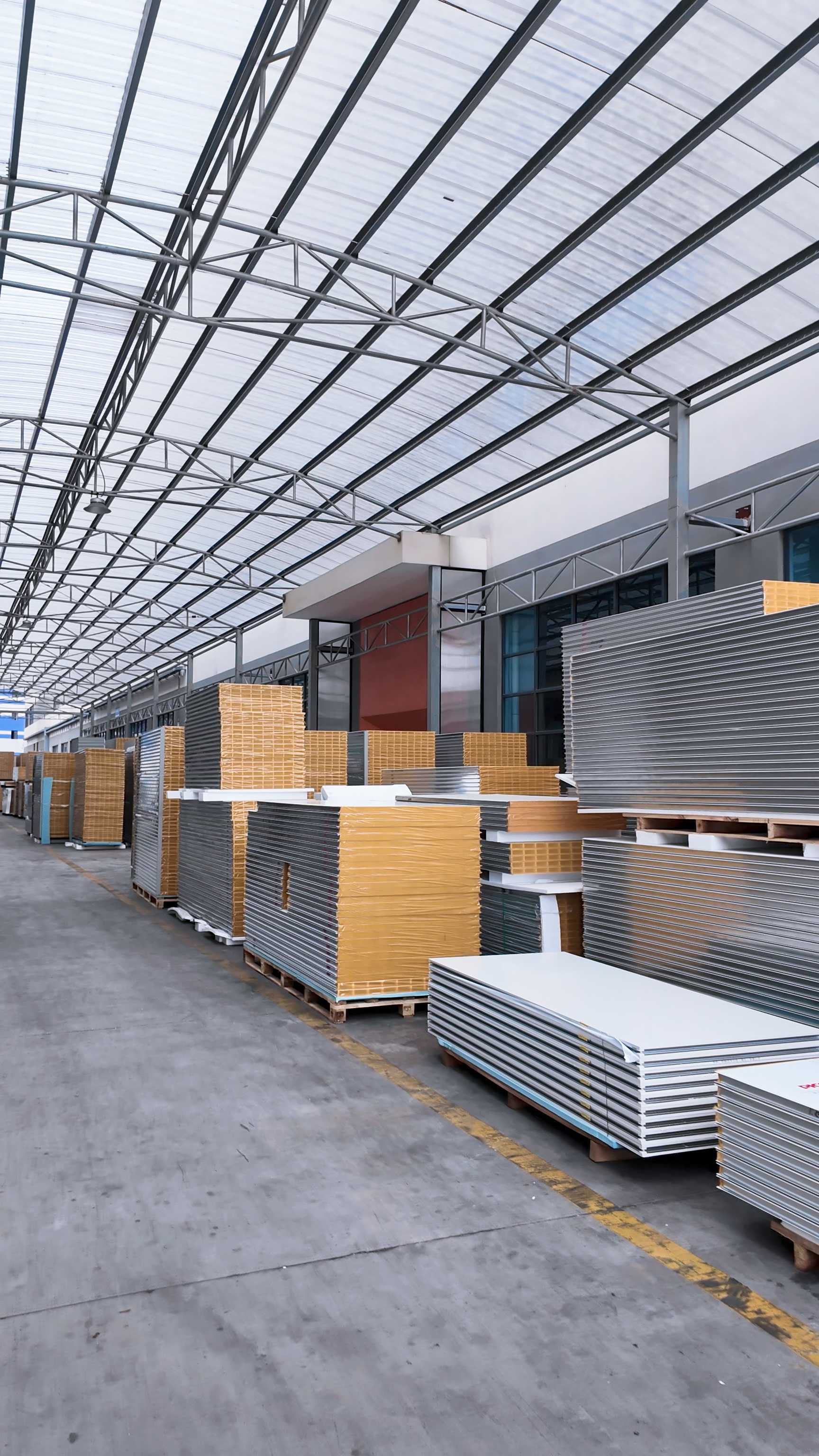
Every fill-finish suite carries a set of inherited assumptions—sterility is fragile, automation requires a cleanroom the size of a football field, and flexibility means sacrificing throughput. This suite was designed from the ground up to question those defaults. Instead of bolting on workarounds, the layout itself eliminates common failure points: single-direction material flow, simplified glass handling, and closed robotic filling that doesn't rely on operator finesse. The result is a line that runs consistently without the usual operational theatre.
One of the more persistent myths is that small-batch fill-finish can't be cost-effective. In practice, that belief comes from systems built around large-scale assumptions. Here, changeover between vial sizes or product formulations happens in minutes, not shifts, because the critical path was designed around clean, tool-less parts and pre-sterilized, disposable contact surfaces. You're not constantly fighting the equipment to adapt; the equipment was never locked into a single product profile.
Another myth worth discarding: that regulatory compliance demands layers of paperwork and manual oversight. Modern fill-finish can track every parameter in real time, from fill weight to environmental monitoring, with automatic batch records that don't require human transcription. That doesn't mean less rigor—it means the rigor is built into the system rather than bolted on as an afterthought. The suite removes the noise so your team can focus on what actually changes between runs.
Where Single-Use Systems Meet Daily Sanitization
In many bioprocessing facilities, the shift toward single-use bags, tubing, and connectors has quietly reshaped how cleaning teams think about their daily routines. The assumption that disposables eliminate sanitation work is only half true. While the product-contact surfaces are discarded after each batch, the surrounding equipment, transfer carts, storage racks, and even the outer packaging still demand regular disinfectant contact. Operators quickly learn that a dropped bag or a loosely capped connector can introduce contamination just as easily as a stainless steel vessel left unwashed.
Daily sanitization in a single-use environment becomes a practice of boundaries rather than brute force. Wipe-down protocols often focus on the transition zones where disposable assemblies meet fixed infrastructure—peristaltic pump heads, pinch valves, and sensor housings. Residues from bag changes, small leaks at sterile connectors, and dust from cardboard overpacks tend to accumulate in these seams. A pragmatic approach is to treat the area within arm's reach of every single-use connection as a high-touch surface, scheduling multiple short sanitizing passes during a shift instead of relying on one end-of-day deep clean.
What makes this intersection tricky is that many disinfectants approved for stainless steel can degrade the very plastics used in single-use systems. Alcohol-based wipes may craze polycarbonate guards, while strong oxidizers can embrittle silicone tubing left nearby. Facilities often maintain two separate spray bottles or pre-saturated wipes: one for hard surfaces, another for compatible plastics. This small logistical choice, repeated across dozens of daily touchpoints, quietly determines whether a single-use platform delivers its promised reduction in contamination risk or simply shifts the burden elsewhere.
Why Every Sensor Trace Tells a Regulatory Story
A sensor trace is not a passive log entry. When a bioreactor drifts half a degree outside its validated range, that trace becomes the first piece of evidence a regulator will ask to see. The shape of the curve matters as much as the final value: a slow, wobbling deviation hints at probe degradation, while a sharp spike often points to a steam-in-place cycle that wasn't fully isolated. Teams that treat these traces as operational noise discover too late that auditors read them as a narrative of control failure.
In most inspections, the question is rarely "Did you record the data?" but "Can you explain every movement on this chart?" A missing thirty-minute segment during a drying cycle, even if the final moisture content passed, can unravel confidence in the batch record. Regulators use sensor data to reconstruct what actually happened, not what the batch ticket claims. If the trace shows a pressure equalization event that no operator logged, the entire deviation management system comes under scrutiny.
The regulatory weight of a trace grows with time. Legacy systems that stored only daily averages or wrote over raw data may have met older expectations, but current reviews expect full-resolution, tamper-evident archives. Every gap, flattening, or unexplained excursion in a sensor history is a prompt for a deeper question: was the process truly in control, or merely reported that way?
Powder Handling: The Step Nobody Filmed Until Now
Most coffee tutorials skip straight from grinding to tamping, but the way you transfer those fine particles into the portafilter basket can make or break a shot. Static, clumping, and uneven distribution all happen in those few seconds that rarely make it onto camera.
The real reason nobody filmed it? It's not glamorous. A shaky hand, a plastic dosing cup, a few taps on the counter—these moments feel like filler footage. Yet seasoned baristas know that a careful transfer reduces channeling later, especially with lighter roasts that tend to fly everywhere.
Next time you pull a shot, slow down at the powder stage. Watch how the grounds fall, where the fines collect, and whether your distribution tool actually fixes what the transfer messed up. That quiet, unfilmed step is where consistency begins.
What Actually Stops a Batch: Alarms, Anomalies, and Human Checks
In most plants, the official batch record lists dozens of alarm points, but only a handful ever bring production to a halt. Pressure spikes on a reactor jacket might trigger a warning that operators acknowledge and ignore for hours, while a five-degree drift in a distillation column's bottom temperature can shut the line down instantly. The difference isn't sensor priority—it's whether the reading points to a recoverable deviation or a genuine risk to the next unit operation.
Anomalies act as a slower, more corrosive stopper. A pump drawing 8% more current than last month rarely triggers an alarm, yet a wary shift lead will pause the batch to pull the impeller before a full seizure. These unplanned checks often take longer than the official deviation procedure because they aren't scripted: someone has to open the casing, inspect for cavitation damage, argue with maintenance about whether the bearing is 'fine', then write a note that never makes it into the deviation log.
Human checks remain the least predictable brake. A veteran operator who notices a subtle color change in the distillate—barely visible against the sight glass—can hold the transfer without any alarm or trend alert. That kind of stop doesn't show up in OEE reports as downtime; it hides in 'operator delay' or gets blamed on a slow lab result. But it's often the only thing preventing a batch from turning into a disposal ticket.
FAQ
Modern plants integrate closed processing systems, real-time environmental monitoring, and single-use technologies that drastically reduce cross-contamination risks. Older facilities often rely on open transfers and manual cleaning, while new designs emphasize continuous manufacturing and isolator-based filling lines.
Cleanrooms are graded from ISO 5 to ISO 8 based on airborne particle counts. Aseptic filling typically occurs in ISO 5 zones with unidirectional airflow, while surrounding areas may be ISO 7. Pressure cascades ensure air moves from cleaner to less clean spaces, and personnel gowning requirements scale with the grade.
Single-use bioreactors, tubing, and connectors eliminate cleaning validation between batches, reduce water and energy use, and shorten changeover times. They are particularly valuable for multiproduct facilities and personalized medicines where campaign sizes are small.
Automation handles everything from dispensing raw materials to visual inspection of filled vials. Process analytical technology (PAT) allows real-time release testing, while batch records are generated electronically. This reduces human error and supports continuous manufacturing, where materials flow without stopping.
High-potency compounds require containment strategies such as isolators, restricted access barrier systems (RABS), and dedicated HVAC with HEPA filtration. Negative pressure rooms prevent active pharmaceutical ingredients from escaping, and operators wear powered air-purifying respirators or use closed transfer devices.
Modular cleanrooms and process skids are built off-site in controlled environments, then assembled on location. This cuts construction time by up to 50%, improves quality because modules are factory-tested, and allows future expansion or repurposing with less disruption to ongoing operations.
Facilities now use heat recovery from HVAC systems, low-flow water fixtures, and solvent recycling. Some plants pursue LEED certification by optimizing energy use for cleanroom air handling, which accounts for a large share of total consumption. Single-use systems also reduce water for cleaning but raise plastic waste, so recycling programs are emerging.
Retrofits often struggle with limited ceiling heights, inadequate utility capacity, and existing cleanroom layouts that cannot easily accommodate modern isolator lines. Upgrading HVAC to tighter particle and pressure control may require shutting down production, so phased renovations and temporary cleanroom enclosures are common workarounds.
Conclusion
走进现代制药生产工厂,最先让人意外的是气流设计——它并不迁就人的直觉,而是严格遵循单向流原则,把污染风险挡在产品之外。灌装套间里那些流传已久的“洁净室神话”被逐一拆解,实际运行远比教科书上的分区更灵活。一次性系统在这里不是配角,它们与每日消毒流程和平共处,既缩短了周转时间,也降低了交叉污染的隐患。每一条传感器曲线都不只是实时监控,而是在累积一份可追溯的监管档案,从温湿度到压差,每一个数据点都在讲述批次的故事。
粉末处理长期隐藏在镜头之外,直到最近才被细致记录,暴露出输送、混合和分装中那些容易被忽视的微粒行为。而真正让一批药品停下脚步的,往往不是单个警报的尖锐鸣响,而是异常趋势、设备偏差和操作员直觉判断的叠加。设施制造商必须理解这种微妙的平衡:自动化系统负责捕捉异常,人工检查则提供最后一层防线。从气流到粉末,从一次性组件到传感器网络,现代药厂的每一寸空间都在整合工程精度与人类判断,最终支撑起药品的安全底线。
Contact Us
Contact Person: Amy Yang
Email: [email protected]
Tel/WhatsApp: 008619330882686
Website: https://www.genopharmatech.com/