

Polymer-Based Chemical Soil Stabilizers: A Guide to Stronger, Greener Foundations
2026-07-29
Imagine building on soil that's as dependable as concrete yet kinder to the planet. That's the promise of polymer-based chemical soil stabilizers, a groundbreaking solution redefining modern construction. From dusty rural roads to massive commercial foundations, these advanced formulas lock soil particles together, dramatically boosting strength while minimizing environmental impact. At the forefront of this shift is MST, a pioneer in engineering greener, more resilient foundations. In this guide, we'll unpack the science behind these stabilizers, explore their benefits over traditional methods, and show why they might be the missing link in your next project.
The Real Chemistry of Stronger Soil
Beneath our feet, soil isn't just dirt—it's a living, breathing matrix where minerals, microbes, and organic matter engage in constant chemical dialogue. The secret to stronger soil lies in understanding this hidden chemistry. Clay particles carry negative charges that attract and hold positively charged nutrients like calcium, magnesium, and potassium, preventing them from washing away. Meanwhile, the soil's pH isn't just a number; it governs the solubility of these nutrients, directly affecting how well plants can access them. Get this balance right, and you've laid the foundation for robust plant growth.
But the real alchemy happens at the biological level. Plant roots exude sugars, amino acids, and organic acids that fuel a thriving microbial community. In return, mycorrhizal fungi and bacteria shuttle water and solubilized phosphorus back to the roots, creating an underground barter system that money can't buy. These microorganisms also secrete sticky substances that bind soil particles into aggregates, improving aeration and water infiltration. It's a self-reinforcing cycle: the more biological activity, the stronger and more resilient the soil structure becomes.
Even the breakdown of organic matter is a marvel of chemical cooperation. As soil organisms decompose dead plant material, they release humic substances—complex molecules that act like a nutrient reservoir and pH buffer. These humates not only chelate micronutrients, making them more available, but also improve the soil's cation exchange capacity. So, when you add compost or mulch, you're not just feeding the soil; you're upgrading its chemical engine, enabling it to store more nutrients and water for the lean times ahead. That's the real chemistry behind soil that can withstand drought, heavy rain, and intensive cropping.
Turning Weak Ground into Load-Bearing Assets
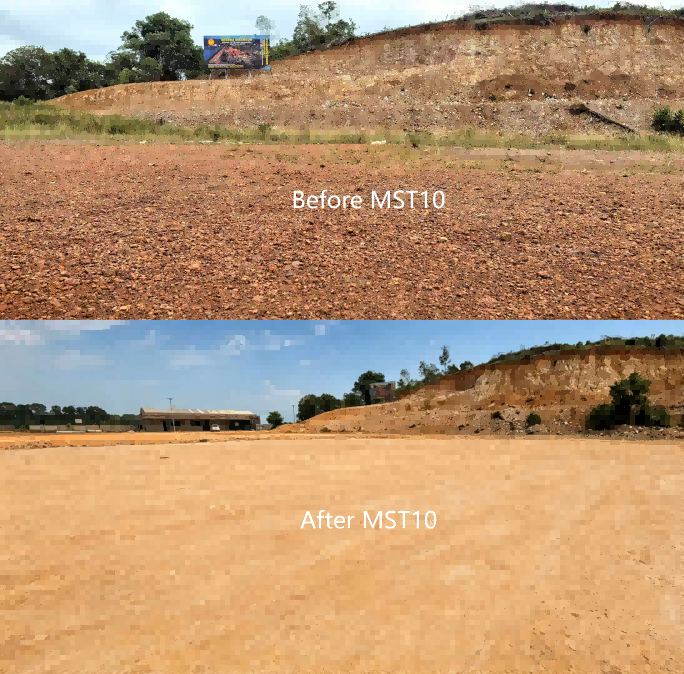
Dealing with unstable soil conditions has always been a challenge in construction. Whether it’s loose sand, soft clay, or fill material, these conditions can threaten the safety and longevity of any structure. The key is to stop seeing weak ground as an obstacle and start treating it as an opportunity. With the right approach, even the most problematic subgrades can be transformed into reliable foundations that support heavy loads without excessive settlement.
Modern ground improvement techniques make this possible without the need for deep excavation or replacement. Methods like dynamic compaction, vibro stone columns, and chemical grouting alter the soil’s properties in place, increasing its density, cohesion, and load-bearing capacity. Each technique is selected based on site-specific factors, ensuring that the ground becomes an integral part of the structural system rather than a liability.
The real value emerges when these improved soils are treated as engineered assets. They reduce material costs, shorten project timelines, and minimize environmental disruption compared to traditional piling. By investing in soil reinforcement, developers gain a dependable base that performs predictably over decades, turning what was once a risky variable into a lasting advantage.
Eco-Friendly Foundations: More Than Just a Buzzword
When you hear “eco-friendly foundations,” it’s easy to dismiss it as yet another marketing phrase designed to cash in on green trends. But peel back the label, and you’ll find a real shift in how we think about the very base of our homes. It’s not about slapping a solar panel on the roof and calling it a day—it’s about reengineering the materials and methods that literally hold everything up. From rammed earth and recycled concrete to mushroom-based insulation, these aren’t futuristic concepts; they’re proven techniques that drastically reduce carbon footprints without compromising strength. The fact is, a truly sustainable building starts from the ground down, and that means making deliberate choices about the part we never see.
What makes a foundation “eco-friendly” goes beyond just using less cement. It’s about understanding the lifecycle of every component—how it’s sourced, what energy it consumes during manufacturing, and whether it can be repurposed down the line. For instance, traditional concrete production is responsible for a massive chunk of global CO₂ emissions, but innovators are now mixing in industrial waste like fly ash or slag to slash that impact. Others are turning to hempcrete, a breathable material that actually absorbs carbon over time. There’s also a growing emphasis on design: floating foundations or pier systems that minimize excavation, preserve soil health, and work with the land rather than against it. These approaches aren’t just gentler on the planet—they often prove more resilient to floods, earthquakes, and shifting soils.
The real proof that this isn’t a passing fad lies in the numbers and the builders who’ve made the switch. Small-scale architects and large developers alike are finding that eco-foundations can be cost-competitive when you factor in long-term durability and lower maintenance. In cold climates, insulated concrete forms cut heating bills dramatically; in hot zones, earth-sheltered foundations keep interiors naturally cool. Beyond the practical perks, there’s a quiet satisfaction in knowing your home’s footprint is literally buried in ethical choices. So next time someone rolls their eyes at the term, remember: a buzzword only stays a buzzword if nobody acts on it. And right now, plenty of people are digging deeper—literally—to build a future that’s as solid as it is sustainable.
From Parking Lots to Highway Embankments
The journey begins in the most mundane of places: the asphalt plains of suburban parking lots. Here, beneath the baking sun and relentless tread of tires, early experiments took shape. Engineers and tinkerers alike saw potential where others saw only empty space. They rigged solar panels onto canopies, tested heat-resistant surfacing, and learned harsh lessons about durability and drainage. These trials, often overlooked, laid a gritty foundation for what was to come.
Eventually, the focus shifted from stationary lots to the arteries of motion—highway embankments. Sloping stretches along interstates and rural roads suddenly offered miles of angled, sunlit real estate. Installing systems here wasn’t just about capturing energy; it was about redefining infrastructure. The challenges multiplied: vibration from traffic, wind shear at speed, and the need to avoid distracting drivers. But solutions emerged, blending civil engineering with photovoltaics in ways that felt almost organic.
Now, what began as a quirky idea has matured into a quiet network of roadside energy harvesters. Maintenance crews trim grass around panels instead of just mowing, and data from these linear installations feeds back into smarter grid management. The transformation from parking lot pilot projects to functional embankment arrays mirrors a broader truth: sometimes, innovation doesn’t need a grand stage—it just needs enough neglect and sunlight to take root.
How Long Do Polymer-Treated Soils Last?
The lifespan of polymer-treated soils varies widely and is influenced by a combination of environmental conditions, polymer type, and application quality. In ideal settings, these stabilized surfaces can remain effective for five to fifteen years, though some high-traffic or harsh-weather sites may show wear much sooner. The polymer binds soil particles, creating a durable, water-resistant layer that resists erosion, but its performance inevitably degrades over time due to UV radiation, freeze-thaw cycles, and mechanical abrasion.
Key factors that dictate durability include the specific polymer formulation—acrylics, vinyls, or polyurethanes each have distinct degradation rates—as well as soil composition and climate. Sandy soils with poor cohesion may not hold the polymer as well as clay-rich blends, while constant exposure to intense sunlight or heavy rainfall accelerates breakdown. Regular maintenance, such as reapplying a diluted polymer solution or repairing cracked areas, can significantly extend the service life, pushing it beyond the typical range.
Next-Generation Stabilizers: What's on the Horizon?
Stabilizer technology is quietly undergoing a radical shift, moving beyond the basic role of preventing degradation. Modern formulations now aim to actively enhance material performance under stress, responding to heat and light in ways that were once impossible. This isn't just about extending shelf life anymore; it's about enabling products to function reliably in harsher environments, from scorching desert sunlight to the deep-freeze of aerospace applications.
What's particularly interesting is the rise of multifunctional and bio-based stabilizers. Rather than stacking multiple additives, chemists are engineering single molecules that tackle several problems at once—like a stabilizer that simultaneously quenches free radicals, absorbs UV, and neutralizes metal ions. Meanwhile, a push toward sustainability is driving innovation in renewable sources, with lignin derivatives and vegetable oil-based chemistries beginning to rival their petroleum-derived counterparts in performance.
Looking ahead, smart stabilizers that respond on-demand to environmental triggers could reshape the industry. Imagine a polymer additive that remains dormant until a specific temperature threshold is reached, then activates precisely where needed. Such precision would reduce overall additive loading, cut costs, and limit leaching into the environment—a win for performance, economics, and ecological stewardship alike.
FAQ
They are synthetic compounds that chemically bind soil particles together, creating a durable matrix. Unlike cement or lime, which rely on hydration and can be brittle, polymers often provide flexibility, faster curing, and can be tailored for specific soil types without drastically altering pH levels.
They can reduce the carbon footprint by requiring less material overall, minimize dust generation, and sometimes allow for in-situ treatment, cutting transportation emissions. Many formulations are also non-toxic and prevent soil erosion, protecting surrounding ecosystems.
They work well with a range of soils but perform best when matched to the specific mineralogy and moisture content. Highly organic soils or those with extreme pH may require pre-treatment or specialized polymer blends. A proper site evaluation is essential.
Typically, the soil is scarified, the polymer is mixed with water and sprayed onto the soil, then mixed in thoroughly using a reclaim er or grader. Compaction follows to achieve design density, and the surface may need a light mist cure. The exact procedure varies by product.
When correctly designed and applied, they can offer excellent resistance to water infiltration, freeze-thaw cycles, and abrasion. Some polymers form a semi-flexible bond that handles thermal expansion better than rigid cement, reducing cracking over time.
Most polymer products are water-based and low in volatile organic compounds, making them safer than solvent-based alternatives. Still, standard personal protective equipment like gloves and masks is recommended to avoid skin contact or inhalation of mist during spraying.
Generally, minimal maintenance is needed if the treatment was properly executed. Periodic inspection for surface wear or cracking is advised, and minor repairs can be done by re-applying diluted polymer to affected areas. Unlike asphalt, it doesn't require regular sealing.
Initial material costs can be higher, but overall project savings often come from reduced excavation, shorter construction time, and lower life-cycle maintenance. When factoring in environmental benefits and durability, they frequently offer a favorable return on investment.
Conclusion
Polymer-based soil stabilizers represent a shift in how we approach ground improvement. Unlike traditional cement or lime, these formulations trigger ionic exchanges and polymer chain entanglement that bind soil particles at a molecular level. The result isn't just a temporary crust but a genuine transformation—weak, shifting earth becomes a cohesive mass capable of supporting heavy loads. This chemical reinforcement turns problematic soils into viable construction substrates, eliminating the need for excavation and replacement. What's more, the eco-friendly angle isn't marketing fluff; by reducing reliance on cement, which carries a heavy carbon footprint, polymer stabilizers offer a legitimately greener path. The process requires less water, generates fewer emissions, and can even utilize on-site soils, minimizing transportation and landfill waste.
Applications span from parking lots and residential driveways to highway embankments and industrial yards, where the demand for durable, dust-free surfaces is constant. Testing shows polymer-treated soils maintain integrity for years, resisting erosion, freeze-thaw cycles, and heavy traffic without significant degradation. The longevity often outpaces conventional alternatives, making them a cost-effective choice over the life cycle. Looking ahead, next-generation stabilizers are poised to incorporate self-healing properties, bio-based polymers, and smart additives that respond to environmental conditions, potentially revolutionizing soil stabilization for an even wider range of projects. This evolving technology promises foundations that are not only stronger and greener but also smarter.
Contact Us
Contact Person: Helen
Email: [email protected]
Tel/WhatsApp: 86 18630661160
Website: https://www.roadmilestone.com/