

PP Cream Jar Makers: Your Guide to Quality Packaging Partners
2026-08-30
Choosing the right PP cream jar can make or break your product's shelf appeal—but with so many makers out there, how do you separate the reliable from the rest? This guide cuts through the noise, and companies like Zhejiang Haitong Plastic Industry Technology Co., Ltd. are raising the bar for quality and consistency. Read on to discover what truly matters when scouting packaging partners.
Matching Jar Wall Thickness to Your Filling Line Speed
Thicker jar walls can absorb more shock during high-speed filling, but they also transfer heat more slowly if you're running a hot-fill process. A line running at 300 bottles per minute puts far more mechanical stress on the container than one at 60, so you need to look closely at the cumulative impact of gripper pressure, starwheel transitions, and the sudden stop when the fill nozzle retracts. If your wall is too thin for that speed, micro-cracks start appearing around the neck finish within weeks, and by month three you're dealing with random breakage on the conveyor.
On slower lines, you can often get away with a lighter weight jar because the dwell time at each station is longer, letting the material flex and recover without fracturing. But pushing that same jar onto a faster line with aggressive timing cams will expose every weak point. The practical approach is to measure your actual line speed in containers per hour, then request a drop-impact test and a top-load test from your glass or plastic supplier at that specific throughput—not the generic lab conditions they usually quote.
One trick experienced plant engineers use is to start with the wall thickness that survives your fastest filler setting, then step it down by ten percent at a time while watching for stress whitening near the base and shoulder. This gives you a real threshold for your own equipment rather than relying on a catalog spec. Keep in mind that filling line speed isn't just the filler itself; it includes the cumulative speed of labelers, cappers, and case packers, all of which grip the jar at different points. Matching wall thickness to the highest-impact station in that chain saves you from both under-engineering and overpaying for material you don't need.
Why Some PP Cream Jars Crack Under Air Freight Pressure
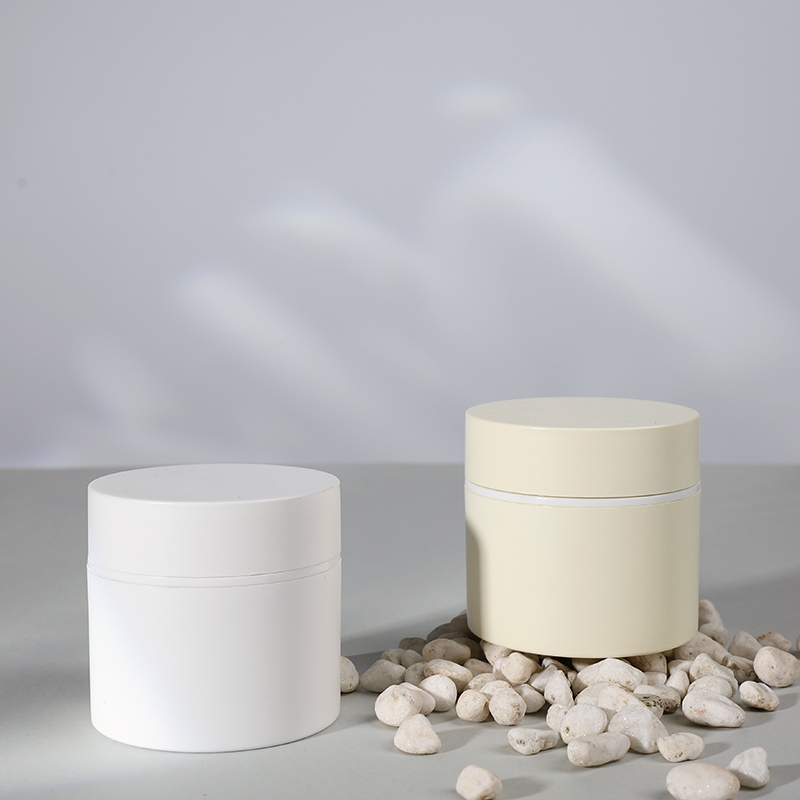
The main culprit is the difference between cabin pressure at cruising altitude and the sealed air inside the jar. Air freight holds are pressurized, but not to sea level; the pressure can drop to the equivalent of 8,000 feet or higher. If a cream jar is filled and sealed at ground level, the trapped air expands as external pressure falls. PP (polypropylene) is a stiff material with limited flex, so instead of bowing outward, the walls experience a sharp stress increase. When combined with the cold temperatures common in cargo holds—often near freezing—PP becomes more brittle and less able to absorb that stress without cracking.
Design details make this worse. Sharp corners at the base or shoulder of the jar act as stress risers, concentrating the internal pressure into a small area. Thin walls meant to save resin or weight reduce the jar's ability to resist expansion. Even minor manufacturing inconsistencies, like uneven wall distribution or microscopic weld lines from the injection molding process, can turn a routine freight journey into a cracked jar. Switching to a slightly thicker wall, rounding internal corners, or leaving a small headspace for air expansion often prevents the failure without changing the outward appearance.
Reading a Maker's Sample Box for Clues About Consistency
A sample box isn't just a collection of pretty pieces—it's a maker's signature written in small, deliberate details. Pick up each sample and feel how the weight sits in your hand, how the edge aligns without wobble, how the finish catches light from one angle but not another. When a craftsperson repeats a process dozens of times, the result shows up in the near-invisible sameness: no abrupt jumps in grain direction, no subtle shifts in dye lot between supposedly identical tiles, no tiny burrs hiding on the underside of a metal tab. That quiet uniformity is what separates a thoughtful maker from someone simply filling a box.
Look for the places where mistakes would be easiest to hide. Flip the samples over and examine the backs, the joints, the bindings. A consistent maker treats every surface as if it's on display, because in their mind, it is. Check the thickness of a leather swatch at three different points, or the spacing between stitching on two pieces cut from the same run. You're not hunting for perfection—no human hand produces zero variation—but for a pattern of controlled variation. The best sample boxes reveal a maker who knows exactly where their tolerances live and respects the line between character and sloppiness.
Smell the samples if they're natural materials, bend them slightly, hold them up to a window. These small acts tell you whether the maker sorted for consistency before they ever boxed a single piece. A leather sample with an even temper across its surface, a wood block with matching end grain on every face, a ceramic chip that shows the same glaze thickness at its edges as at its center—these are not accidents. They're the result of someone who measured, rejected, and repeated until the box itself became a promise of what a larger order would feel like. When you read a sample box carefully, you're not just auditing materials. You're auditing attention.
Negotiating Minimum Orders Without Sacrificing Jar Integrity
Many buyers assume that asking for a lower minimum order means accepting thinner walls or a cheaper annealing cycle. That trade-off is rarely necessary if you restructure the conversation around setup costs. Ask the supplier which elements of the order actually drive the per-unit price at low volumes—often it is the changeover, not the glass itself. You can then negotiate a smaller run of the same jar by committing to the supplier's standard mold, standard neck finish, and standard pallet configuration, while explicitly keeping the glass distribution and thermal treatment unchanged. Integrity is not a place to compromise; it is the part of the spec that preserves your fill line and shelf performance.
A rolling forecast works better than a one-time order when you cannot hit the published minimum. Instead of asking for a discount on a sub-MOQ quantity, propose a fixed annual volume split into quarterly releases. The supplier gains predictable production slots, and you gain the ability to pull smaller batches without triggering a new setup charge. Crucially, put the quality plan in writing: the same leak detection thresholds, the same thermal shock test, and the same visual inspection criteria should apply to every release. This keeps the jar's structural and sealing performance consistent, even when the commercial terms flex.
For smaller brands, pooling demand with another company that uses the same jar profile can reduce the pressure to downgrade materials. Shared mold costs and combined pallet loads make a lower individual minimum more palatable to the factory without asking them to cut corners. During the negotiation, define integrity in measurable terms—vertical load strength, anneal stress, sealing surface flatness—and reference those numbers rather than vague promises. When the supplier sees that you are monitoring these parameters, the minimum order becomes a scheduling topic, not a quality lever.
The Real Cost of Cheap PP Resin in Cosmetic Packaging
Cheap PP resin often carries a hidden price that shows up long after the invoice is paid. Lower-grade polypropylene may have inconsistent melt flow, leading to sink marks, warpage, or weak hinge points on caps and compacts. For a cosmetic brand, these defects translate directly into returned product, dissatisfied customers, and expensive rework lines that erode the very savings the purchasing team chased.
Beyond visual flaws, budget PP can trigger chemical headaches. Impurities or recycled content blended into low-cost resin may react with fragrance oils, alcohol-based formulas, or UV filters, causing discoloration, odor transfer, or even micro-cracking over time. Testing a cheap resin against a full cosmetic formulation takes months—by the time a failure appears, you've already committed to tooling, filling, and a launch date.
The real cost also lands on your brand's reputation. A cracked jar or a lid that pops open in a customer's hand screams "cheap" louder than any advertisement can whisper "luxury." Premium cosmetics demand packaging that feels solid and closes with a satisfying click. Saving pennies per unit on PP resin often means spending dollars later on emergency air freight, line downtime, and lost shelf space at retailers who won't tolerate a second quality complaint.
Questions to Ask About Mold Ownership Before Signing Anything
Before you sign any manufacturing agreement, get the mold ownership terms in writing. Ask who legally owns the mold once it's made—some suppliers keep the tooling even after you've paid for it, which can lock you into their production pricing forever.
Also clarify what happens if the mold is damaged, needs maintenance, or reaches the end of its life. Will the supplier repair or replace it at their cost, or is that your responsibility? And if you ever want to move the mold to another factory, is there a release fee or is it simply handed over?
Finally, consider the worst-case scenario: the supplier goes out of business or you end the relationship. Without a clear ownership clause, you may have no legal right to retrieve the mold, leaving you to pay for a new one from scratch.
FAQ
Look beyond the catalogue. Ask for samples with your exact closure and liner, not just a stock jar. Check the wall thickness consistency around the neck and base—cheap jars often taper unevenly and cause cracking during filling. Request a breakdown of their PP resin source and whether they can provide batch-level material certifications. Also, confirm their mold ownership policy: you don't want your custom design being offered to a competitor.
Request the full resin datasheet and any food-grade or cosmetic compatibility test results. PP is generally inert, but additives like plasticizers or recycled content can interact with essential oils or active ingredients. A serious partner will happily run a compatibility test with your actual product for a few weeks, not just say 'it's PP so it's fine.' Ask about the percentage of virgin vs. recycled resin if that matters to your brand.
Small things like precise weight control for wall thickness, a wide range of liner options for different product textures, and the ability to match a specific Pantone shade in PP without streaking. Strong partners also offer in-house printing or labeling guidance, and they'll advise on the best neck finish for your pump or disc top, instead of just saying yes to whatever you ask.
They are, but expect to compromise somewhere. Many factories now run flexible production lines that can switch colors quickly, so 5,000 or even 3,000 pieces is possible for stock molds. For fully custom molds, you may need to pay a tooling fee and agree to a higher quantity. Always ask if the MOQ is per color or per mold, because that detail changes your cash flow significantly.
Quoted lead times usually cover production only, not mold making, sampling, or shipping. Custom molds can take four to eight weeks on their own. Then you need sample approval, another week or two. For stock jars with minor decoration, four to six weeks is realistic. If you have a hard launch date, add at least three weeks of buffer because PP resin shortages and freight delays are common.
The jar body is rarely the culprit—it's the liner and neck finish. Test with your actual closure and a thick cream, not water. Water leaks less than emulsions. Ask the supplier to run a drop test and a vacuum leak test at different temperatures. Also, inspect the sealing surface for any sink marks or flash. A reliable maker will have inline camera inspection or at least manual QC checkpoints for neck dimensions.
They invest in your growth. That means transparent pricing when resin costs shift, proactive suggestions for reducing material without sacrificing strength, and keeping your custom mold in good condition with regular maintenance records. You'll also notice they communicate early about production delays or raw material issues instead of waiting until the ship date. A partner wants your reorder to be easier, not just your first order.
Conclusion
Finding the right PP cream jar maker usually comes down to how well their production realities match your filling line. A jar with walls too thin might shave resin costs but buckle under high-speed capping or crack when air freight pressure shifts during transit. Before committing, check sample boxes not just for finish but for wall thickness consistency across multiple cavities—uneven distribution often shows up as weak shoulders or thread areas. Ask how they handle mold ownership early; some suppliers retain molds and use that leverage to lock in minimum order quantities that force you to accept thinner walls or lower-grade resin later.
The cheapest PP resin rarely stays cheap once rejects, returns, and brand damage enter the picture. Poor impact resistance and stress cracking from aggressive fills or altitude changes can turn a bargain jar into a packaging failure. Negotiating MOQs works better when you frame it around stable mold maintenance and dedicated production runs rather than price alone. A reliable partner will explain resin batch controls, offer pilot runs at higher line speeds, and be transparent about which mold changes could affect jar integrity. In short, quality packaging partners are judged less by their catalog and more by how they answer those uncomfortable questions before you sign.
Contact Us
Contact Person: Kara Yang
Email: [email protected]
Tel/WhatsApp: 8618857568397
Website: https://www.haitongplastic.com/