

Precision Turned Parts Supplier Tips for Choosing a Reliable Manufacturing Partner
2026-10-10
A batch of turned parts that measures perfectly in the inspection report but fails on your assembly line—that's the cost of picking the wrong supplier. Before you place your next order, it's worth questioning the usual selection criteria. In this guide, we lay out the practical checks used by BOYIKUN to qualify reliable precision turned parts partners.
Reading Past the Spec Sheet: What Actually Matters in a Precision Turning Partner
Spec sheets are useful for narrowing a long list, but they won't tell you how a shop reacts when your part has a feature that doesn't fit their standard tooling or when a tolerance is tighter than their listed capability. A good precision turning partner will push back on unnecessary callouts, ask about the part's actual function, and suggest changes that save cost or improve manufacturability before you send a PO. That kind of engagement shows they're thinking about your outcome, not just taking a print and running it.
Consistency over a production run matters far more than a single impressive first article. Anyone can hit a tight number once on a new machine, but holding that same tolerance at part 5,000, with tool wear, material lot variation, and operator changes, is where real capability lives. Instead of asking only about the best achievable tolerance, ask how they monitor drift, what SPC or in-process checks they run, and how often they audit setup repeatability. Those answers reveal whether their inspection lab is decoration or part of the daily workflow.
The final differentiator is how the shop handles problems, because problems will happen no matter how carefully everything is planned. A delayed material shipment, a broken insert mid-batch, a questionable surface finish at final inspection—these are the moments that test a partner. Do they call you early with options, or hide the issue until the ship date slips? A precision turning supplier that owns the schedule, communicates without being chased, and brings recovery plans instead of excuses is worth more than any extra decimal place on a brochure.
Why Consistent Tolerances Beat Impressive Claims Every Time
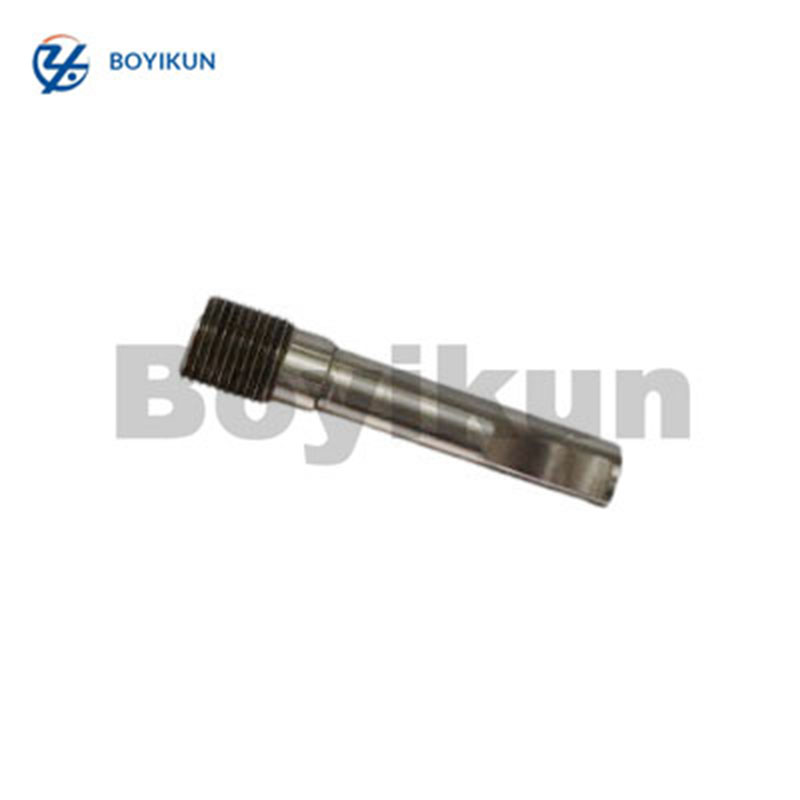
A spec sheet can list a tolerance of ±0.001 inch, but that number means nothing if it only appears on the first batch. Shops that chase tight numbers for a single sample run often leave customers with production parts that drift, warp, or fail to assemble six months later. Consistency is the quiet metric that separates a reliable supplier from a lucky one.
When a machine shop holds a tolerance across thousands of cycles, it proves something far more valuable than a flashy audit report: process control. Tool wear, thermal expansion, and fixture drift all threaten dimensional stability. The shops that succeed at consistent tolerances are the ones that monitor those variables with real-time checks, not just final inspections. They accept that a single impressive claim is easy; repeating it every shift is the actual challenge.
Customers eventually learn to ignore the boldest promises on a quote. What keeps them coming back is the absence of surprises. A part that fits the first time, every time, eliminates line stoppages, rework, and late shipments. That reliability is built on boring, repeated verification, not on a heroic one-off measurement. In the end, the tolerance you can hold for a year is worth infinitely more than the one you can hold for an afternoon.
Five Questions to Ask Before You Share a Single CAD File
Sharing a CAD file seems simple until you realize how much can go wrong after it leaves your desk. Before you hit send, pause and ask who really needs it and why. A supplier may only need a simplified exterior shell, while a collaborator might require the full parametric history. Sending too much detail creates unnecessary risk; sending too little causes delays.
Next, check whether the file contains hidden metadata, internal references, or proprietary features that should be removed. Ask what format the recipient can open without conversion errors, and confirm how changes will be tracked if they send it back or pass it along. These five questions aren't just cautionary—they turn a routine file transfer into a deliberate handoff.
The Real Cost of Cheap Turned Parts Hides in Your Assembly Line
When a batch of bargain-priced turned parts arrives at your loading dock, the invoice looks like a win. But that saving starts to evaporate the moment those parts hit the assembly line. A slightly oversized shoulder here, a rough thread there, or a tolerance that wanders just outside spec can force operators to slow down, rework, or quietly scrap pieces that refuse to seat properly. The line doesn't stop for a meeting about it; it just bleeds time in small, constant drips.
Cheap parts often carry hidden inconsistencies that only surface under torque, vibration, or thermal cycling. What fits fine on a bench can fail after an hour in a running machine, leading to intermittent stoppages that are notoriously hard to trace. Technicians end up chasing ghosts instead of doing preventive work, and supervisors start padding schedules to absorb the chaos. The real cost isn't in the part itself but in the labor, lost throughput, and customer goodwill that quietly pile up downstream.
Eventually, the math becomes hard to ignore: every penny saved on a low-cost turned component can cost dollars in warranty claims, line downtime, or field failures. Smart buyers look past the unit price and ask how a part behaves when it meets your fixtures, your torque wrenches, and your deadlines. In assembly, consistency is its own economy, and paying for it upfront is usually the cheapest option you'll find.
How to Verify a Supplier's Quality Without Flying Across the World
Chasing supplier quality from a desk feels less like detective work and more like assembling a puzzle with missing pieces. You can't walk the factory floor or watch a weld cool in real time, so you lean on indirect signals. A supplier's paperwork tells one story, but their response time, the consistency of their sample revisions, and the way they handle a pointed technical question tell another. I once caught a vendor inflating capacity because their monthly output figures didn't line up with the number of shifts they claimed to run. No flight needed—just a spreadsheet and a bit of skepticism.
Third-party audits are the obvious shortcut, but don't treat them as a rubber stamp. Ask for the full report, not the summary, and pay attention to the auditor's methodology. Did they test incoming raw materials, or only finished goods? Were measurements taken against the same ISO standards you'd actually care about? If a supplier hesitates to share the raw data or insists on using an auditor they've hired before, that's a yellow flag worth probing. You can also request a live video tour with a fixed time—not a pre-recorded highlight reel. Watch how long it takes them to find the calibration records for a specific machine.
Small-batch pilot orders reveal more than any certificate. Order a modest quantity with strict tolerances and see what arrives: the packaging, the labeling, the variance between units, the way they respond when you flag a defect. A supplier that argues about every micron on the first run is unlikely to improve on the tenth. And don't overlook the power of references—but ask for them sideways. Instead of "give me three happy clients," ask which client pushed them hardest on delivery dates or forced a production change. Those are the ones who will tell you the truth.
From Prototype to Production: Signs Your Partner Can Scale With You
Moving from a prototype to full production is where many partnerships quietly fall apart. The prototype stage rewards creativity and speed, but production demands consistency, documentation, and the ability to absorb sudden changes in volume. A partner who can scale with you will already have processes that survive contact with reality: version-controlled design files, a bill of materials that doesn't drift after the third revision, and a supply chain that doesn't buckle when your order jumps from fifty units to five thousand. Watch for the small signs early—how they handle feedback on a single prototype often predicts how they'll handle a production line failure.
One overlooked signal is how your partner talks about their own constraints. A scaling-ready partner won't pretend everything is possible; they'll tell you which tolerances are too tight, which components have lead times that don't align with your timeline, and which manufacturing steps they'd outsource versus keep in-house. This honesty feels like friction during prototyping, but it's actually the foundation of a production partnership. If you only hear yes, you'll be debugging the relationship later instead of the product.
Finally, test the handoff before you need it. Ask for a pilot run of twenty units, not two. See if the documentation survives the transition from the engineer who designed the prototype to the technician who assembles the final product. The partners worth scaling with treat the prototype-to-production gap as a design problem itself, not an afterthought. They'll have checklists, test fixtures, and failure logs from previous projects—and they'll be eager to show them to you.
FAQ
Look beyond the wall of certificates and ask about their rejection rate on similar parts. A shop that tracks scrap and rework down to fractions of a percent and can show you live SPC data during a visit isn't guessing at quality—they're measuring it every shift.
Often the difference hides in tolerance interpretation and surface finish expectations. One shop might assume a standard ±0.005 inch while another plans for ±0.0005 inch with extra polishing. Always attach a fully dimensioned drawing and ask exactly which tolerances drive the quote, so you're not comparing apples to oranges.
Request a portfolio of past jobs that include cross-holes, knurls, threads, and thin-wall features. Better yet, send them a challenging sample print during the RFQ stage and watch how their engineers respond—do they ask smart questions about material stress or just promise 'no problem'?
Insist on full material certs from the mill, not just a supplier's internal test report. A reliable partner will trace every bar stock heat number to the final part and keep that paperwork for years. If they hesitate to share certs before you place an order, treat that as a red flag.
It's actually a good sign. Shops that care about manufacturability will flag undercuts, impossible radii, or tolerance stacks that will drive cost without improving function. A supplier that always says yes without question may be planning to figure it out on your dime—or ship parts that barely pass inspection.
Pay attention to how they handle your quote request: do they respond within one business day, ask clarifying questions, and provide a clear lead time? Send a follow-up email with a technical question and see if an actual engineer replies, not just a sales rep reading a script.
A dependable partner won't disappear after the invoice. They should offer first-article inspection reports, retain setup programs for repeat orders, and proactively notify you about tooling wear or material price shifts that may affect future runs. Ask them directly how they handle engineering changes or rush orders—their answer reveals whether they see you as a one-off sale or a long-term account.
Conclusion
Most precision turning suppliers can send a polished brochure and a tolerance sheet that looks flawless on paper. That document rarely tells you whether a shop actually understands your part's function, how it handles tool wear at 10,000 units, or whether the person quoting your job will still answer emails six months later. Before sharing a single CAD file, ask about the fixtures they have built for similar geometries, how they measure critical diameters in process, and what happens when a batch drifts by a few microns. Consistency matters more than marketing claims; a supplier who holds ±0.005 mm across three production runs is worth far more than one who promises ±0.001 mm on a one-off sample and then hides behind inspection reports.
Cheap turned parts tend to fail in ways that never show up on the initial invoice—burrs that jam an automated assembly line, out-of-round bores discovered after anodizing, or batches with mixed heat lots that behave differently under load. The real cost lands in your rework time, line stoppages, and warranty claims. You do not need to fly across the world to verify quality; ask for live video of an in-process inspection, request first article reports with raw measurement data, and check whether the supplier tracks tool life and machine calibration logs. Finally, look for signs the partner can scale: duplicate tooling sets, backup machines, a documented handoff from prototype machinists to production operators, and a willingness to discuss process capability studies before you increase order volume. All of that tells you more than a spec sheet ever will.
Contact Us
Contact Person: Xianchen Hu
Email: [email protected]
Tel/WhatsApp: 86-13248645200
Website: https://www.hexnb.com/