

Private Label Wood-Based Activated Carbon: A Smart Choice for Your Brand
2026-09-02
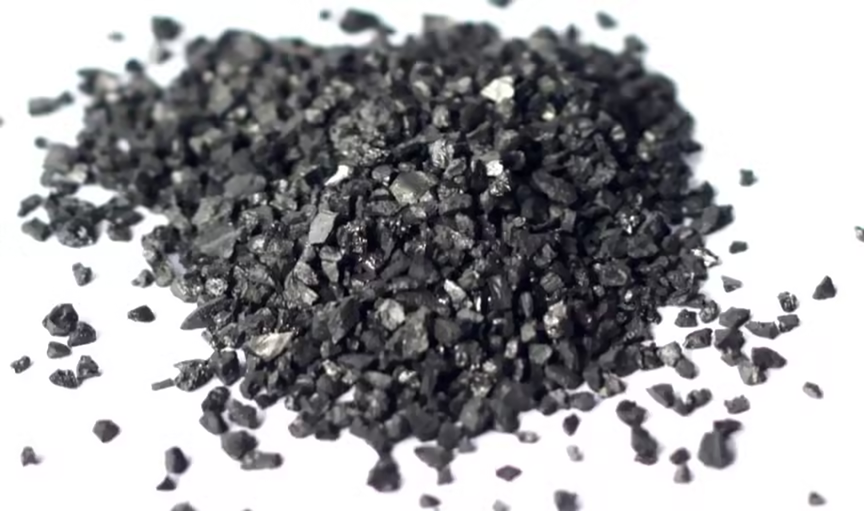
Wood-based activated carbon rarely gets the credit it deserves. While buyers obsess over filter performance and shelf appeal, the raw material quietly shapes both. It burns cleaner, adsorbs more selectively, and tells a better sustainability story than many legacy options. That’s exactly why private label brands are rethinking their sourcing—and why Tundrr has made it the backbone of a smarter product line. If your brand is still treating activated carbon as an afterthought, this is the moment to flip the script.
What Really Sets Wood-Based Activated Carbon Apart?
Most activated carbons are judged by iodine number alone, but wood-based material earns its keep through a wider pore spectrum. The cell structure of wood leaves behind an open, channel-like network after activation, which gives larger molecules a place to move instead of getting stuck at the surface. That makes it unusually effective in liquid-phase applications like decolorizing food-grade syrups, purifying organic acids, or cleaning up industrial wastewater where coal or coconut carbons often plateau.
Another underappreciated difference is the chemistry of the raw material. Wood starts with very little sulfur or heavy metal content, and after steam activation the resulting carbon is low in ash and highly porous without aggressive chemical washes. This cleaner starting point matters when the carbon touches sensitive streams—pharmaceutical intermediates, beverage processing, or potable water—where unwanted leaching is not an option. The result is a product that behaves less like a generic adsorbent and more like a tailored filtration medium.
Build Trust With a Supply Chain You Can Explain in One Sentence
Most companies treat their supply chain like a messy closet—they know it's full of stuff, but if you ask them to name every item on the top shelf, they'd freeze. Trust doesn't work that way. If you can't walk a customer through your sourcing, manufacturing, and delivery in a single breath, they won't believe your promises about quality or ethics. Simplicity is the first brick of credibility.
Think about the brands you actually recommend to friends. Chances are, you can describe how they operate without pausing to Google a flowchart. That's not an accident. A clean, explainable supply chain forces hard choices: fewer suppliers, transparent partnerships, and a refusal to hide behind vague terms like "globally sourced." When every link is obvious, your customer isn't just buying a product—they're buying a story they can retell.
The pressure test is brutally simple: sit down with a skeptical stranger and try to explain your supply chain in one sentence. If you start hedging, adding footnotes, or saying "it's complicated," you've already lost the trust battle. Complexity might feel impressive in a boardroom, but on a store shelf, it reads as a red flag. Clarity isn't a nice-to-have—it's the whole game.
Your Formula, Your Name: Customization Without Compromise
Many brands promise customization, but few deliver it without hidden trade-offs. We built our formulation process around one principle: your name on the label should mean exactly what it says. Every ingredient, every ratio, every batch is tailored to your specifications—yet still meets the rigorous standards we apply to our own flagship products.
The secret lies in our modular blending system. Instead of forcing your formula into a pre-set template, we start from a clean base and build outward. Choose the texture, potency, scent profile, and even packaging details. Our chemists adjust for compatibility and stability in real time, so the final product feels less like a custom order and more like a discovery.
This approach does demand more from us—more testing, more precise documentation, more care with each small batch. But compromise was never an option. Because when your name is on the bottle, the product should be as unique as the person it represents.
Lower Your Cost Per Unit Without Cutting Corners
Trimming unit costs often starts with rethinking how materials move through your facility. A small change in layout—like positioning raw stock closer to the first workstation—can eliminate hours of walking and handling each week. That time directly translates into lower labor cost per finished piece without asking anyone to work faster.
Another lever is supplier terms. Instead of chasing the lowest sticker price, consolidate orders with fewer vendors and negotiate tiered pricing based on annual volume. Many suppliers will also hold inventory for you or deliver in reusable packaging, which cuts both storage and disposal expenses. These adjustments reduce the cost baked into every unit before production even begins.
Finally, look at rework. Defects quietly drain margins because you pay for materials, labor, and machine time twice. Investing in better jigs, preventive maintenance, or a simple first-article inspection can drop your defect rate by a few points. That improvement alone often more than pays for the upfront cost within a quarter, while keeping quality intact.
How to Keep Every Batch Consistent From Day One
Consistency starts before the first batch is even mixed. Create a 'golden batch' reference—a physical sample and a detailed log of every setting, timing, and observation from the run you want to replicate. This isn't just a recipe; it's a memory. If you rely on people remembering how it felt or how it looked, you'll drift by the third run.
Set your limits on the first day, not after problems appear. Decide the acceptable ranges for temperature, viscosity, weight, or whatever matters in your process, and write them next to the equipment. Check those numbers during the run, not after you've already made fifty units. Catching a small deviation at batch one is cheap; fixing a full production line later is expensive.
Finally, treat your suppliers and your mixing crew as part of the same team. If a raw material lot changes, test it against your golden batch before you commit to a full run. And if you rotate operators, pair a new person with someone who ran the reference batch, so the muscle memory transfers. That way, batch ten matches batch one without anyone having to guess.
Win Shelf Space With a Story Competitors Can’t Copy
Most brands chase shelf space by offering better margins or flashier packaging, but those levers are easy for a rival to match. A story that lives inside your product—where it came from, who makes it, why it exists—gives a retail buyer something they cannot swap for a cheaper alternative. It turns a faceless SKU into a reason for the store to say yes.
The trick is to anchor that story in details a competitor would have to actually live through to replicate. Talk about the farm that has grown your key ingredient for three generations, or the design flaw you discovered after a customer’s angry letter pushed you to rebuild the product overnight. Such moments cannot be faked easily, and they give the buyer a mental hook when they stand in front of your shelf or your pitch deck.
When your story is specific enough, shelf space becomes less about outspending rivals and more about being the only option that fits the narrative the store wants to tell its own customers. That is a position no line review spreadsheet can capture—and no competitor can copy without sounding hollow.
FAQ
Wood-based carbon typically offers a higher mesopore volume, which makes it especially effective for decolorization and removing larger molecules that coconut shell carbon struggles with. It also comes from renewable sources, so sustainability claims feel more authentic.
Yes. Private label programs are built around low minimums and flexible packaging. You choose the format—pellets, granules, or powder—and we handle the rest, from filling to label design support.
Food and beverage, water treatment, pharmaceuticals, and air purification all lean on it. Its mild taste profile and high purity make it a favorite for edible oil refining and spirits filtration.
We test iodine number, ash content, moisture, and particle size distribution in-house, and we keep retention samples from every production run. If a batch doesn't meet spec, it doesn't ship.
Beyond granule size and packaging weight, you can choose jar, pouch, or bulk bags. We also offer custom printing, barcodes, and even formulation tweaks for niche applications like aquarium filtration or odor control.
No. We operate under strict confidentiality agreements and never put our branding on your packaging. Your label, your customer relationship.
Depending on quantity and packaging complexity, most orders ship within 10–15 business days after artwork approval. Rush options are available for repeat clients.
Yes. We provide documentation like REACH, FDA food-contact statements, and certificates of analysis that match your shipment. If you need something specific for a new market, we will work with you to get it.
Conclusion
Private label often forces a trade-off: accept a generic ingredient or pay a premium for exclusivity. Wood-based activated carbon breaks that pattern. Its naturally high surface area and low ash content mean it adsorbs impurities faster, with fewer unwanted residues than coal or coconut alternatives. That performance edge comes from the raw material itself, not from a complicated supply chain. You can trace every bag back to a single, responsibly managed forest source, which makes your sourcing story refreshingly simple to tell. Better yet, customization doesn't require a separate R&D budget. Particle size, activation level, moisture content, and even surface treatment can be tuned to your formula—so your product carries your brand's identity, not someone else's specification.
The economics are just as compelling. Because wood-based carbon activates more efficiently, you typically need less material to achieve the same purification targets, which reduces your cost per unit without any sacrifice in quality. That efficiency also supports tighter batch control. With a controlled feedstock and consistent activation parameters, the carbon that arrives in month six matches the sample you approved on day one. No surprises, no reformulation headaches. That reliability becomes a marketing asset. When your label promises the same performance every time, and you can back it with a transparent, wood-sourced supply chain, you own a story that private label competitors using commodity carbon simply can't replicate. It's the difference between selling a product and building a brand.
Contact Us
Contact Person: Ellen Zhang
Email: [email protected]
Tel/WhatsApp: +86(21) 2287 6756
Website: https://www.tundrr.com/en/