

Stainless Steel Fasteners Supplier Tips for Choosing Durable Hardware for Any Project
2026-10-12
Selecting the right stainless steel fasteners can make or break your project's longevity. From corrosion resistance to tensile strength, every choice matters when you're sourcing durable hardware. Whether you're working on marine construction or a backyard deck, understanding key supplier criteria saves time and money. At BOYIKUN, we've seen firsthand how small hardware decisions lead to big structural differences—let's dive into what truly sets reliable fasteners apart.
What Your Fastener Supplier Won't Tell You About 304 vs. 316
Most suppliers will happily sell you 316 stainless fasteners at a premium, but they rarely mention that for a huge chunk of indoor and mild outdoor applications, 304 performs just as well. The real difference only shows up in chloride-heavy environments—think coastal salt spray, de-icing salts, or industrial chemical exposure. If your project sits inland and away from harsh chemicals, paying extra for 316 often just lines someone else's pocket. The trick is knowing exactly where that corrosion line sits, because once you cross it, 304 will start showing surface rust surprisingly fast.
Another quiet truth: not all 304 and 316 are created equal. Low-quality melts, poor cold-working, or sloppy passivation can make a 316 bolt corrode faster than a well-made 304. Suppliers rarely volunteer batch-specific chemistry or surface treatment details, yet these factors frequently outweigh the nominal alloy difference. Ask for mill certs and check the actual molybdenum content and passivation quality—those small print details can save you from a costly field failure that nobody will warn you about upfront.
Finally, the galvanic story is often hidden. Pairing 304 or 316 fasteners with plain carbon steel plates or aluminum structures can trigger corrosion on the less noble metal, regardless of which stainless grade you chose. The fastener itself may stay shiny while the surrounding material rots away. A knowledgeable supplier would ask about your full material stack, but many just quote the cheapest stainless option and move on. Knowing this lets you pick the right grade for the whole assembly, not just the bolt.
Five Signs a Stainless Fastener Will Corrode Before the Job Is Done
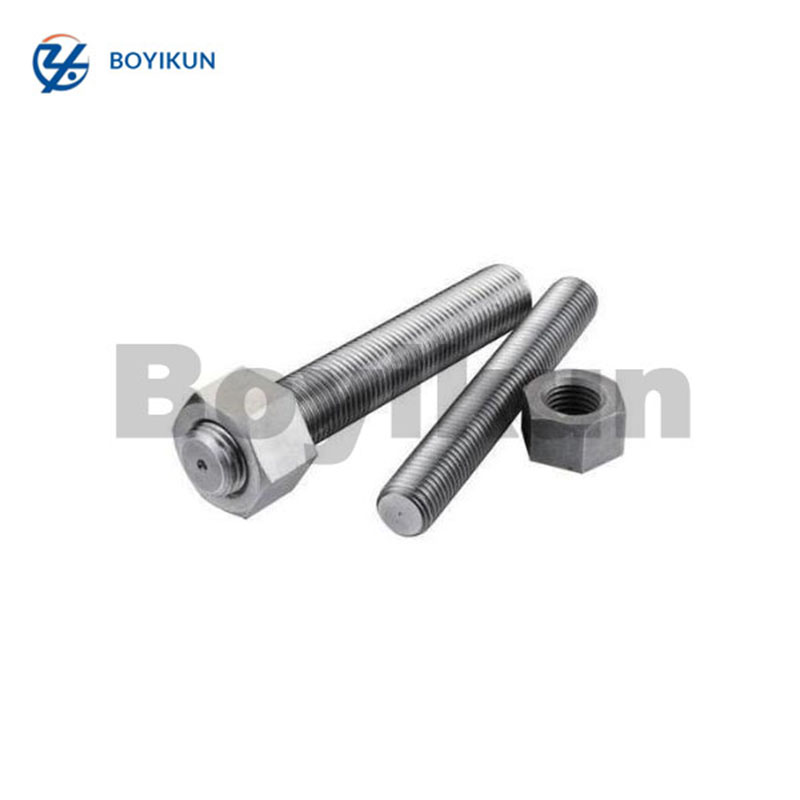
A stainless fastener can start corroding long before the project wraps up, and the first red flag is often a few tiny brown or orange freckles on the surface. That discoloration means the passive chromium oxide layer has been scratched, contaminated, or never properly formed. Another warning appears as a chalky white or gray dust around the threads or under the head—typically a sign that chloride ions are attacking the metal, especially in coastal or de-icing salt environments.
You might also notice the fastener binding or grabbing during installation even though the threads look clean. That extra friction often comes from microscopic pitting that has already roughened the surface. In assemblies where stainless touches a different metal, keep an eye out for a dark ring or staining at the contact point—galvanic corrosion can eat into the fastener before you even torque it down.
The most serious sign is a hairline crack running across the shank or under the head with no obvious impact or overload. That’s frequently stress corrosion cracking, and it can snap a supposedly rust-proof bolt while it’s just sitting in place. If any of these symptoms show up, swap out the fastener and check the whole batch plus the surrounding environment, because once the passive layer is compromised, failure usually comes faster than the job schedule.
Choosing Thread Types That Hold Up Under Vibration and Load
Most standard fasteners use a 60-degree V-thread, which handles static tension well but struggles when vibration enters the picture. The inclined plane of the thread converts some of the axial load into a radial force, and under cyclic shaking that force can overcome friction and back the nut off. If you expect repeated vibration, don't just reach for the coarse-thread bolt—look for thread forms with a lower helix angle or an asymmetric profile.
For one-directional heavy loads, a buttress thread is often a smart choice. Its load flank is nearly perpendicular to the axis, so axial force produces very little radial thrust, which means less tendency to rotate loose. In power transmission where loads reverse or need precise movement, an Acme thread offers a thicker root and better wear resistance, but you'll likely need a locking mechanism. If you're working with finer adjustments or smaller fasteners, fine threads have a smaller pitch and therefore a shallower helix angle—this gives them better vibration resistance than their coarse counterparts, though they are more sensitive to thread damage.
Don't overlook modified thread geometries. Some internal threads feature a wedge-shaped ramp at the root that redirects bolt tension more evenly across all engaged threads, reducing stress concentrations that lead to fatigue. Pairing these with proper preload and, if needed, a secondary locking element such as a nylon patch or anaerobic adhesive gives you a connection that holds up under both vibration and heavy load without relying on excessive torque.
Why Bulk Pricing Can Mask the True Cost of Inferior Hardware
When a vendor offers a steep discount for buying in volume, it's easy to focus on the immediate savings on the invoice. But that lower unit price often hides a much more expensive reality: inferior hardware fails sooner, runs less efficiently, and demands constant attention. The upfront bargain quietly shifts costs into maintenance hours, unexpected downtime, and early replacement cycles. What looked like a smart bulk purchase becomes a recurring operational drain.
Cheaper components tend to have shorter lifespans and higher failure rates. A batch of cut-rate power supplies or drives may work fine out of the box, but six months later you're swapping parts across dozens of machines. Each swap costs labor, disrupts workflow, and chips away at the original savings. The bulk discount was real, but so are the accumulating repair bills that never appeared in the purchase order.
The most dangerous part is that these hidden costs don't trigger alarms. They appear as small line items: a service call here, an extra spare there, a few hours of overtime. Over a year, they can easily exceed the money saved by choosing the cheaper hardware. Smart buyers learn to compare total cost of ownership, not just bulk price per unit. Otherwise, a great deal on paper turns into a long-term liability that no discount can justify.
Matching Finishes to Exposure: From Salt Spray to Sub-Zero
Choosing the right finish starts with understanding the specific stresses a component will face. A marine environment, for instance, combines relentless moisture, chloride attack, and UV radiation, so a coating that performs brilliantly in a dry interior can fail within months near the coast. On the other end of the spectrum, cryogenic service brings its own set of challenges: metals contract at different rates, condensation forms during cycling, and many polymers become brittle. Matching a finish is less about picking the most expensive option and more about aligning the coating’s flexibility, adhesion, and barrier properties with the actual exposure profile.
Salt spray testing gives a useful baseline for corrosion resistance, but it rarely tells the whole story. A finish that survives 1,000 hours in a standard fog chamber might still develop under-film corrosion at the scribe line after just a few freeze-thaw cycles. That gap between laboratory data and real-world performance is why engineers often pair accelerated weathering with thermal shock testing. For sub-zero applications, the failure mode shifts from rust to micro-cracking—these tiny fissures allow moisture to penetrate during warm-up periods, leading to a form of corrosion that salt spray alone would never predict.
The most reliable way to select a finish across such different conditions is to use a matrix that weighs exposure duration, temperature swing, and chemical contact. For example, a zinc-rich primer may excel in coastal atmospheres but perform poorly under repeated deep freezing because the zinc particles create stress risers in the binder. Meanwhile, a flexible polyurethane topcoat with ceramic microspheres can bridge the gap, offering both barrier protection and low-temperature ductility. In practice, matching finishes to exposure means accepting that no single coating is universally ideal—the goal is to find the one whose failure mode is slowest under the specific combination of salt, ice, and thermal cycling the part will actually endure.
Questions That Separate Reliable Suppliers from Catalog Resellers
When vetting a supplier, the first question isn't 'do you have this part?' but 'who actually made it?' A catalog reseller can quote a datasheet, yet hesitates when you ask for batch traceability, original manufacturer documentation, or photos of the physical inventory. A reliable supplier answers without scrambling because the stock is in their own warehouse, not dropshipped from someone else's shelf.
Ask what happens when a percentage of parts fail incoming QC—who covers rework, replacement, and freight? Resellers often point to the manufacturer's warranty while leaving you to handle returns. Dependable suppliers put their own reputation on the line and offer a clear corrective action path before your production line stops.
You also want the same lot number, date code, or revision across repeat orders. Can they guarantee it? Catalog resellers trade on price and availability, not continuity. A real partner can reserve stock, provide photos of labels, and tell you exactly where the components have been stored. These questions separate order takers from supply chain allies.
FAQ
Look past the price sheet and ask where the raw steel comes from. A supplier with traceable mill sources and clear grade markings on every batch is usually safer than one that only promises 'stainless steel' without specifics.
Match the grade to the exposure. For most outdoor projects, 304 works if you're away from saltwater, but 316 is far better near coasts, pools, or de-icing salts. If the supplier can't tell you the difference, keep shopping.
Yes. Watch for vague product descriptions, missing dimensional tolerances, and refusal to share test data. Cheap stainless often has inconsistent threads or hidden surface defects, which lead to seized bolts and premature rust.
Absolutely. Rolled threads are stronger and less prone to cracking than cut threads, especially under vibration. Ask the supplier how threads are formed. If they don't know, their fasteners probably won't survive heavy use.
Always. Legitimate suppliers will offer material certs without hesitation. These reports confirm the alloy chemistry and mechanical properties, so you're not guessing whether that '316' bolt actually has enough molybdenum.
Usually yes. Passivation removes free iron from the surface and boosts the natural corrosion resistance. The extra cost is small compared to replacing rusted hardware or dealing with a failed installation later.
Yes, galvanic corrosion is real. When stainless touches plain steel or aluminum in a wet environment, the less noble metal corrodes faster. Use isolating washers or match all hardware materials to avoid surprise failures.
Conclusion
When sourcing stainless steel fasteners, the alloy choice matters more than most suppliers admit. 304 handles everyday moisture, but 316 with molybdenum resists chlorides from salt spray or industrial runoff—skimping here invites pitting long before the job ends. Watch for early corrosion signs like tea staining or rust blooms at cut edges; these aren't cosmetic quirks but warnings that passivation failed or the grade is off-spec. Thread geometry also dictates survival under vibration: rolled threads with proper pitch and a locking feature (nylon patch or distorted thread) outperform cheap cut threads that loosen after thermal cycling.
Beyond metallurgy, smart buyers question bulk pricing that hides soft dimensional tolerances or mixed heats—one bad batch can force rework costing far more than the upfront savings. Match the finish to the exposure: electro-polished surfaces shed contaminants in marine air, while passivated or coated options hold up better in sub-zero or acid-rich environments. Finally, ask your supplier for mill test reports and traceability instead of just a catalog page. A real partner will discuss lot-to-lot consistency and failure modes, while a reseller just reads you the price. That conversation separates durable hardware from a costly gamble.
Contact Us
Contact Person: Xianchen Hu
Email: [email protected]
Tel/WhatsApp: 86-13248645200
Website: https://www.hexnb.com/