

Top Gas Insulated Switchgear Innovations Transforming Power Grids
2026-10-08
Power grids worldwide are under pressure to modernize, and gas insulated switchgear (GIS) is emerging as a game-changer. From compact designs that save valuable space to advanced monitoring that prevents failures, the latest innovations are quietly reshaping how electricity is delivered. In this post, we’ll explore the top breakthroughs driving this shift—and see how Lugao is helping utilities stay ahead of the curve.
SF6-Free Gas Mixes That Keep Dielectric Strength Intact
The search for alternatives to SF6 often stumbles on one stubborn fact: few gases can match its ability to withstand high voltages without breaking down. That dielectric strength, roughly three times that of air, has made SF6 the default choice for switchgear and circuit breakers for decades. Yet the environmental penalties are severe, pushing engineers toward mixes that borrow the best traits of both worlds. By combining a small percentage of a high-strength fluorinated compound with a carrier gas like CO2 or dry air, it becomes possible to preserve a large share of the original insulating performance. The key lies not in finding a single drop-in replacement, but in tuning the partial pressures and gas ratios so the mixture stays stable across a wide temperature range while resisting decomposition under electrical stress.
Practical experience with gas blends such as C4-fluoronitrile or C5-fluoroketone mixed into a CO2/O2 background shows dielectric strengths reaching 85–95% of SF6 levels under comparable conditions. These mixtures also exhibit lower boiling points when diluted, avoiding liquefaction issues in cold climates. Field tests on medium-voltage and high-voltage equipment reveal that switching arcs and partial discharge behavior remain well within acceptable limits, even after thousands of operations. What often gets overlooked is the mechanical side: seals, gaskets, and pressure vessels designed for SF6 may behave differently with these new mixes, so minor redesigns are usually needed. Still, the core goal stays intact—keeping the air gap safe while shrinking the environmental footprint, one gas ratio at a time.
Vacuum Interruption Merged into Compact GIS Enclosures
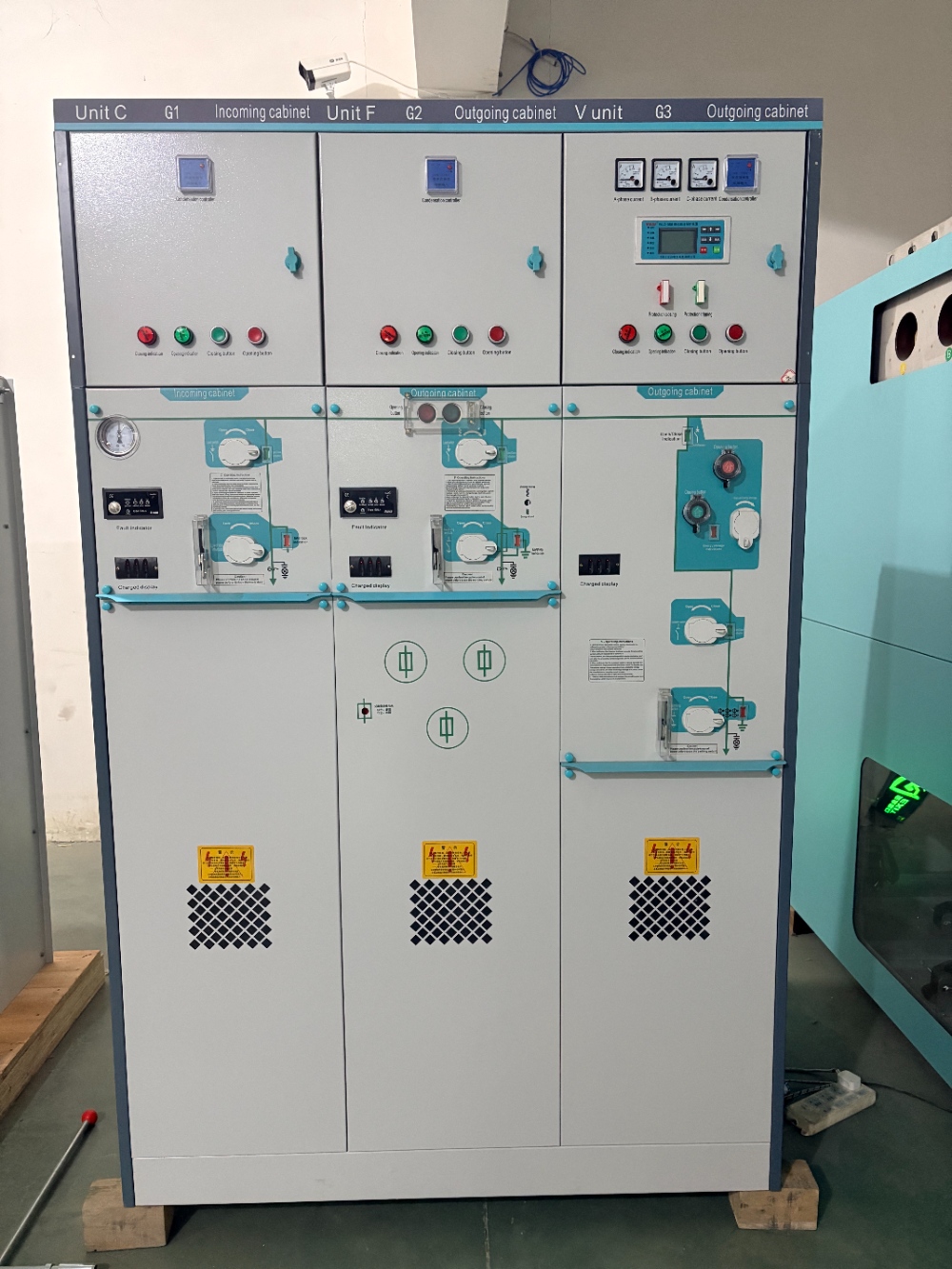
Merging vacuum interrupters directly into compact GIS enclosures removes the need for separate air-insulated compartments and reduces the switchgear footprint by up to forty percent. The vacuum bottle sits inside a sealed, SF6-free housing where the surrounding gas provides dielectric strength and cooling, while the interrupter handles current interruption. This co-location shortens bus runs, lowers part count, and simplifies assembly on site.
The main engineering challenge is managing the electric field distribution around the vacuum interrupter's ceramic envelope, especially at the triple junction where ceramic, metal, and gas meet. Designers use internal shielding, conductive coatings, and carefully shaped grading rings to keep the field below inception levels. Thermal behavior also shifts because vacuum gaps conduct heat poorly; heat from continuous current flows through the contacts and vapor shields must be dissipated through the enclosure walls, so materials and connection interfaces are selected to avoid hot spots.
In operation, the combined unit offers lower maintenance burden and improved safety because no arc byproducts are released into the insulating gas, and the vacuum interrupter's contact wear is minimal across its rated operations. Testing has shown that such integrated designs can achieve high short-circuit interrupting ratings while keeping the enclosure diameter compact enough for retrofit in aging substations. The trend toward vacuum-based GIS is accelerating as utilities move away from SF6 and demand smaller switchgear without sacrificing reliability.
UHF Sensors That Fingerprint Partial Discharge Early
Instead of waiting for insulation breakdown, engineers now use UHF sensors to catch the faint electromagnetic bursts emitted when partial discharge begins. These sensors operate in the 300 MHz to 3 GHz range, well above common electrical noise, so they can isolate the earliest signs of PD in transformers, GIS, and cables. The result is a real-time listening post inside high-voltage assets.
What makes the UHF approach stand out is the way it reads discharge signatures. Each type of defect—voids, floating metal, surface tracking—generates a distinct pulse shape, repetition rate, and phase pattern. By capturing these fingerprints, the sensor doesn't just raise an alarm; it tells you what kind of fault is developing and roughly where it sits, all without opening the equipment.
This early fingerprinting changes maintenance from a calendar-driven chore into a condition-based strategy. Small PD signals can be logged, trended, and compared against baseline patterns before they evolve into catastrophic flashovers. For aging substations, that means fewer unplanned outages and a safer path to extending asset life.
Bay-Level Modularity for Faster Brownfield Expansion
Retrofitting an existing data hall often stalls at the edges of fixed power and cooling zones. Bay-level modularity sidesteps that by treating each row or pod as a self-contained increment, with its own busway taps, containment, and monitoring points. You can bring up a few racks at a time without rebalancing the entire room, which matters when the building is live and every shutdown window is expensive.
The real payoff shows up in older facilities where floor loading, chilled water capacity, or breaker space is uneven. Instead of forcing a uniform design across the hall, teams can match the bay to what the site can actually support. A high-density bay gets supplemental cooling and larger feeds, while a low-density bay uses the existing infrastructure almost untouched. This keeps the expansion moving even when the building throws surprises during demolition.
Operations also benefit after handover. Because each bay is isolated, failures stay local and capacity can be adjusted by swapping components within a bay rather than reworking the central plant. Over time, that turns a brownfield project from a single risky cutover into a sequence of smaller, reversible steps.
Edge Analytics Predicting Contact Wear Before Failure
Predicting contact wear before failure isn't about fancier sensors alone—it's about moving the decision point closer to the equipment. Edge analytics takes raw signals from contact resistance, temperature rise, and occasional voltage dips, then runs lightweight models directly on a local gateway or microcontroller. Instead of waiting for a cloud round-trip, the system spots erosion patterns in the first milliseconds of arcing, long before pitting becomes visible on inspection.
The real value shows up in high-cycle applications like relays, contactors, and switchgear. A contact might still pass a functional test while its surface roughness has already changed enough to alter micro-arc frequency. Edge models trained on historical failure signatures can flag that shift, even when the change is buried in noise. Because the analysis happens on-site, it works with low bandwidth and keeps operating without connectivity—critical for remote substations or moving machinery.
What separates this from generic condition monitoring is the focus on pre-failure indicators rather than threshold alarms. Edge analytics continuously updates a wear profile for each contact set, comparing new samples against both healthy baselines and known degradation curves. When the rate of change accelerates, the system issues an early warning with enough lead time to schedule replacement during planned downtime, not after an unexpected arc flash or open circuit.
Digital Twins Mapping Gas Density Drift in Real Time
A digital twin built for gas monitoring does not just store a static snapshot of a site. It pulls live readings from pressure, temperature, and gas-specific sensors, then updates a spatial model as conditions change. This means a slow accumulation near a flange or a gradual dilution in a ventilated room becomes visible on the map as it happens, not after a routine check.
The drift itself is often more informative than any single reading. By comparing current density values against the twin’s baseline and neighboring zones, operators can trace how a leak moves, where it lingers, or whether a sensor is starting to underreport. Small shifts that might be dismissed as noise in a spreadsheet stand out when they form a coherent path across the 3D layout.
In practice, this turns the digital twin into a live warning system. A control room can see that gas is pooling beneath a walkway or spreading toward an air intake, then adjust ventilation or isolate a section before concentrations reach hazardous levels. The mapping is continuous, so the picture stays current even when wind, production load, or equipment status changes.
FAQ
Digital sensors embedded directly in GIS bays now provide continuous partial discharge, temperature, and gas density readings. Combined with vacuum interrupting technology for medium voltage and eco-friendly gas blends for high voltage, these upgrades allow operators to catch faults before they escalate and reduce outage durations significantly.
Utilities are moving away from SF6 due to its high global warming potential. New mixtures based on C4-FN or dry air require revised pressure levels and slightly larger enclosures, but they preserve dielectric strength while cutting carbon footprint by over 99%. Seal materials and monitoring sensors have been adjusted to handle the different gas chemistry.
Space constraints and rising land costs make air-insulated switchgear impractical in dense cities. Compact GIS can fit into underground vaults or building basements, reducing footprint by up to 70%. This also lowers visual impact and allows substations to be placed closer to load centers, cutting transmission losses.
Smart GIS units stream real-time data on gas pressure, moisture, and mechanical wear to central control rooms. Machine learning algorithms then flag anomalies, triggering targeted maintenance. This shift from time-based to condition-based servicing prevents unexpected failures and extends asset life by years.
Yes, 420 kV and 550 kV GIS designs are now standard for offshore wind farms and large solar parks. Their compact layout fits on converter platforms and collector stations, while advanced cooling and arc-quenching systems handle the fluctuating load profiles typical of renewables without compromising reliability.
Compatibility with legacy busbar arrangements and protection relays often forces custom adapter bays. Space restrictions may require phased replacement during narrow outage windows, and crews need retraining on gas handling procedures for non-SF6 mixtures. Careful planning can mitigate these issues but rarely eliminates them entirely.
A digital twin mirrors the physical switchgear in real time, modeling thermal stress, gas leakage scenarios, and partial discharge patterns. Engineers use it to test emergency procedures and optimize maintenance schedules without touching live equipment, reducing both operational risk and downtime during commissioning.
Conclusion
Replacing sulfur hexafluoride without compromising performance has pushed manufacturers toward gas blends built around fluoronitriles, fluoroketones, and carbon dioxide. These mixtures hold dielectric strength close to legacy SF6 levels while shrinking global warming potential by more than 99 percent. The shift pairs naturally with vacuum interruption inside tighter enclosures: by moving current breaking into sealed vacuum bottles, engineers can reduce bay footprint, cut maintenance on arcing contacts, and eliminate gas decomposition byproducts that used to complicate inspection. At the same time, ultra-high frequency sensors are moving beyond simple alarm thresholds. They now capture partial discharge signatures early enough to distinguish harmless corona from insulation defects, giving field crews a fingerprint-like record that pinpoints the exact compartment before a minor discharge turns into a flashover.
Grid planners facing space-constrained substations are adopting bay-level modularity to add feeders without re-engineering the entire busbar scheme; pre-tested modules slide into live stations, shortening brownfield outages from weeks to days. Contact wear prediction has also shifted from calendar-based maintenance to edge analytics that process trip current, travel time, and temperature in real time, flagging worn arcing contacts only when actual erosion data demands intervention. Parallel to this, digital twins now track gas density drift continuously, modeling leakage against ambient temperature and load cycles so operators can plan refills before lockout pressures are reached. Together these changes move gas insulated switchgear from a passive, maintenance-heavy asset toward a self-describing system that adapts to grid conditions instead of waiting for periodic inspection.
Contact Us
Contact Person: Doreen
Email: [email protected]
Tel/WhatsApp: 8618057712366
Website: https://www.liugaopower.com/