

Top Model 200 Single-Axle Flatbed Trailer from China: Built for Performance and Durability
2026-10-06
You don't have to look far to find a flatbed trailer, but finding one that holds up under real workload is another story. The Top Model 200 single-axle flatbed from China has been turning heads for exactly that reason—it pairs a lean, road-friendly footprint with the kind of build quality that keeps maintenance costs down. Whether you're hauling equipment or materials, Whole Chain Tech knows this model has become a go-to for operators who need more than just a price tag. Let's dig into why.
A Single Axle That Carries More Than Expected
A single axle rarely gets much credit. The assumption is that if you want serious hauling capacity, you need a tandem setup—or at least something bulkier. This one quietly overturns that logic. The forged beam, thicker spindle walls, and oversized bearings work together to handle loads that would normally demand a second axle. It doesn't look much different at a glance, which is part of the appeal.
What stands out isn't just the rated capacity on paper. It's how the axle behaves when the trailer is loaded unevenly or the road surface turns rough. There's no flex that makes you second-guess the hitch, no creaking from the spring seats, and the hub temperatures stay surprisingly low after long runs. Those details matter more than the marketing numbers.
For anyone replacing a worn axle or building a trailer from scratch, the real value is simple: fewer moving parts, less maintenance, and a tighter turning radius than a twin-axle setup. You get the payload margin without the extra tires and brakes. That's the kind of trade-off that makes a single axle feel like a deliberate upgrade rather than a compromise.
Frame and Deck Engineering for Daily Abuse
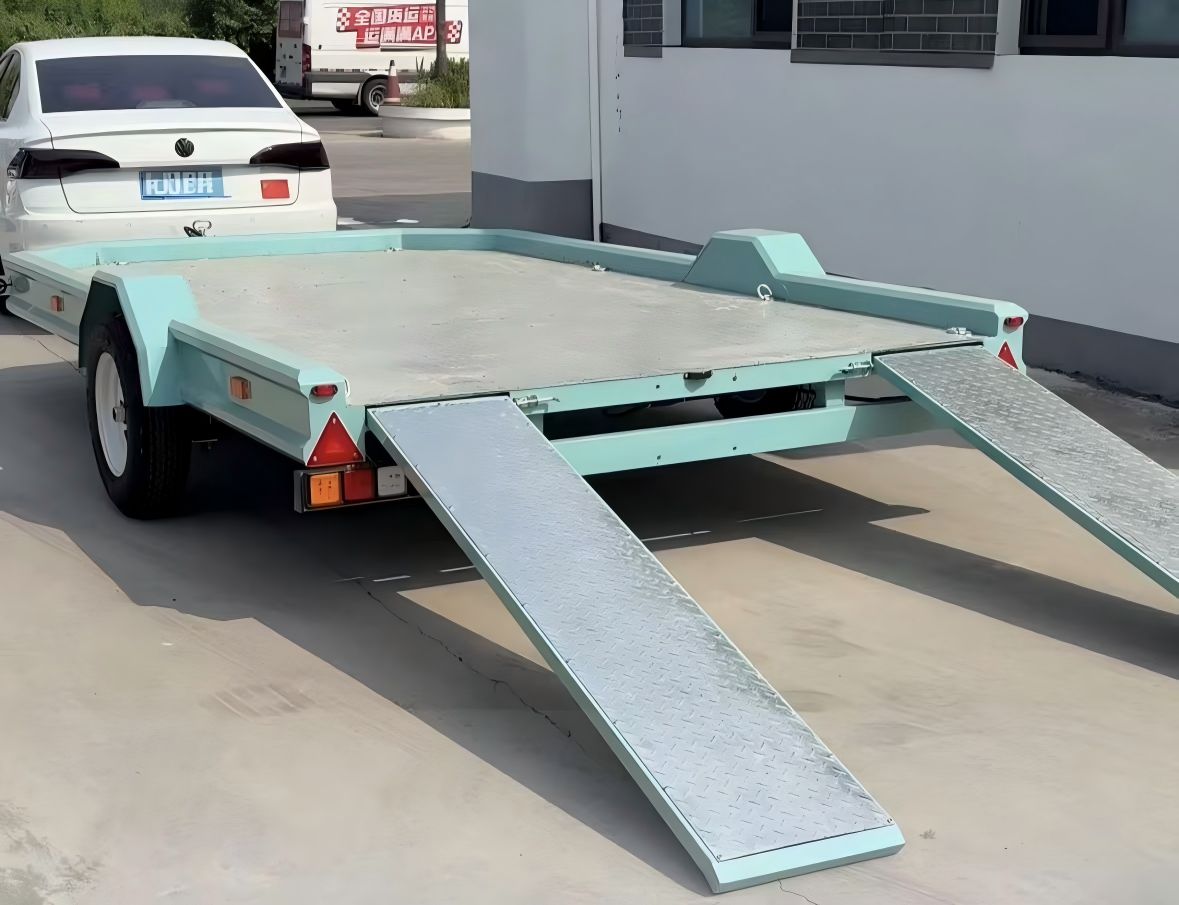
Most frames start with a heat-treated aluminum extrusion, but the real trick is in the gusseting around the head tube and dropouts. We run a continuous bead along the inside of the downtube where stress cracks like to appear after a few thousand curb drops. Instead of relying on a single thick wall, the cross-section steps down in three zones so flex gets absorbed gradually rather than concentrating at one weld point. That means the frame twists a little on square-edge hits and springs back without fatiguing the metal.
The deck takes a different kind of punishment—pebbles, wallet chains, slammed tail kicks. We press nine plies of Canadian maple with a layer of tri-axial fiberglass just below the top veneer. That fiberglass isn't there for stiffness; it's there to stop razor tail from delaminating the nose and tail after months of dragging. The wheel wells are cut deeper than most, which reduces bite without sacrificing the standing platform, and the grip tape we ship is a coarse 36-grit that actually grabs shoes instead of just looking aggressive.
What ties it together is the hardware spec. Bolts are shouldered so they bottom out on the insert rather than crushing the wood, and the countersinks are machined after the deck is sealed to keep moisture from wicking into the plies. We test a complete setup by cycling the tail against a steel curb edge 20,000 times, then flexing the middle to 500 pounds. The deck will eventually die—everything does—but it should die from honest wear, not from a design shortcut.
How the Top Model 200 Stays Stable on Uneven Ground
The Top Model 200 doesn't rely on a single trick to keep its footing. Its chassis is built with a slightly lower center of mass than most machines in this class, so when one side dips into a rut or climbs a root, the whole unit tilts less. The suspension arms are also independent at each wheel, letting them drop and rise without forcing the body to follow every contour. That means the drive wheels spend more time pressed against the ground instead of hanging in the air.
What seals the deal is the way torque gets distributed. As soon as a wheel starts to lose grip, the controller eases power away from it and sends more to the wheels that still have bite. Combined with a wider stance and slightly oversized tires, that split-second adjustment keeps the Top Model 200 moving forward instead of rocking side to side. On slopes, the same system works in reverse: it can momentarily hold a wheel with light braking to prevent the rear from swinging out.
Smart Details That Speed Up Loading and Tie-Down
Most delays at the ramp or jobsite come from hunting for a solid anchor point. Recessed tie-down rings, fold-away D-rings, and sliding track anchors cut that idle time by giving you a hard point wherever the load sits. You spend less time wrapping straps around frame rails and more time rolling.
The hardware itself matters just as much as placement. Quick-adjust cam buckles, self-ratcheting straps, and tension indicators you can read at a glance let one person snug everything down without walking back and forth to re-tighten. Small changes like angled cleats or low-profile winch handles reduce the crouch-and-crank routine that eats up minutes.
For equipment hauling, details such as fold-out ramps that stow beneath the deck and tie-down points positioned near the wheels remove the awkward choreography. When the anchor, the strap, and the release are all within arm's reach, loading becomes a smooth sequence instead of a wrestling match.
Durability Tests and Real-World Endurance
Most manufacturers run a gauntlet of lab tests before a single unit ships. We’re talking about repeated drop impacts onto concrete from hip height, hinge articulation cycles that go well past 200,000 opens and closes, and thermal shock chambers that swing from -20°C to 60°C within minutes. These numbers sound abstract until you realize they map directly to the clumsy drops, the impatient fidgeting, and the forgotten phone left on a car dashboard in July.
Real-world endurance, though, is where the rubber meets the road. A device can pass every standardized test and still fail when it meets pocket lint, humidity from a rainy commute, or the slow creep of battery degradation after 800 charge cycles. That’s why the best validation programs pair those harsh lab protocols with months of beta testing across different climates and use patterns. The result is a product that doesn’t just survive a spec sheet—it holds up when you actually live with it.
Low Ownership Hassle: Maintenance Without the Headaches
Owning a property often means dealing with a never-ending list of repairs, upkeep tasks, and surprise breakdowns. But a low ownership hassle model flips that script. Instead of spending weekends unclogging gutters or tracking down reliable contractors, you get a setup that’s designed to run smoothly with minimal input. Routine inspections, proactive fixes, and clear lines of responsibility mean you’re not the default handyman. The goal is simple: your investment works for you, not the other way around.
Maintenance without the headaches comes down to smart design and transparent systems. Long-life materials, energy-efficient systems, and centralized management reduce the chance of mid-month emergencies. If something does need attention, a single point of contact handles scheduling, vetting, and follow-up. You won’t wake up to a flooded bathroom or a broken AC with no idea who to call. Instead, most issues get resolved before they ever reach your inbox.
This approach frees up time and mental energy. You can travel for a month, focus on your career, or simply enjoy a quiet Sunday without a wrench in hand. The property stays in good condition because the upkeep is continuous and planned, not reactive. That’s the real benefit of low ownership hassle: you still own the asset, but the day-to-day burden is lifted. It’s maintenance managed so quietly, you might forget it’s even happening.
FAQ
The main difference is in the frame construction. Instead of a basic C-channel, this trailer uses a reinforced box-section frame with extra crossmembers, so it can carry concentrated loads like pallets of bricks or a small skid steer without the deck flexing over time.
Because there's only one axle, the trailer pivots much tighter than a tandem. That makes it easier to back into narrow gates, storage yards, or between buildings. Load distribution matters more, but the axle is placed slightly rearward to keep proper tongue weight when loaded.
Yes, it's designed with that in mind. The suspension uses heavy-duty leaf springs or an optional torsion axle, and the tires are rated for off-road use. Ground clearance is higher than most flatbeds in this size, so it clears rocks and ruts without scraping the deck supports.
It handles the usual flatbed work well: lumber, scaffolding, landscaping materials, palletized freight, small machinery. The deck is also drilled for stake pockets and tie-down rails, so you can secure irregular loads like pipe or frames without drilling extra holes.
The frame and deck get a zinc-rich primer before a powder-coated topcoat, and all fasteners are galvanized or stainless. The deck planks are either treated wood or checkered steel plate, depending on the build, and both are sealed against moisture at the edges.
Most units come with a 50mm ball coupler and a 7-pin flat plug, so it works with standard North American and many imported pickups. There's also an option for a pintle ring if you're towing with a heavier truck or off-road vehicle.
It's pretty simple: grease the wheel bearings every 10,000 km or annually, check tire pressure before each trip, rinse the deck after hauling salt or fertilizer, and inspect the lights and breakaway cable monthly. The sealed wiring harness means you rarely deal with corroded connectors.
Conclusion
The Top Model 200 single-axle flatbed trailer redefines what a single axle can handle. Its oversized spindles and heavy-gauge steel crossmembers allow it to carry loads that many would expect only from a tandem setup. The frame and deck are engineered for daily abuse—think forklifts rolling on, skid steers turning, and cargo chains pulling tight against the side rails. A non-slip deck surface and reinforced perimeter channel keep everything stable even when loads shift during transit. On uneven ground, the trailer stays level and predictable because the axle geometry and leaf-spring configuration are tuned to resist sway and bottoming out. Loading is faster thanks to integrated tie-down points, a low deck height, and rear approach plates that reduce lifting effort.
Behind the design are repeated durability tests and years of real-world use in demanding conditions, from construction hauling to equipment transport. The engineering team focused on reducing ownership hassle: sealed hubs, accessible grease points, and corrosion-resistant coatings cut down on routine maintenance. Routine upkeep rarely goes beyond a quick visual check and occasional bearing repack. The result is a flatbed that spends more time working and less time in the shop—a practical, dependable choice for operators who need consistent performance without constant attention. Every detail, from the wiring harness to the paint finish, is chosen to survive harsh environments and keep the trailer earning its keep season after season.
Contact Us
Contact Person: Ethan
Email: [email protected]
Tel/WhatsApp: +86 13963964935
Website: https://www.wholechaintech.com/