
Top Plastic Pipe Machines: Key Features and Selection Tips
2026-05-08
Choosing the right plastic pipe machine can make or break your production line. From extrusion speed to energy efficiency, the details matter—and overlooking them can cost you dearly. That’s where Yongte comes in, engineering machines that tackle real-world demands without the hype. In this blog, we’ll cut through the noise and walk you through the must-have features and insider tips you actually need, so you can invest with confidence.
Decoding the Core Mechanics of Pipe Extrusion Lines
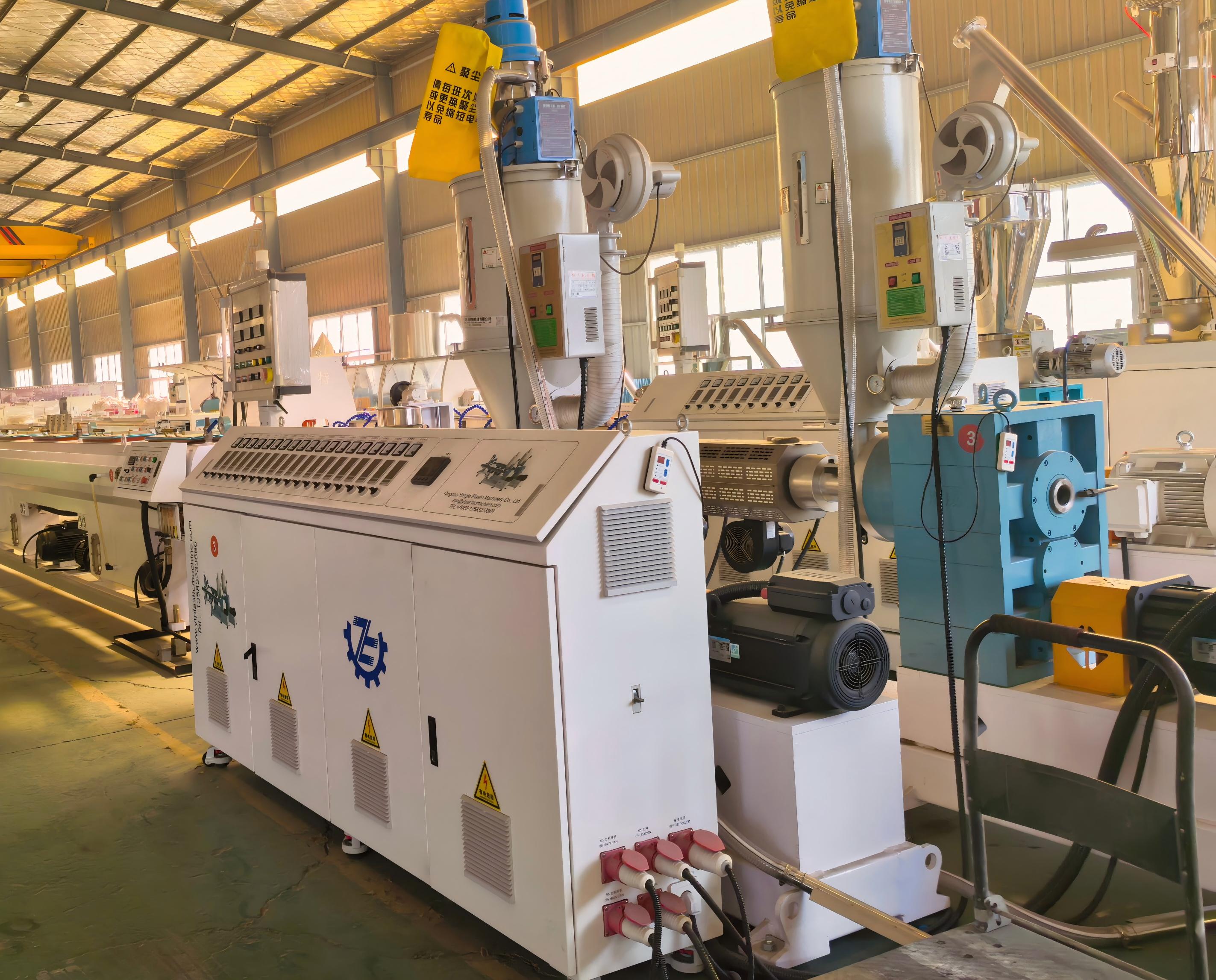
At the heart of any pipe extrusion line lies the interplay between material behavior and machine design. The process begins with raw plastic pellets—often PVC, PE, or PP—being fed into a heated barrel. Inside, a rotating screw not only melts the material but also builds the pressure needed to push it through a die. Temperature control here is critical; too much heat can degrade the polymer, while too little can cause uneven flow. Advanced lines now use multiple heating zones and real-time sensors to maintain a narrow thermal window, ensuring the melt is homogeneous before it even reaches the shaping stage.
Moving downstream, the molten tube enters the calibration and cooling phase, where its final dimensions are locked in. A vacuum sizing tank pulls the soft pipe against precision-machined sleeves, setting the outer diameter with remarkable accuracy. Cooling water circulates at carefully managed rates, preventing thermal shock that could warp the structure. This stage is where many quality issues originate—from ovality to surface blemishes—so operators monitor water temperature, vacuum levels, and haul-off speed with a watchful eye. It's a balancing act between quenching the pipe quickly enough for production speed, yet slowly enough to relieve internal stresses.
Finally, the puller and cutter units work in tandem to handle the solidified pipe without deformation. The haul-off system applies consistent tension, synchronizing its speed with the extruder output to avoid stretching or compressing the product. Meanwhile, the cutting mechanism—whether a saw or guillotine—must execute clean, square cuts on the fly, often at speeds exceeding several meters per minute. Behind these mechanical actions, a network of controllers and feedback loops keeps everything in rhythm. Understanding these core mechanics isn't just about troubleshooting; it's what separates a mediocre line from one that runs reliably around the clock, delivering pipe that meets exacting standards without constant human intervention.
Resin Compatibility: The Hidden Driver of Production Quality
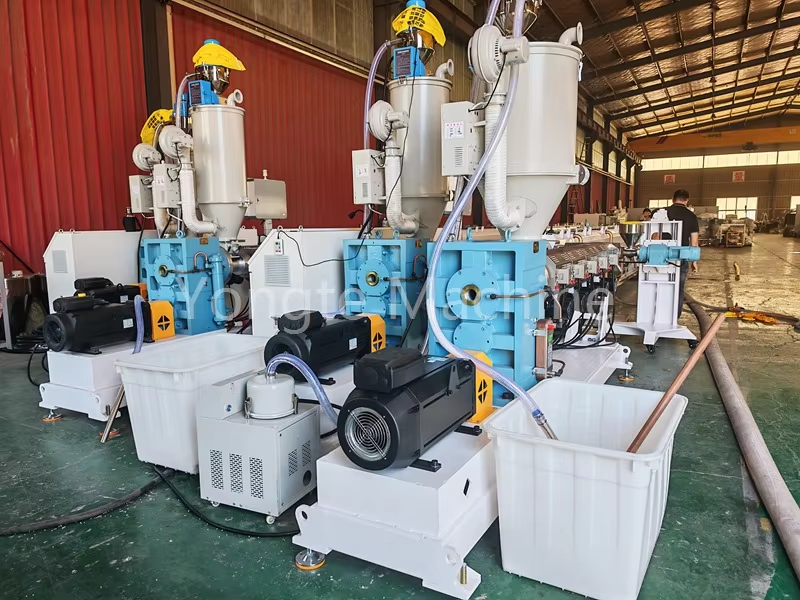
When production lines grind to a halt or defects spike unexpectedly, the culprit is rarely an obvious material defect—it’s often a subtle mismatch lurking in the resin system. Compatibility between resin and additives, reinforcements, or even the processing environment dictates whether a batch flows evenly, cures fully, or bonds properly. A resin that performs brilliantly in isolation can turn brittle, discolor, or refuse to set when paired with the wrong catalyst or filler, turning a carefully engineered formula into scrap.
Veteran compounders know that true compatibility testing goes beyond basic solubility charts and datasheet promises. It’s about how the resin network forms in the presence of every ingredient, how shrink rates align with embedded inserts, and whether the cured matrix holds up under thermal cycling with its specific pigment load. Small choices—like switching antioxidant types or adjusting the silane package—can make the difference between a durable part and a catastrophic field failure, yet these interdependencies rarely show up in standard quality checks.
The most consistent manufacturers treat resin compatibility as a dynamic, process-wide variable instead of a one-time formulation checkbox. They map out interaction zones, monitor batch-to-batch drift in raw materials, and allow the mixing, curing, and cooling stages to inform each other. This proactive lens doesn’t just prevent rejects; it unlocks higher filler loadings, faster cycle times, and finishes that were assumed out of reach, turning a hidden risk into a quiet competitive edge.
Automation Smarts: Why Intelligent Controls Are No Longer Optional
Manufacturing floors a decade ago could still get by with rigid, rule-based automation. Those systems followed fixed parameters and lacked the ability to adapt when conditions shifted. That approach now feels painfully outdated. Modern supply chains fluctuate without warning, customer demands morph overnight, and production lines must handle increasing variety. Intelligent controls don’t just execute pre-programmed routines—they sense, decide, and adjust in real time. Without that flexibility, downtime spikes and waste creeps up. It’s the difference between reacting to problems after the fact and preventing them entirely.
Plant managers often assume that smart automation is a luxury for mega-factories with deep pockets. But the cost of embedded intelligence has dropped sharply while the cost of sticking with rigid setups has climbed. A conveyor that halts because it encountered an unexpected box size, a quality check step that keeps passing defective units because the thresholds haven’t been updated—these aren’t just nuisances; they compound into missed deliveries and scrapped batches. Intelligent controls bring self-diagnostics and self-correction that turn those silent losses into visible savings, often within months of integration.
Something else has changed too: the workforce. Skilled technicians are harder to find, and older machines with cryptic interfaces leave them frustrated. Intelligent systems bridge that gap with clear feedback loops and assisted decision-making. They don’t replace expertise—they amplify it by letting operators manage by exception instead of constant firefighting. When a packaging line can auto-tune its sealing temperature based on ambient humidity, a worker stops babysitting dials and starts improving throughput. That shift from manual oversight to strategic management marks the real threshold where intelligent controls stop being a nice-to-have and become a competitive necessity.
Cooling and Sizing Units That Prevent Costly Defects
Proper cooling and sizing units are often the unsung heroes in manufacturing lines, quietly preventing defects that could otherwise spiral into costly rework or scrap. When materials aren't cooled uniformly, internal stresses build up, leading to warping, cracking, or dimensional inaccuracies that only become apparent downstream. A well-calibrated cooling system ensures that each part exits the process with the right thermal profile, locking in material properties and geometry without guesswork.
Sizing units play an equally critical role by maintaining precise dimensions before the product fully stabilizes. Even minor deviations here can cascade into assembly issues or functional failures, especially in high-tolerance industries like automotive or medical devices. By integrating real-time feedback and adaptive controls, modern systems catch variations early, adjusting parameters on the fly to keep every piece within spec. This proactive approach replaces post-production inspection with in-process assurance, slashing waste and protecting your bottom line.
Calculating the Real Cost Beyond the Purchase Price
When you see a price tag, it's easy to forget that the number you're looking at is just the starting point. The true sum you'll end up paying often includes layers of additional expenses that quietly stack up over time — from delivery fees and installation charges to essential accessories that the product can't function without. These hidden add-ons can turn a seemingly straightforward purchase into a much heavier financial commitment than you initially anticipated, catching even careful shoppers off guard.
Beyond the immediate extras, you also need to factor in the long-term carrying costs that begin the moment you take ownership. Think about consumption of energy, mandatory subscriptions to unlock core features, recurring maintenance, or consumables that need regular replacement. A cheaper item might drain your wallet over months and years, while a slightly pricier alternative could prove far more economical once these ongoing obligations are tallied up. The sticker price alone rarely tells that story.
To avoid buyer's remorse, it pays to develop a habit of mentally mapping out the full lifecycle expenditure before you commit. Ask pointed questions: What does this really need to work? What will I keep paying for after I've bought it? And how gracefully will it age? By shifting your focus from the initial outlay to the total cost of ownership, you protect yourself from inflated expectations and make choices that align better with your actual budget and priorities.
Support Networks That Keep Your Lines Running 24/7
When your business depends on constant connectivity, the support behind the scenes isn't just a nice extra—it's the whole game. Our network operations team doesn't clock out when the office lights dim; they're tuned into every fluctuation, from a slight lag spike to a potential hardware hiccup, catching issues before they snowball.
We've built redundancy into every layer so that a single point of failure never becomes a single point of disaster. Traffic gets rerouted in real time across multiple pathways, often so smoothly that you won't notice a blip in your service. It's the kind of invisible choreography that keeps remote teams collaborating, transactions processing, and customers happy around the clock.
Technology alone can't guarantee uptime—people make the difference. Our support engineers are deeply familiar with your setup and empowered to act instantly. Whether it's 2 a.m. on a holiday or the busiest hour of a weekday, you'll reach someone who thinks on their feet and resolves problems without a script, because keeping your lines alive is what we do.
FAQ
Look beyond thick steel frames. True durability comes from proprietary surface treatments on screws and barrels, like tungsten carbide coatings that resist wear from abrasive fillers. Also, check if the gearbox is designed with a direct-drive coupling rather than belt-driven, as it reduces maintenance and extends lifespan significantly.
It's not just about the motor's kWh rating. Advanced machines use servo-driven vacuum pumps and cooling systems that adjust speed based on real-time demand, slashing idle consumption. Some newer models recapture heat from the barrel to pre-dry raw material, cutting overall energy use by up to 25%.
Yes, if the machine has a modular die head with quick-release clamps and automatic wall-thickness centering. Some systems pair this with recipe-based controls that recall exact settings for each pipe size, so changeovers happen in under 15 minutes rather than hours.
It's the silent game-changer. Beyond basic PLC control, look for inline measurement systems that automatically adjust haul-off speed and temperature to maintain ovality and wall thickness. True lights-out operation is possible with automatic pipe collaring and cutting to length, reducing reliance on manual labor.
Because it determines melt quality and output consistency. A barrier screw with optimized compression ratio and mixing elements can handle regrind without pulsation. If you run multiple materials, a grooved feed throat paired with a custom screw profile prevents slippage and boosts throughput by 20-30%.
Demand a dual-vented barrel with a high-performance vacuum system to strip volatiles from contaminated regrind. A screen changer with backflush capability is essential—it lets you filter out impurities without stopping the line. Some manufacturers offer specialized degassing screws that work even with high-moisture content.
Remote diagnostics via VPN connection is now a baseline. Push for a local service hub that stocks critical spares like heaters and thermocouples. Also, training should go beyond the manual—look for suppliers who offer on-site process optimization visits in the first six months to fine-tune your settings for maximum yield.
Conclusion
When evaluating plastic pipe machines, getting a grip on the extrusion line’s inner workings is what separates consistent output from constant headaches. The screw geometry, barrel temperature zones, and melt uniformity aren’t just textbook details—they shape how evenly the pipe wall forms and how stable your throughput stays. Hand in hand with this is resin compatibility. A line that hums along with PVC might produce nothing but defects with HDPE unless you’ve accounted for differences in heat sensitivity and viscosity. Without that attention, you risk slow-burn quality problems like brittleness or wavy surfaces that only show up after months of production.
Looking further down the line, automation has moved past simple on/off controls. Today’s systems lean on real-time feedback from thickness sensors and pressure transducers, adjusting screw speed or haul-off pull on the fly to cut waste and keep dimensions tight. The cooling and sizing setup is equally unforgiving—if the vacuum calibration or water bath can’t lock in shape quickly, you’ll battle ovality and sink marks. And while sticker price grabs attention, the real expense lives in energy draw, spare parts logistics, and whether your supplier offers genuine round-the-clock support. A lower upfront cost means little if you’re stranded at 2 a.m. without a technician who understands your line’s quirks.
Contact Us
Contact Person: Ms Qin
Email: [email protected]
Tel/WhatsApp: 8613583233866
Website: https://www.yongteplast.com