

Top Water Jet Sewer Machine Factory: What to Look For Before Partnering
2026-09-28
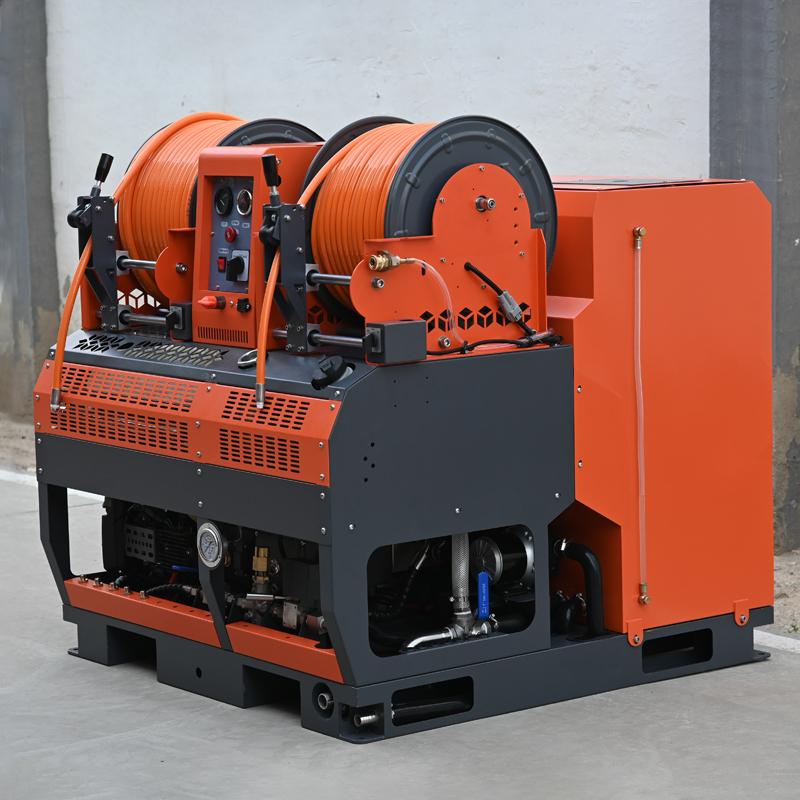
Partnering with a water jet sewer machine factory isn’t a decision to take lightly. The wrong choice leads to costly downtime and subpar equipment. So what separates a top-tier factory from the rest? Before you commit, look beyond the glossy brochures. At AMJET, we’ve seen what really matters—and what gets overlooked. In this guide, we’ll walk you through the key checks that can save you from a bad deal.
Walk the Factory Floor Before You Sign Anything
A contract never tells you how a place actually breathes. Spend at least an hour walking the floor without a guide hovering over your shoulder. Watch how workers move between stations, whether they look rushed or bored, and if supervisors actually solve problems or just stare at clipboards. Pay attention to the noise, the clutter, the way materials are stacked. Those details reveal more about on-time delivery and defect rates than any polished spreadsheet. If you spot red flags like blocked fire exits or frayed cables, don't wave them off as “normal wear.” Trust your gut. That gut feeling is often the only early warning you'll get.
Ask to see three things while you're there: the rejection bin, the maintenance log, and the employee break area. The rejection bin tells you if quality is enforced or just advertised. The maintenance log shows whether machines are nursed along until they fail or serviced on schedule. The break area — its condition, cleanliness, posted notices, even the chairs — hints at how management treats people. A factory that skimps on break room upkeep usually skimps on training and safety too. And don't leave until you've met at least two line workers away from their supervisors. Ask one simple question: “What would you change if you ran this place?” Their answer will either confirm your confidence or send you running.
Finally, verify the flow of materials and information. Does the receiving dock match the production schedule? Are work orders printed out or still handwritten? Observe whether anyone double-checks incoming parts before they hit the line. A factory that accepts raw material without inspection is gambling with your order. If you see stacks of rework sitting off to the side, find out why — and how often that happens. None of this requires an engineering degree. Just curiosity and the willingness to look past the conference room PowerPoint. The floor never lies, but your signature on the wrong agreement can lock you into a very expensive truth.
Who Really Makes the Pump Hose and Nozzle
Most people assume the name printed on the side of a fuel dispenser reflects the company that built every component. That assumption falls apart quickly when you trace the pump hose and nozzle. In many cases, the brand on the handle is just a licensed label. A handful of industrial manufacturers produce the actual hardware, then sell it to equipment distributors who apply their own branding before it reaches a gas station forecourt.
Companies like Husky, OPW, and Goodyear dominate the supply chain for these parts, but you rarely see their names on the finished pump. Instead, a station owned by Shell or Chevron might have hoses and nozzles made by one of these firms, stamped with the oil company's logo. The original equipment manufacturer often remains invisible to drivers, even though they handle the product every time they fill up.
This hidden layer exists because fuel dispensing equipment is heavily regulated and requires specialized engineering. Small regional distributors don't have the resources to cast metal nozzles or extrude multi-layer rubber hoses that resist ethanol and extreme temperatures. They buy from the same few factories, then compete on service contracts, not on who actually poured the metal. So the next time you grab a nozzle, remember: the name you see is usually a badge, not a builder.
Ask for a Live Demo on Your Most Stubborn Blockage
Most demos use clean, easy material. That doesn't tell you much. If you have a filter, screen, or line that has been shutting down your shift every few hours, bring that exact problem. We'll run it through the equipment and show you what actually comes off.
The stubborn ones are the only ones worth testing. Bring the blockage that has survived pressure washing, chemical soaks, and whatever else your crew threw at it. You'll see whether it clears, and if it doesn't, you'll know exactly why before spending a dime.
Set aside 20 minutes. No prepared slides, no generic sample. Just your toughest clog and a straight answer about what it takes to remove it.
After Sales Service Response Time vs. Written Promise
When a customer signs off on a service agreement, the promised response window often feels like a handshake. In reality, many after-sales teams treat that written promise as a best-case scenario rather than a binding target. A 24-hour response pledge can quietly stretch to 36 or 48 hours once the ticket enters the queue, especially during peak periods or when the issue requires escalation. This gap isn't always caused by indifference—it's frequently the result of understaffing, fragmented communication channels, or unclear ownership of incoming requests.
To close the distance between the written promise and the lived experience, leading teams start measuring response time from the customer's perspective, not from when an agent first opens the ticket. They also add internal buffers: if the contract says 8 hours, the internal goal becomes 4 hours. Regular audits of actual versus promised response times, shared openly with the team, create accountability without blame. The most honest approach, however, is to rewrite the promise itself. If a 2-hour response isn't consistently achievable with current resources, stating 4 hours upfront builds more trust than repeatedly missing a faster target.
Custom Builds for Unusual Pipe Sizes and Pressures
Not every piping system fits neatly into a catalog. When you're working with diameters that fall between standard schedules or need a wall thickness to match a legacy spec, we build the pipe sections and spools to your exact measurements rather than asking you to adapt the site to what's available.
Pressure ratings get the same treatment. A standard 150# or 300# flange won't solve every problem, so we calculate material allowances and joint details from the pressure and temperature data you supply. That often means a custom wall schedule, a different alloy, or a welded branch reinforcement that standard fittings don't cover.
Before any custom order ships, it's hydrostatically tested at a level tied to your operating conditions, not just a generic factory test. We also keep mill certs and heat numbers on file, so if something changes downstream, you have the full story on the pipe you installed.
Spare Parts Lead Times and Warranty Exclusions You Missed
Most replacement part delays don't come from the supplier's stated turnaround. They come from the handoffs no one tracks: the request sitting in a distributor's inbox over a holiday weekend, the customs hold for a commodity code typo, or the warehouse picking error that sends a similar but incompatible revision. If your planning only uses the published lead time, you're already late on a third of your emergency repairs.
Warranty fine print tends to exclude exactly the situations where spares matter most. Look for clauses that void coverage when a non-OEM part is used temporarily, when installation happens outside certified service hours, or when the failure occurs during field modifications the manufacturer didn't pre-approve. Some policies also treat repeated failures of the same component as a design issue after the second replacement, shifting cost to you without announcing it.
A practical habit is to log actual part arrival times against the quoted figure for every critical asset, then compare those gaps with the warranty terms before you sign the next service contract. The mismatch is rarely obvious in the brochure; it shows up only after you've waited six weeks for a seal that was supposed to ship in five days.
FAQ
Look for evidence of in-house engineering and testing rather than just assembly. A factory that openly shares failure modes, material specs, and past warranty data is usually more trustworthy than one that only shows polished brochures.
Ask for video tours of the production floor and request the factory to run a machine at full pressure for an extended cycle. If possible, have a local third-party inspector check weld consistency, hose routing, and the fit of quick-connect fittings.
It often matters more than the initial price. A factory that assigns a dedicated technical contact, keeps troubleshooting guides current, and can ship common wear parts within days will save you far more downtime than a slightly cheaper machine ever could.
Insist on documentation for pressure vessel compliance and electrical safety relevant to your region, such as ASME or CE marking. Do not accept vague statements; ask for certificate numbers and verify them with the issuing body.
Give them a small, unusual modification early in the conversation, like a non-standard nozzle thread or a different hose length. How they respond, whether they ask engineering questions or just say yes, reveals whether they actually build machines or simply resell generic units.
Request a written list of the ten most commonly replaced parts along with their current stock levels and typical restocking time. A factory that keeps seals, nozzles, and pressure switches in stock shows they understand field conditions and operator needs.
A live video walkthrough that lets you see raw material storage, testing stations, and the actual people doing the work can be almost as revealing as being there. In-person visits are still best for judging workplace culture, but a factory that refuses even a video tour is a clear warning sign.
Watch for incomplete technical drawings, hesitation to provide warranty terms in writing, and salespeople who cannot explain how the pressure regulator works. Also be wary if the factory changes its company name or export records frequently, as that often hides past quality disputes.
Conclusion
Before you commit to any water jet sewer machine factory, step onto the production floor yourself. A glossy brochure can hide rushed welds, mismatched threads, or pumps assembled from mismatched third-party parts. Ask bluntly who actually casts the pump housing, who winds the hose reinforcement, and who machines the nozzle orifice. If they hesitate or point to a vague “partner network,” that’s your cue to dig deeper. Request a live demo on your worst recurring blockage—grease-packed clay, root intrusion, or hardened scale—not their carefully curated test pipe. Watch how the machine behaves when pressure spikes and the operator has to back off and re-advance. The real factory will welcome this; the reseller will stall.
After the sale is where most partnerships unravel. Get the response time for a burnt-out motor or cracked swivel in writing, then call their service line on a Friday afternoon to see who picks up. Custom builds for odd pipe diameters or low-pressure municipal lines should be a conversation, not a special favor. Ask for a list of spare parts that are actually stocked on-site, and read the warranty exclusions line by line—many factories quietly exclude seals, nozzles, and hose fittings, which are precisely the parts that fail first. If they promise “24-hour parts anywhere,” push for a real lead time on a high-wear item. The factory that tells you a three-week wait for an uncommon nozzle is often more honest than the one that says “no problem.”
Contact Us
Contact Person: Mike
Email: [email protected]
Tel/WhatsApp: +86 19545555505
Website: https://www.amjeting.com/