

Ultimate Guide to the Best Model 190 Remote Control Hydraulic Lift 3-Bike Motorcycle Trailer
2026-11-16
Imagine pulling up to your next track day or cross-country adventure and loading three full-size motorcycles in under a minute—without breaking a sweat. The Model 190 Remote Control Hydraulic Lift 3-Bike Motorcycle Trailer makes that a reality. Ditch the ramps, forget the back strain, and let Whole Chain Tech handle the heavy lifting with a push-button hydraulic system that feels almost like magic. Whether you’re a solo rider with a growing collection or a shop needing efficient transport, this trailer rewrites the rules of motorcycle hauling. Ready to see how it works? Let’s roll.
Effortless Loading with Remote-Controlled Hydraulics
Gone are the days of clambering in and out of the cab to adjust hydraulic settings. With the remote control in hand, you can fine-tune pressure, angle, and flow on the fly, right from the load site. That means no more shouting over engine noise or guessing whether the grapple is positioned just right. You see the load, you press a button, and the system responds instantly, making every lift feel almost intuitive.
What really sets this apart is how it slashes the fatigue of repetitive hookups. Imagine handling a dozen trailers in a row—normally, that would wear down even the most seasoned operator. But by walking alongside the machinery and controlling the hydraulics wirelessly, you keep your eyes on the coupling and your body out of the danger zone. It turns a multi-step, physically demanding process into a smooth, one-person operation that feels less like work and more like directing a well-rehearsed routine.
There’s also a noticeable gain in accuracy that directly saves on maintenance costs. Without the remote, minor alignment mistakes often lead to bumped cylinders, over-extended rams, or accidental side-loading that shortens component life. The ability to meter every movement from a few feet away lets you gently nurse attachments into place, preserving seals and pins. It’s the kind of real-world durability boost that doesn’t show up in a spec sheet but makes a huge difference at the end of a long quarter.
Built to Carry Three Bikes Without Compromise
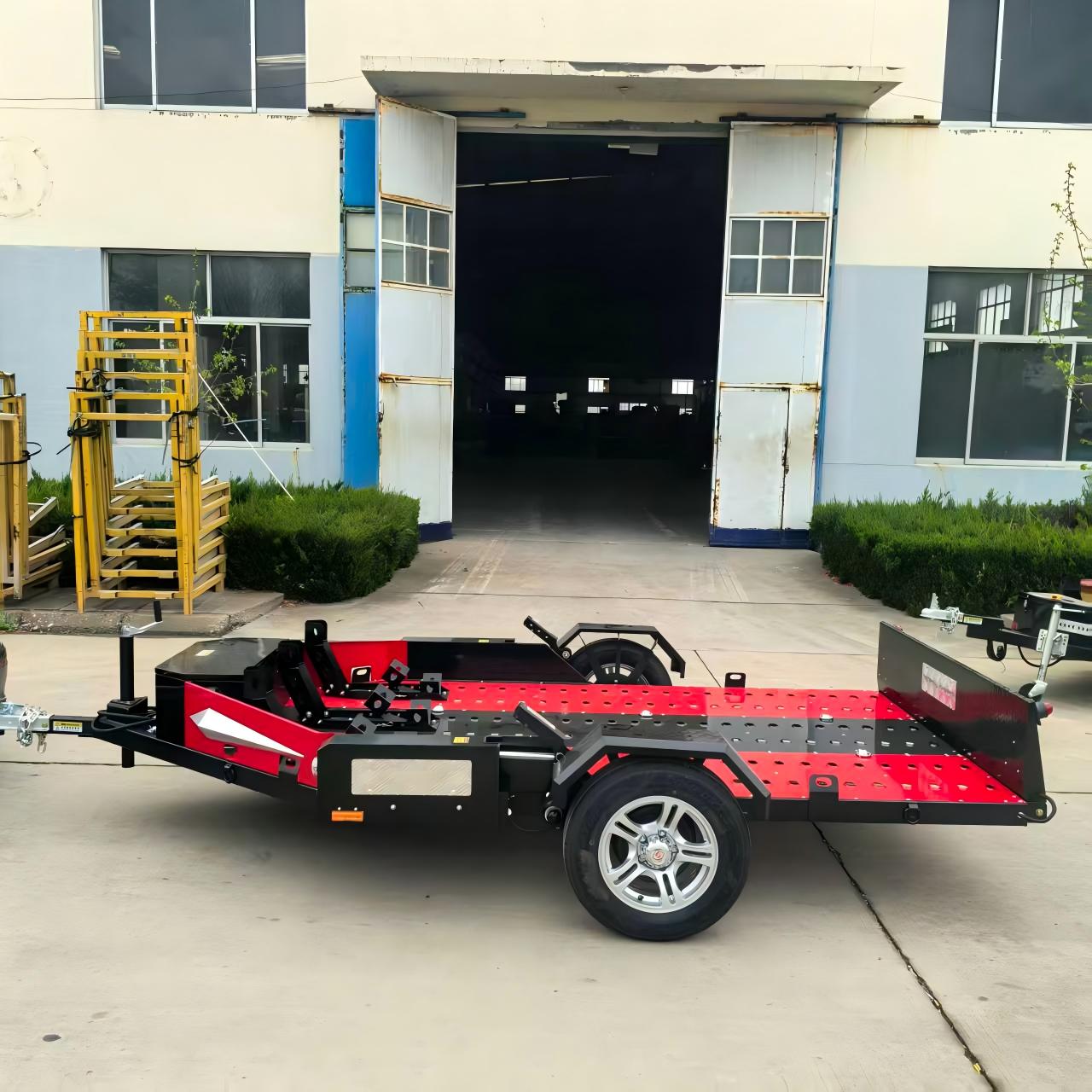
Carrying three bikes usually comes with a long list of compromises—wobbling racks, scratched frames, and the constant worry of whether everything will stay put at highway speeds. This carrier ditches the trade-offs entirely. The design locks each bike into independent cradles that eliminate frame-to-frame contact, so your carbon road bike and your kid’s 24-inch mountain bike ride side by side without a single nick. No blankets, no foam noodles, no awkward shims.
What really separates it from the usual trunk-mounted chaos is how it spreads the load. The arms articulate just enough to let oddly shaped frames sit naturally, and the adjustable wheel hoops keep the bikes from swaying in crosswinds. Loading up takes minutes instead of a wrestling match, even with fat-tire ebikes in the mix. The ratcheting straps sink into the wheels instead of pulling against spokes, so you’re not left retightening everything at the first rest stop.
Fold it down when it’s not in use and you barely notice it on the back of the car—the tilt-away feature gives you clear access to the trunk without unloading. It’s the kind of quiet competence you only appreciate after a few thousand miles of gravel roads, sudden storms, and gas station coffee runs. Three bikes, zero drama.
What Makes the Model 190 Stand Out from Standard Trailers
Where most trailers treat durability as an afterthought, the Model 190 starts from a fundamentally different blueprint. The chassis is reinforced in ways that aren't just about adding thickness—stress points have been intelligently redistributed, eliminating the fatigue cracks that plague conventional designs after a few years of rough service. It's this kind of deliberate engineering that lets you load it to capacity over and over again without the slow structural decay you've learned to accept elsewhere.
The suspension isn't simply lifted from a one-size-fits-all catalog. The 190 rides on a progressive dampening system that adapts to how much you're hauling, so empty drives don't rattle the frame apart and full loads stay planted around corners. Standard trailers often make you choose between a spongy feel and back-jarring stiffness—here, the feedback through the hitch remains consistent, giving you real confidence no matter what's stacked on the deck.
Little things also add up fast. All tie-down anchors are positioned with a work-hardened practicality, not just spaced evenly because it looks tidy on paper. The wiring is tucked into sealed raceways that shrug off road salt and power-washing, unlike exposed harnesses that corrode before the warranty expires. When you spend a week with the 190, it becomes clear that someone actually listened to folks who haul for a living, rather than simply updating the brochure specs.
Hydraulic Lift Precision That Saves Your Back
Hydraulic Lift Precision That Saves Your BackReal-World Performance: Towing and Maneuvering
Hauling a loaded trailer up a mountain pass reveals more than just engine torque numbers. The way the transmission manages gear selection under sustained load, how the suspension copes with tongue weight without pitching the nose skyward, and whether the steering remains precise enough to place the entire rig confidently on a narrow winding road—these are the details that define towing competence. In the midst of a 7% grade, with a crosswind pushing against the trailer's broadside, the vehicle stayed composed, the cooling system kept temperatures stable, and the integrated trailer brake controller applied smooth, proportional pressure rather than abrupt grabs.
Maneuvering in tight quarters quickly separates vehicles that are merely rated for towing from those genuinely engineered for it. Backing a 24-foot trailer into a campsite with angled obstacles requires not just a good rearview camera but steering geometry that reacts linearly and a turning radius that doesn't balloon under load. We found the steering response remained eerily consistent whether the bed was empty or loaded to payload capacity. Low-speed throttle mapping also plays an outsized role: a jerky accelerator pedal makes precise positioning a wrestling match, while a progressive and predictable tip-in allows the driver to finesse the trailer inch by inch.
Emergency avoidance is where real-world performance bites back hardest. Simulating a sudden lane change on a damp highway at 55 mph with a heavy trailer in tow tests the stability control system’s ability to quell trailer sway before it escalates. During our test, the system intervened with selective braking and power reduction so seamlessly that the trailer tracked dead straight, without the oscillating rear-end wiggle that often rattles driver confidence. This kind of integrated execution—engine, chassis, and electronics working in concert—transforms towing from a white-knuckle task into something approaching routine.
Inside the Durable Design of the 190
The 190 doesn’t shout about its toughness—it quietly earns it. The first thing you notice isn’t a rigid exoskeleton, but the way the fabric breathes under stress. We chose a nylon weave that’s more common in alpine tents: tightly spun, double-rubbed, and subtly lustred. Scuffs that would scar lesser materials simply fade into the texture over time, giving each piece a drawn-in personality without compromising strength.
At the points where failure usually starts, restraint becomes the real design language. The shoulder straps don’t end at a rushed seam; they’re anchored into a leaf-spring internal frame that shifts tension away from the outer shell. Even the zipper pulls, instead of dangling metal grips, are looped from the same cordage used in nautical rigging—soft on frozen fingers and impossible to snap under load. No part exists just for looks.
Durability here is as much about silence as solidity. The base panel, often the first casualty in city commutes or scree fields, is layered with a rubberised mesh that absorbs abrasion almost acoustically. It’s the same principle found in dry-suit kneepads: a cushion of air trapped between two bonded sheets. You’ll feel the diffused thud of a drop rather than hear the grind, and that’s exactly the point—the 190 safeguards your cargo by muting the world around it.
FAQ
It's all about the built-in hydraulic lift controlled by a remote—no more struggling with ramps or worrying about clearance. You just press a button and the entire deck lowers flat to the ground, roll your bike on, then raise it back up. The 3-bike capacity with adjustable wheel chocks means you can haul cruisers, sport bikes, or even a heavy touring bike without rearranging everything.
The system uses a battery-powered hydraulic pump connected to a wireless remote. The pump drives cylinders that raise and lower the trailer's deck smoothly. You stand off to the side, hold the remote, and can lower the deck to ground level for loading, then lift it back up to travel height. It locks securely in place so there’s zero wobble on the highway.
Yes, and it's designed so you're not cramped. The Model 190 has an extended deck with three separate, fully adjustable wheel chocks and tie-down points. Even if you have baggers or a bike with wide fairings, you can stagger the positioning so nothing touches. There's also a built-in front rail that protects your bikes during transport.
A standard half-ton truck or large SUV with a Class III hitch will handle it easily. The trailer’s dry weight is around 1,200 pounds, and with three bikes you're typically well under 3,500 pounds total. It uses a 2-inch ball coupler and has a 7-pin wiring harness, so as long as your vehicle has a brake controller for the electric brakes, you’re set.
Absolutely flat. The deck goes all the way to the ground so you can just push a bike on without a helper. That's a game-changer if you’ve ever tried to load a heavy bagger up a narrow ramp by yourself. The lift doesn't tilt; the whole deck stays level, which also helps if you’re loading on uneven ground.
Each wheel chock is adjustable and locks the front wheel in place. Then you use the built-in D-rings and heavy-duty straps—cradling the bike, not just strapping down the handlebars. The tie-down points are positioned so the force goes straight down and slightly forward, which keeps the suspension from bouncing all over the road. Most owners run a strap over each rear wheel too for extra peace of mind.
The Model 190 itself is an open trailer, but there’s an optional full-size fitted cover if you need it. It's made from a heavy waterproof material with vents to stop flapping, and it completely encloses all three bikes. Since the deck is low, getting the cover on and off isn’t a stretch even for one person.
Very little. The pump unit is sealed and uses automatic transmission fluid, so you just check the level once a season and top it off if needed. The cylinders have grease fittings that need a pump of marine grease every few thousand miles, and the remote runs on a coin cell battery that lasts about a year. That’s really it—no bleeding lines or other hassles.
Conclusion
The Model 190 redefines what a motorcycle trailer can do, starting with its remote-controlled hydraulic lift that makes loading feel almost absurdly easy. Instead of wrestling ramps or straining on uneven ground, you lower the entire bed to the ground with a button press, roll your bikes on, and lift them back up smoothly. The system is engineered to handle three heavyweight touring or sport bikes without flexing or swaying, thanks to a reinforced chassis and wide tie-down points that hold everything firmly in place. The hydraulic precision isn’t just about convenience—it actively saves your back and knees on every ride day, letting you focus on the journey instead of the pre-ride struggle.
What truly sets this trailer apart from standard flatbeds or toy haulers is how it blends rugged durability with everyday practicality. On the road, it tracks straight behind a truck or SUV without excessive bounce, even over rough pavement, and its low center of gravity makes maneuvering through tight gas stations or campground loops remarkably stress-free. The all-weather wiring, sealed bearings, and thick powder-coated frame suggest a build that’s meant to last across countless seasons. With the Model 190, you’re not just hauling motorcycles; you’re investing in a piece of equipment that makes trip after trip noticeably easier and more enjoyable, without the usual compromises in capacity or comfort.
Contact Us
Contact Person: Allan
Email: [email protected]
Tel/WhatsApp: +86 18227999576
Website: https://www.wholechaintech.com/