

Used Bulldozers Manufacturer: Finding Quality Pre-Owned Dozers for Your Needs
2026-05-17
When your project demands reliable earthmoving power without the new-equipment price tag, sourcing from a trusted used bulldozers manufacturer makes all the difference. Whether you're expanding a fleet or tackling a one-off job, quality pre-owned dozers can deliver exceptional performance—if you know where to look. At JILIANG CHI, we specialize in rigorously inspected, job-ready machines that defy the typical risks of buying second-hand. But what really sets a dependable used dozer apart from a costly mistake? Let's explore the key factors that turn a smart purchase into a long-term asset.
What to Look for in a Used Bulldozer Beyond the Hour Meter
Hour meters can be reset or disconnected, so treat them as just one piece of the puzzle. A machine with low hours but poor maintenance can hide expensive problems. Instead, start by examining the undercarriage—look at the track chains, sprockets, and rollers. Uneven wear or dry, cracked links suggest harsh operating conditions or neglect. Push the blade against the ground and watch for excessive slop in the pivot points; that kind of play often points to a lifetime of hard digging without proper greasing.
Don't ignore the small clues around the operator's station. Cracked or repaired welds on the ROPS canopy, a seat that's torn and compressed unevenly, or pedals worn smooth on one side tell you about the daily grind the bulldozer has endured. Open the engine compartment and look past the obvious leaks. Check if the air filter housing is packed with fine dust or if the coolant has that sludgy, neglected look—signs that routine care was skipped. A diesel engine that fires up instantly from cold without a puff of smoke might be masking a block heater habit, so ask about cold-start practices.
Finally, put the machine to work, even if briefly. Run the blade through its full range and listen for hydraulic pump whine under load—a faint, high-pitched chatter often means cavitation or worn internals. Cycle the ripper if equipped, noting how smoothly the cylinders extend and retract. Any hesitation or shudder points to internal leakage. While doing so, pay attention to the transmission's shifting behavior. A bulldozer that lurches or hesitates between gears, especially when turning under power, may have a torque converter or clutch pack on its way out. These functional tests, combined with a careful visual inspection, reveal far more than an hour meter ever could.
Matching Dozer Types to Terrain and Task
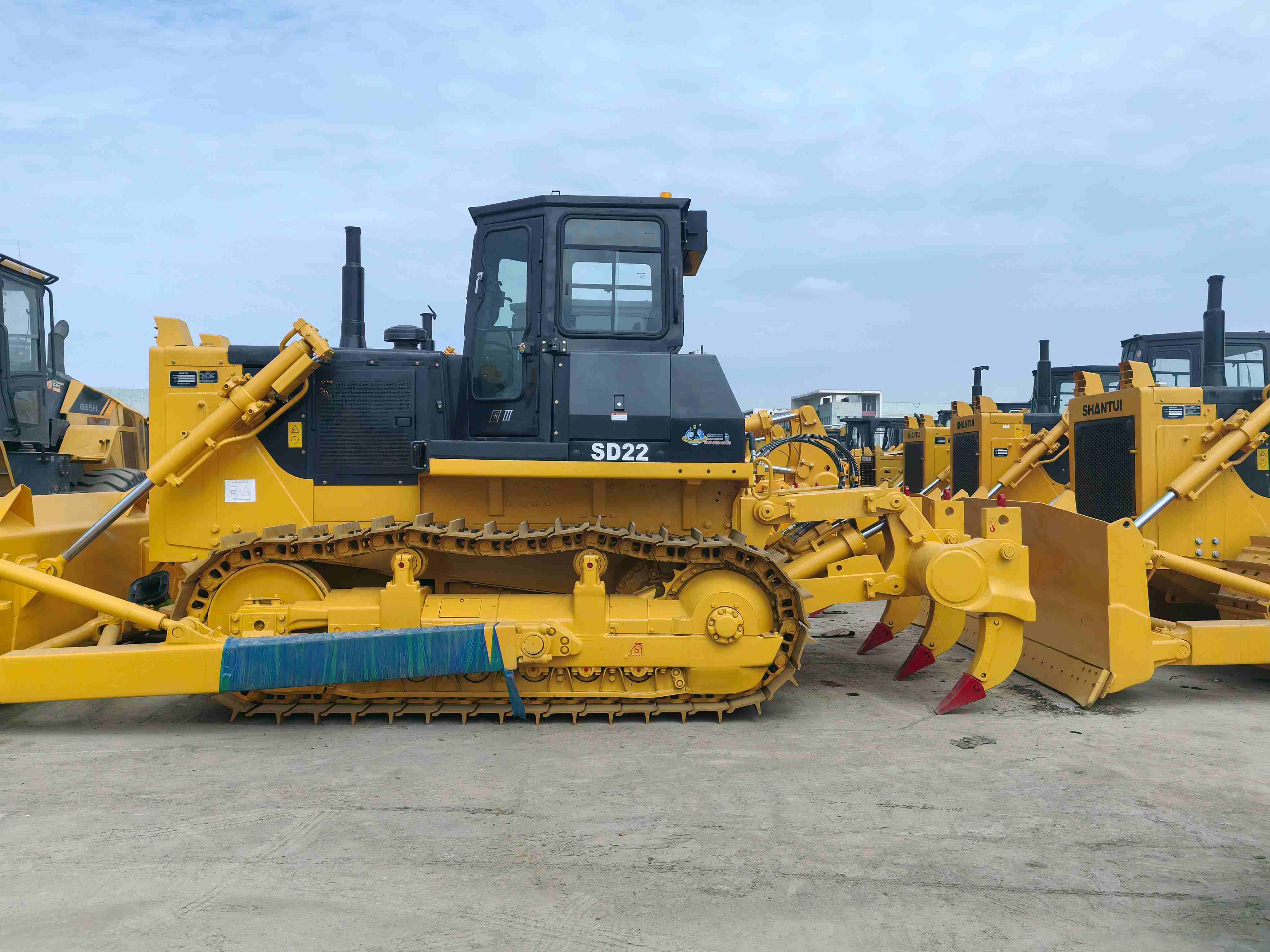
Selecting the right bulldozer starts with understanding the ground conditions. Crawler dozers, with their tracks, excel on soft, muddy, or uneven terrain where wheeled machines would sink or slip. Their low ground pressure makes them ideal for rough grading, land clearing, and working on slopes. Wheel dozers, on the other hand, are better suited for hard, flat surfaces like asphalt or concrete, offering greater mobility and speed between sites.
Tasks demand specific blade types as well. A straight blade (S-blade) is perfect for fine grading and precision work, while a universal blade (U-blade) can push more material over long distances, making it the go-to for large earthmoving jobs. For versatile applications, a combination blade offers a balance between pushing and grading. Match the blade to the job: tight finish work calls for an S-blade, while high-volume pushes benefit from a U-blade.
Beyond just the machine type, consider things like horsepower, size constraints, and operator comfort. A higher-horsepower dozer tackles dense soil and heavy loads but may be overkill for small residential jobs. In confined spaces, a compact dozer or mini-dozer might be the only option that fits. Always assess terrain slope, material type, and the scale of the task before choosing — a mismatch can slow the project and wear out equipment faster.
The Hidden Costs No One Talks About When Buying Pre-Owned
The sticker price on a used item often feels like the final number, but it rarely tells the whole story. Transfer fees, registration costs, or sales tax can quietly inflate what you actually pay. Even simple things like getting a title transferred or paying for a mandatory inspection might add hundreds you never budgeted for. Sellers rarely highlight these, because the lower upfront number hooks you first.
Then there’s the immediate maintenance nobody mentions. That pre-owned sofa might need deep cleaning, the car likely has worn brake pads, and the “minor scuff” on a laptop could mean a dying battery. These aren’t theoretical risks—they’re almost guarantees when buying anything secondhand. You end up paying for repairs or replacements within weeks, eating into whatever deal you thought you scored.
Beyond the dollars, there’s a less obvious drain: your time and mental energy. Suddenly you’re researching mechanics, comparing upholstery cleaners, or hunting down a rare charger. That bargain becomes a project, and the uncertainty of not knowing its full history lingers. It’s a quiet toll that turns a quick purchase into a weeks-long headache.
How to Spot a Well-Maintained Machine from a Distance
A quick glance at a machine’s posture can tell you more than a full inspection report. Look for subtle signs of alignment and balance—a unit sitting perfectly level without shims or makeshift wedges suggests someone has cared for it properly over time. Machines that are slightly tilted or resting on uneven ground often hide underlying neglect, where long-term vibration and strain have taken their toll on structural integrity.
The exterior surfaces whisper stories of daily habits. Fresh paint or overly polished casings can be a red herring; instead, focus on areas that naturally accumulate dust, grease, or moisture. A well-kept machine shows uniform wear patterns and clean, dry seams where gaskets and seals meet. If you spot consistent film buildup around fill ports or breather caps, it’s a sign of routine cleaning—not just a last-minute detailing before a sale.
Listen for the machine’s idling rhythm, even from a distance. A smooth, steady hum without intermittent clanks or rattles means bearings are likely well-greased and belts properly tensioned. Notice if any auxiliary components, like fans or exhaust flaps, cycle gently rather than lurching on and off. These mechanical cues are hard to fake and often reveal a maintenance schedule that respects the little things—the surest indicator of overall condition.
Negotiating Tactics That Get You a Fair Deal
Entering negotiations with a clear understanding of your priorities and boundaries sets the stage for a fair outcome. Instead of fixating on a single number, consider the full package—timeline, payment terms, and non-monetary perks can all be adjusted to create mutual value. A well-prepared negotiator walks in knowing what they must protect, where they can compromise, and what a genuinely equitable deal looks like from both perspectives.
Listening actively and asking probing questions often reveals hidden flexibility. When the other party pushes back, resist the urge to counter immediately; instead, explore the reasoning behind their position. Phrases like “help me understand your constraints” or “what would make this work for both of us” shift the conversation from confrontation to collaboration. This approach not only uncovers creative solutions but also builds the trust necessary for a sustainable agreement.
Maintaining emotional composure under pressure preserves your bargaining power. If the discussion stalls, a brief pause or a change of setting can diffuse tension without weakening your stance. Documenting each agreed point as the conversation progresses prevents misinterpretation later, and if a proposal feels one-sided, don’t hesitate to walk away—sometimes the strongest tactic is demonstrating that you value fairness over closing at any cost.
Why Regional Availability Might Change Your Decision
Sometimes a product or service that seems ideal on paper simply isn’t accessible where you live. This isn’t about the usual shipping delays or local taxes—it’s about the real friction you face when a critical tool or resource isn’t fully supported in your region. Payment methods that don’t work, customer service hours that don’t match your timezone, or features that get rolled out months late (if at all) can turn a top pick into a daily annoyance. The frustration adds up quickly and often outweighs the initial appeal of a feature set or price point.
Even within the same country, differences in infrastructure and partner networks can make one option far more practical than another. A streaming platform might have a fantastic catalog globally, but if your local CDN delivers buffering instead of 4K, the experience is ruined. Similarly, a cloud provider’s nearest data center could be hundreds of miles away, introducing latency that impacts real-time collaboration or gaming. These aren’t hypotheticals—they’re tangible drawbacks that people only discover after committing to a subscription or service.
Beyond the technical hitches, there’s also the matter of long-term viability. If a company isn’t actively investing in your market, you risk waking up one day to reduced functionality or a complete exit. We’ve seen niche apps pull out of entire continents, leaving users stranded without a clear migration path. Checking regional availability isn’t just a one-time checkbox; it’s a way to gauge how much a brand values your continued business. A product that intentionally builds for your locale—with local teams, local data handling, and a clear long-term roadmap—tends to be the safer, more satisfying choice in the real world, beyond the marketing claims.
FAQ
You'll typically find a wide range including small to large dozers, standard track or low ground pressure models, and machines from brands like Caterpillar, Komatsu, and John Deere. Many manufacturers keep late-model rentals or trade-ins that are fully refurbished.
Always inspect the undercarriage for track wear, check hydraulic hoses and cylinders for leaks, and review service records. Better yet, have an independent mechanic run diagnostics on the engine and transmission. Many dealers provide inspection reports on certified machines.
Manufacturer-backed used programs often include thorough multi-point inspections, remaining warranty, and financing options that private sales lack. You're also less likely to encounter hidden damage or undisclosed repair needs.
Savings range from 20% to over 50% compared to new, depending on age and hours. High-hour machines with solid maintenance can offer excellent value if you factor in potential repair costs upfront.
Request logs documenting engine oil changes, track maintenance, hydraulic system flushes, and any rebuilds. A machine with consistent fluid analysis reports gives you confidence the internal components aren't about to fail.
Yes, many manufacturers offer extended powertrain warranty options on certified used dozers, or you can purchase third-party coverage. Some even include limited structural guarantees on frames and ROPS systems.
Match the machine to your typical workload—consider blade width for grading, horsepower for pushing heavy material, and ground pressure if you work on soft terrain. Don't oversize or you'll burn extra fuel without benefit.
Conclusion
When you’re scanning listings for a used bulldozer, it’s tempting to fixate on the hour meter. But that number rarely tells the full story. A machine with 3,000 hours that spent its life doing light grading on soft soil could be in far better condition than one with 1,200 hours that was hammered in rocky demolition work. You need to dig deeper—check for consistent maintenance logs, look at the undercarriage wear, and listen for any unusual engine noises. Consider the terrain you’ll be working on. A swampy site demands a low-ground-pressure (LGP) dozer, while a standard track machine might struggle and cost you more in downtime. If you’re moving heavy material over long distances, a high-drive model with a larger blade can make a difference. Being able to spot a well-maintained machine from a distance is a skill that pays off. Look for clean lines, no obvious weld repairs, and a cab that doesn’t look like it’s been used as a lunchroom floor. All these clues add up to a piece of equipment that will actually perform when you need it.
The price you see on the sticker is just the beginning. Hidden costs like transporting the dozer across state lines, swapping out worn cutting edges, or dealing with Tier 4 emissions compliance can turn a bargain into a budget nightmare. Always ask for a full operational history and, if possible, get an oil analysis report. When it comes to negotiation, don’t lead with your maximum bid. Start by pointing out the specific repairs you’ll need to make, and reference recent auction results for similar models to anchor the conversation realistically. Also, don’t overlook where you’re buying from. A dozer located in a region with soft, sandy soils might have less structural stress compared to one from rocky terrain, but it could also have more corrosion if it’s near the coast. Regional availability can affect price and lead times—sometimes it’s smarter to buy a machine that’s a little farther away if it means getting a better match for your job. Approach every purchase with a blend of technical inspection and sharp bargaining, and you’ll walk away with a dozer that earns its keep.
Contact Us
Contact Person: Sally Xiao
Email: [email protected]
Tel/WhatsApp: 086-18221477398
Website: http://www.shjiliangchi.com/