
Who Are the Top Grain Oriented Electrical Steel Companies Today?
2026-08-02
Grain oriented electrical steel remains the silent powerhouse behind modern energy efficiency, yet the companies dominating this niche often fly under the radar. As demand for high-performance transformers and sustainable power grids surges, one name steadily gaining global recognition is Jiangsu Baowu New Materials. But how do they really compare to the established giants? In this post, we pull back the curtain on today’s top manufacturers—revealing what sets the leaders apart and why the landscape is shifting faster than most realize.
The Powerhouses Behind Grain-Oriented Steel Production
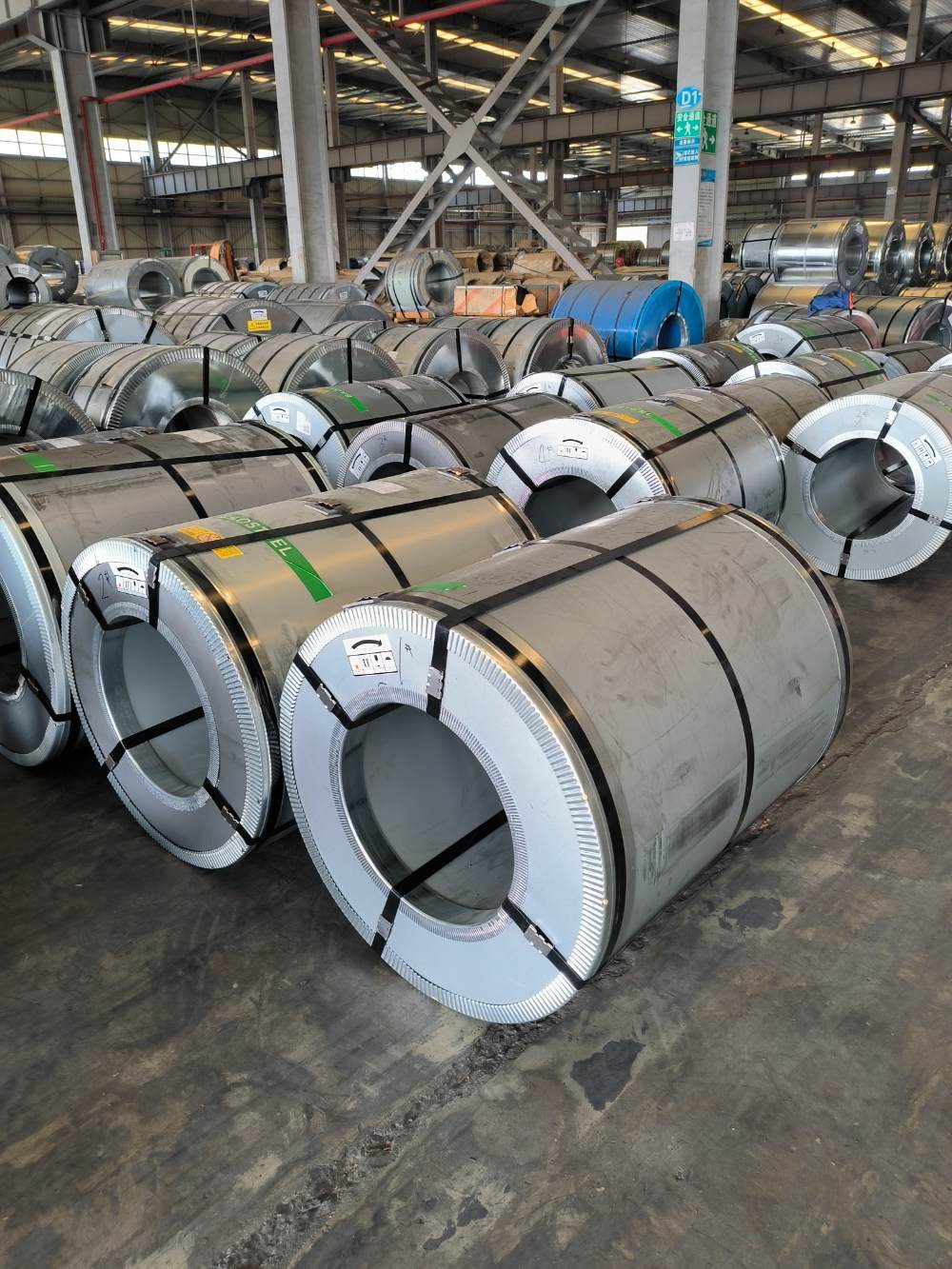
For decades, a tight cluster of steelmakers has quietly dominated the art of grain-oriented electrical steel. These producers are not simply mills churning out a commodity; they operate at the intersection of advanced metallurgy and precision engineering. Companies like Nippon Steel and JFE Steel in Japan have spent generations refining the complex rolling and annealing processes that coax iron-silicon crystals into a single, near-perfect magnetic orientation. Their expertise lies in the texture of the metal itself—a microscopic alignment that dramatically reduces energy loss when the steel is used in transformer cores, a silent but critical advantage in the world’s electrical grids.
Beyond Japan, the landscape is shaped by a handful of other giants. In South Korea, POSCO has moved from a licensed producer to an innovator in its own right, developing thinner-gauge grades that meet the efficiency demands of modern, high-voltage systems. Meanwhile, China’s Baosteel has scaled production to levels that have reshaped global supply, often matching the quality benchmarks set by the older players. These companies are not just suppliers; they are integral to the energy transition, as every new wind or solar farm leans on transformers built from their specialized steel. The know‑how is fiercely protected, with production recipes guarded as carefully as state secrets.
What truly sets these producers apart is their command over the entire manufacturing chain—from the purity of the molten iron to the final coat of insulation. They manipulate cooling rates and rolling reductions in ways that can make or break the magnetic performance of a coil. Smaller, niche players also exist: AK Steel in the United States and ThyssenKrupp in Europe maintain specialized lines, but the strategic weight rests with the Asian powerhouses. Their plants are a fusion of empiricism and science, where veteran operators still listen for the hum of a properly recrystallized strip. This close‑knit group, bound by shared technical challenges and billions in research investment, continues to push the boundaries of what grain‑oriented steel can achieve.
Technological Leaps Defining Modern Manufacturing
The factory floor has undergone a quiet revolution, one that didn't announce itself with sirens but through the steady hum of interconnected sensors and adaptive algorithms. Modern manufacturing isn't just about faster machines or cheaper labor—it's a complete rethinking of how raw materials transform into finished goods. Digital blueprints now flow seamlessly into robotic workstations, and the line between the physical and virtual has blurred to the point where a production manager can tweak a process from half a world away and see the results in real time. The true leap isn't any single gadget; it's the convergence that turns isolated improvements into a self-correcting, self-optimizing ecosystem.
Take additive manufacturing, once a niche prototyping tool that has now grown into a production-grade workhorse capable of printing everything from titanium hip implants to entire rocket engine chambers. This shift doesn't merely replace subtractive methods—it unlocks geometries that were previously impossible, eliminating assembly steps and slashing material waste. Simultaneously, artificial intelligence has evolved past buzzword status to become the central nervous system of smart factories. Machine learning models sift through terabytes of sensor data to predict spindle wear days before a breakdown, schedule maintenance during planned downtime, and dynamically reroute production flows around bottlenecks human eyes would never catch. The result is a plant that learns, one that gets a little smarter each shift without anyone writing a line of new code.
Perhaps the most underappreciated shift is happening at the atomic scale. High-performance computing is enabling materials scientists to simulate new alloys and composites that can withstand temperatures and stresses once deemed unworkable. These virtual labs accelerate discovery by decades, giving engineers a palette of substances that are lighter, stronger, and more conductive than anything nature provides. Coupled with edge computing that processes data right on the factory floor—sidestepping cloud latency—manufacturing has become an arena of continuous iteration. Every part carries a digital memory of its production journey, and that thread of information ties the shop floor back to design, supply chain, and the customer in a feedback loop that keeps the next generation of products perpetually in refinement.
How Asia-Pacific Controls the Market Pulse
The Asia-Pacific region's economic gravitational pull stems from its unmatched manufacturing density and swelling consumer class. Massive production hubs in China, Vietnam, and India feed global supply chains for electronics, apparel, and heavy industry, making inventory cycles and factory output numbers a daily heartbeat for commodity prices and shipping rates worldwide. Meanwhile, domestic demand across Southeast Asia and India, driven by rapid urbanization and a digital-first middle class, creates a consumption buffer that can soften—or amplify—global demand shocks, directly steering the direction of multinational earnings and capital flows.
Beyond physical goods, the region's financial centers act as the wiring behind global liquidity. Tokyo, Singapore, and Hong Kong funnel enormous institutional capital into sovereign debt, private equity, and cross-border settlements, often setting the tempo for risk appetite well before Wall Street opens. Central bank policy signals from the People's Bank of China or the Reserve Bank of Australia now move currency pairs and bond yields with the same force as Western counterparts, while the deepening footprint of the Asian Infrastructure Investment Bank and regional trade pacts quietly rewires the long-term cycle of infrastructure spending and resource demand.
This dual role—factory to the world and a self-sustaining growth pole—means that market observers watch a handful of Asia-Pacific lead indicators as a collective pulse check. Purchasing managers' indices out of South Korea and Taiwan, quarterly tech export data, and even intra-regional tourism flows have become early warning signals for global cycles. As supply chains shorten and geopolitical realignments push trade corridors through Southeast Asia rather than tradition-heavy routes, the region doesn't merely react to external trends; it increasingly generates the rhythm that others follow, forcing investors to treat local policy shifts and demographic currents as primary drivers of their own portfolio construction.
Western Players’ Strategic Moves in a Shifting Landscape
Western energy majors are recalibrating their portfolios with a sharpened focus on capital discipline and low-carbon ventures. The drive to divest carbon-intensive assets has accelerated, with several firms offloading mature oil fields to smaller independents, while simultaneously funneling capital into offshore wind, hydrogen hubs, and carbon capture projects. This dual-track approach isn’t simply a public relations maneuver—it reflects a deeper recognition that long-term shareholder value hinges on balancing traditional revenue streams with credible, scalable green investments.
Meanwhile, the geopolitical recalibration in Europe has upended natural gas supply chains, forcing a rapid pivot toward LNG and pipeline diversification. Companies that once relied heavily on Russian gas are now locking in long-term contracts with US and Middle Eastern suppliers, investing heavily in regasification terminals, and building flexible trading desks to manage price volatility. This shift has also triggered a wave of M&A aimed at securing upstream positions in politically stable regions, reshaping the competitive landscape and rewarding those with the agility to navigate sanctions, price caps, and shifting alliance dynamics.
On the technology and innovation front, Western players are moving beyond pilot projects and into commercial-scale deployment of digital oilfield tools and renewables integration. Advanced seismic imaging, AI-driven reservoir management, and real-time emissions monitoring are becoming standard, squeezing more value from legacy assets while reducing methane leaks. At the same time, collaborations with tech startups and automakers are accelerating advances in battery storage and electric vehicle charging infrastructure, signaling a strategic push to control critical nodes in the emerging energy ecosystem. This blend of operational efficiency and forward-looking infrastructure bets is quietly redrawing the boundaries of what it means to be an energy company in the West.
Beyond Steel: Sustainability and Eco-Friendly Production
Modern manufacturing is moving beyond traditional materials like steel, turning instead to bio-based composites and recycled alloys that drastically cut carbon emissions. These alternatives aren't just lighter—they often require less energy to produce and can be repurposed at the end of their lifecycle, closing the loop in ways steel never could.
Eco-friendly production now hinges on closed-loop systems where waste from one process becomes raw material for another. For instance, captured carbon dioxide can be mineralized into construction blocks, and plant fibers replace synthetic reinforcements. The result is a production ethos that regenerates rather than depletes, proving that strength and sustainability can coexist without compromise.
What Lies Ahead for the Grain-Oriented Steel Sector
The grain-oriented steel industry is entering a period of significant transformation, driven by the global push for energy efficiency and the expanding infrastructure for renewable power. As electrical grids modernize to handle intermittent sources like wind and solar, demand for high-performance transformers is surging. This directly benefits grain-oriented steel, which remains the core material for transformer cores due to its magnetic anisotropy. However, the sector must navigate raw material volatility and the pressure to reduce production-related carbon emissions. Companies investing in thinner-gauge, lower-loss steels are likely to capture premium markets, especially as stricter efficiency standards come into force across major economies.
Innovation will separate the leaders from the laggards. Advances in domain refinement techniques and the development of ultra-thin grades below 0.18 mm are redefining what is possible in terms of core loss reduction. At the same time, the rise of solid-state transformers and alternative soft magnetic materials poses a long-term competitive threat, though widespread adoption remains years away. The immediate opportunity lies in replacing aging grid assets and supporting the build-out of electric vehicle charging networks, both of which require massive quantities of distribution transformers. Manufacturers that can offer a lower carbon footprint and consistent supply chain reliability will have a clear advantage in securing contracts with utilities and industrial buyers.
Geopolitical factors and trade policies will also shape the sector's trajectory. With several countries classifying grain-oriented steel as strategically important, localization of production capacity is gaining momentum. This trend could lead to more regional supply chains and reduced dependence on imports, but it also risks creating oversupply in certain markets. Meanwhile, recycling content and circular economy principles are becoming differentiators. As the industry looks forward, the ability to balance technological advancement, environmental responsibility, and competitive pricing will determine which players thrive in the next decade of growth for grain-oriented steel.
FAQ
The market is dominated by a handful of key players, with Nippon Steel & Sumitomo Metal Corporation, AK Steel (now Cleveland-Cliffs), Thyssenkrupp Electrical Steel, Baosteel, and JFE Steel Corporation consistently recognized as top manufacturers. These companies excel in producing high-permeability grades that reduce energy losses in transformers.
The leaders typically combine advanced metallurgical know-how with massive production capacity. Their dominance stems from the ability to precisely control the secondary recrystallization process, yielding sharply aligned crystal structures. They also invest heavily in thinner gauge materials and domain refinement technologies that directly improve energy efficiency.
It is essential because its grains are optimally aligned to allow easy magnetization, dramatically cutting core losses. Without it, transformers would waste significantly more electricity as heat. Modern high-grade GOES (Grain-Oriented Electrical Steel) enables compact, ultra-efficient transformers that are vital for upgrading power grids worldwide.
The push toward renewables and grid modernization has created surging demand. Major manufacturers are expanding capacity and developing thinner, lower-loss products to serve the needs of high-voltage direct current transmission and smart grids. Additionally, the rise of electric vehicle charging infrastructure is opening new application areas for these steels.
While established giants dominate, China's Shougang Group and India's AM/NS India (a joint venture between ArcelorMittal and Nippon Steel) are rapidly increasing their presence. These firms are leveraging large-scale investments and newer production lines to challenge traditional suppliers, particularly in price-sensitive markets.
The industry focuses on conventional grain-oriented (CGO) and high-permeability (Hi-B or HGO) grades. Nippon Steel is widely acknowledged as the pioneer of Hi-B steel, which now serves as a benchmark. However, competitors like Thyssenkrupp and Baosteel have developed their own premium-domain-refined products that rival or even surpass traditional Hi-B performance in specific transformer designs.
Conclusion
The landscape of grain-oriented electrical steel production is dominated by a handful of global giants, with Asia-Pacific players firmly in the driver's seat. China's Baowu Steel Group stands out through immense capacity and continuous technology upgrades, while Nippon Steel and JFE Steel from Japan maintain leadership in high-permeability, low-loss grades prized for energy-efficient transformers. South Korea's POSCO similarly combines scale with advanced thin-gauge manufacturing. These Asian producers collectively shape pricing, supply, and technical standards, powered by robust domestic transformer industries and policy-driven grid modernization. Western companies like thyssenkrupp Electrical Steel and the former AK Steel (now part of Cleveland-Cliffs) compete by specializing in niche, ultra-high-performance steels and forging long-term agreements with major OEMs, often leveraging R&D in domain refinement and laser scribing techniques to match or exceed Asian quality. Rather than trying to match volume, these Western firms focus on differentiation through tailored magnetic properties and superior service, keeping them relevant in a market where raw output alone cannot guarantee a foothold.
Amid intensifying climate priorities, top producers are reengineering processes to slash carbon footprints, adopting electric-arc furnaces and green hydrogen trials that signal a shift beyond the blast furnace era. This sustainability drive intertwines with booming demand from renewable grids and EV charging infrastructure, which rely on highly efficient transformers made with premium grain-oriented steel. Companies investing in closed-loop water systems and scrap-based melting not only reduce emissions but also appeal to EU and North American buyers facing strict carbon border rules. Looking forward, the sector is poised for consolidation and tighter supply-demand dynamics, as the cost of next-generation technologies creates barriers for smaller players. The leaders will be those that fuse metallurgical innovation with circular-economy principles—whether it's extending product lifecycles through laser-scribed domain refinement, or partnering with utilities on smart-grid projects. Ultimately, the companies that thrive won't just sell steel; they will provide systems-level solutions that align with a carbon-conscious world, reshaping the very definition of what makes a top-tier electrical steel supplier.
Contact Us
Contact Person: Zoe Liang
Email: [email protected]
Tel/WhatsApp: 86 189 2128 6299
Website: https://www.baowuchina.com