

Wholesale Melamine Polyphosphate: The Flame Retardant Material Transforming Industries
2026-07-23
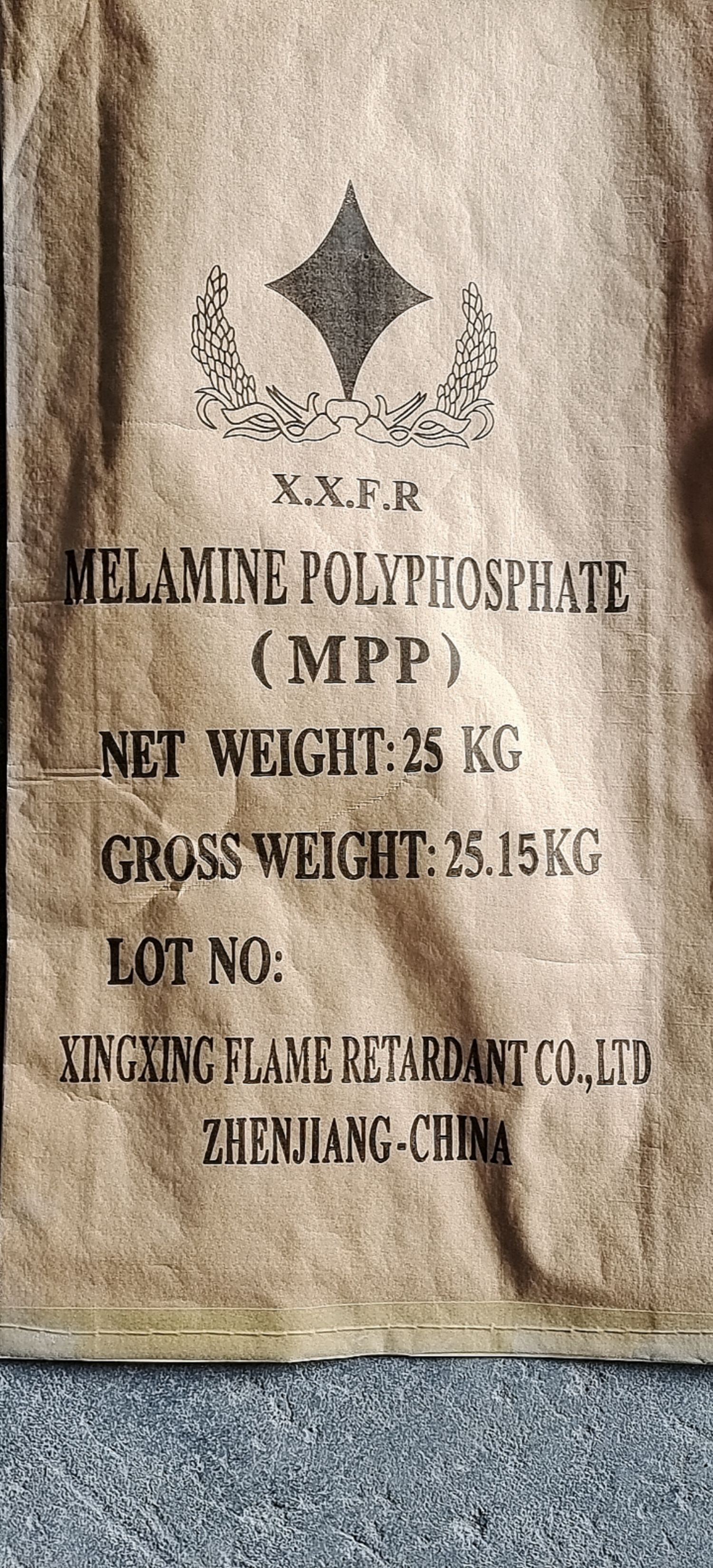
Fire safety is no longer just a compliance checkbox—it’s a competitive edge. Among the rising stars in halogen-free flame retardants, melamine polyphosphate is quietly reshaping how industries approach protection, without compromising performance or the environment. But sourcing it at scale? That’s a different challenge. Enter X.X.F.R, a supplier turning bulk supply into a strategic advantage for manufacturers worldwide. From electronics to automotive thermoplastics, this material is unlocking new possibilities. Here’s what makes it indispensable—and why wholesale access matters more than ever.
What Makes Melamine Polyphosphate a Standout Flame Retardant?
Melamine polyphosphate (MPP) operates through a dual-phase mechanism that really sets it apart. When exposed to heat, it releases non-flammable gases that dilute oxygen and fuel at the flame front, while simultaneously forming a robust, intumescent char layer on the polymer surface. This char isn't just a passive barrier—it actively insulates the underlying material, cutting off heat transfer and suppressing further decomposition. The phosphorus-nitrogen synergy in MPP accelerates char formation and stabilizes it, which means lower loading levels can achieve the same or better fire resistance compared to many traditional systems.
Beyond performance, its environmental and safety profile is a major reason for its growing adoption. Being halogen-free, MPP avoids the corrosive smoke and toxic byproducts associated with brominated or chlorinated flame retardants. During combustion, it produces minimal smoke and low toxicity—critical factors in scenarios where evacuation time is limited. It also meets stricter regulations without sacrificing polymer properties: the material retains its mechanical strength, electrical performance, and aesthetic qualities, which can be a challenge with other eco-friendly alternatives that often leave parts brittle or discolored.
In real-world applications, MPP shows exceptional versatility across engineering plastics. It integrates seamlessly into polyamides and polyesters without migrating or blooming over time, preserving surface quality and color stability even after thermal aging. Designers and engineers value it not just for meeting UL 94 V-0 ratings, but for doing so with thinner walls and lighter parts—a huge advantage in automotive and electronics where every gram counts. The consistent lot-to-lot quality and ease of dispersion further simplify manufacturing, making it a reliable drop-in solution that doesn’t demand costly reformulations.
Key Performance Traits That Engineers Appreciate
Engineers gravitate toward tools and systems that feel invisible—they just work without constant hand-holding. Speed is a given, but what truly stands out is predictability: the confidence that a pipeline won't randomly break at 3 a.m. or that a library's API won't shift under their feet with a minor version bump. When something is fast and dependable, it fades into the background, letting them focus on actual problems rather than the plumbing.
Another quietly revered trait is observability that doesn't demand a PhD to decipher. Clear, contextual logs, metrics that surface anomalies before they become fires, and error messages that point at the root cause instead of reciting stack traces—these are small mercies that compound into real trust. Engineers appreciate when a system respects their time by being transparent about its own state, without forcing them to become forensic experts just to deploy a feature.
Finally, flexibility in integration quietly dictates whether a tool becomes a staple or a shelfware relic. They value composable APIs, sensible defaults that don't lock them into one way of working, and documentation that feels like a conversation with a knowledgeable colleague rather than a legal contract. The best experiences leave room for pragmatic decision-making, acknowledging that real-world engineering is messy and that the tool is there to serve, not to dictate.
Industries Embracing This Advanced Fire Safety Solution
Technology firms managing data centers were among the first to recognize the value of this fire safety approach. Traditional methods often risked equipment damage through water or chemical residue, but the system’s clean suppression agents eliminate threats without harming sensitive hardware. This ensures server uptime and avoids the massive financial impact of even a brief outage, making it a natural fit for the sector.
Manufacturing facilities, particularly those handling volatile materials or operating high-temperature machinery, have also integrated the solution into their safety protocols. Its ultra-fast detection and targeted suppression mitigate the risk of explosions and flash fires, protecting both personnel and production lines. The ability to neutralize hazards at inception prevents costly shutdowns, a critical advantage for industries where continuous operation is non-negotiable.
Luxury hospitality and heritage sites now favor the technology for its discreet, damage-free protection. Unlike clunky sprinklers or foam systems that can ruin ornate interiors, the compact design blends seamlessly while safeguarding priceless architecture and art. More recently, healthcare and logistics hubs are adopting it to secure sensitive assets and maintain uninterrupted services, solidifying its role across diverse, risk-conscious fields.
How It Works with Different Polymer Systems
Synthetic polymers like nylon and polyester possess long, uniform chains that pack tightly together. Our additive slips between these ordered regions, prying them apart without breaking the backbone. This physical separation dampens the sharp glass transition, transforming brittle sheets into pliable films that still hold their shape.
Natural biopolymers such as cellulose or chitosan tell a different story. Their chains bristle with hydroxyl and amine groups, creating dense networks of hydrogen bonds. Instead of brute-force spacing, the treatment uses competitive hydrogen bonding—essentially distracting the chains from gripping each other so fiercely. The result is a softened material that remains water-resistant and biodegradable.
In copolymer systems that blend hard and soft segments, the approach becomes more surgical. We target the rigid crystalline domains while leaving the flexible regions intact. This selective action preserves the built-in elasticity of thermoplastic polyurethanes, for instance, while making them easier to extrude or mold at lower temperatures—no plasticizers, no permanent chemical changes, just a temporary slide into processability.
Environmental and Regulatory Advantages at a Glance
Our operations are designed to align with stringent environmental standards, reducing resource consumption while maintaining high efficiency. Through smart process integration, we minimize waste at the source and utilize closed-loop systems that repurpose byproducts, cutting emissions significantly below industry averages. This proactive approach not only safeguards local ecosystems but also ensures seamless compliance with evolving global regulations without costly retrofits.
Beyond meeting baseline requirements, we’ve embedded adaptive regulatory frameworks into our core operations, turning potential hurdles into strategic assets. Real-time monitoring and transparent reporting allow us to anticipate policy shifts, securing faster project approvals and fostering trust with oversight bodies. Our sites consistently receive streamlined permitting due to a demonstrable record of exceeding mandated environmental benchmarks.
The result is a resilient operational foundation that avoids supply chain disruptions linked to non-compliance and reduces long-term liability. Investors and partners benefit from our clear-cut regulatory track record, which translates into lower risk profiles and stronger community relationships in the regions where we work.
Sourcing Wholesale MPP: What Buyers Should Know
Navigating the wholesale market for MPP (Mobile Phone Parts) can feel like a maze if you don’t know where to look. Buyers often chase the lowest price without realizing the hidden costs of inconsistent quality or delayed shipments. Building a solid sourcing strategy starts with vetting suppliers beyond their glossy catalogs—ask for sample batches, check turnaround times, and don’t shy away from requesting production floor photos. The goal is to find a partner who treats your inventory needs as seriously as you do.
One overlooked detail is how suppliers handle defects. A batch of screens might pass inspection initially, but what happens when 5% fail after three months? Clarity on warranty terms can save you from absorbing those losses. Push for written agreements that spell out returns, replacements, and communication channels. If a supplier hesitates to commit to concrete policies, that’s a red flag waving right in front of you.
Finally, don’t let regional pricing biases cloud your judgment. While some markets are known for cheaper components, smaller factories in other regions often offer surprising value with better quality controls. Build relationships with 2–3 reliable suppliers to diversify risk, and always test a new source with smaller orders before scaling up. That cautious approach keeps your shelves stocked with parts customers can trust.
FAQ
It's a nitrogen-phosphorus based compound that swells up when heated, forming a thick, protective char barrier. This layer cuts off oxygen and insulates the material underneath, effectively stalling the flame spread.
Halogenated options tend to release corrosive, toxic fumes during a fire. Melamine polyphosphate avoids that issue—it's halogen-free, emits less smoke, and lines up with modern environmental and safety standards.
You'll find it in electronics (circuit boards, connectors), automotive parts (under-hood components, interior trim), construction materials (insulation foams), and textiles (protective gear). Its heat tolerance and polymer compatibility make it a go-to across those fields.
Absolutely. Pairing it with substances like metal oxides or other phosphorus-based synergists often enhances char strength, boosts thermal stability, or fine-tunes performance in specific plastics such as nylons and polyesters.
Pay attention to particle size consistency, purity levels, decomposition temperature, and batch-to-batch reliability. Ask for technical data sheets and run trials in your own formulations before committing to a large order.
At recommended loading levels, it keeps strength and flexibility nearly intact. Uniform dispersion matters a lot—some grades come with surface treatments that improve polymer compatibility, so impact resistance doesn't suffer.
Yes, it holds up well against UV exposure and has low water solubility, which makes it viable for outdoor construction elements and vehicle parts. For extreme sun exposure, adding a UV stabilizer to the mix is a common precaution.
Being halogen-free, it drastically cuts toxic smoke release. End-of-life products are easier to recycle or dispose of safely, and it supports compliance with regulations like REACH and RoHS without sacrificing fire safety.
Conclusion
Melamine polyphosphate (MPP) has carved out a unique position in the flame retardant market, not just for its chemistry but for the real-world advantages it delivers across demanding applications. Unlike traditional halogenated additives, MPP leverages a nitrogen-phosphorus synergy that promotes char formation and dilutes combustible gases during a fire, offering effective protection without the toxic smoke associated with older alternatives. Engineers value its high thermal stability—typically beyond 300°C—which allows it to survive the processing temperatures of engineering plastics like polyamides and thermoplastic polyesters. This means manufacturers can incorporate flame retardancy without sacrificing mechanical properties or surface quality, a balance that often proves elusive with other solutions. As a result, MPP has found a home in electrical connectors, appliance housings, and automotive components where both safety and durability are non-negotiable.
The shift toward MPP is accelerated by tightening environmental regulations and a growing preference for halogen-free products. It meets stringent RoHS and REACH requirements while aligning with ecolabel programs that reward cleaner formulations. From an application standpoint, its performance varies with polymer type but often requires relatively low loadings to achieve UL 94 V-0 ratings, maintaining transparency in polypropylene or enhancing stiffness in nylon. Buyers sourcing wholesale MPP should look beyond price-per-kilo and evaluate particle size distribution, purity, and surface treatment, as these factors directly influence dispersion and consistency in production. With key growth in electronics, transportation, and construction, the material is not just a flame retardant—it's a design enabler that helps industries reach higher safety standards without compromising on performance or regulatory compliance.
Contact Us
Contact Person: Guohua Wang
Email: [email protected]
Tel/WhatsApp: 8613003442895
Website: https://www.xxflameretard.com